Introducing ANSIS BLAUS

June 26, 2023
ablaus

Ansis Blaus is a Latvian postdoctoral research associate exploring patterns of climatic and anthropogenic change in the Neotropical Paleoecology Research Group led by Mark Bush at Florida Institute of Technology. He earned his Ph.D. in Earth Sciences from Tallinn University of Technology, Estonia. Supervised by Dr. Triin Reitalu he worked on modern pollen-plant relationships and palaeoecological reconstructions of peatlands and calcareous spring fens with an emphasis on biodiversity and plant functional trait reconstructions.

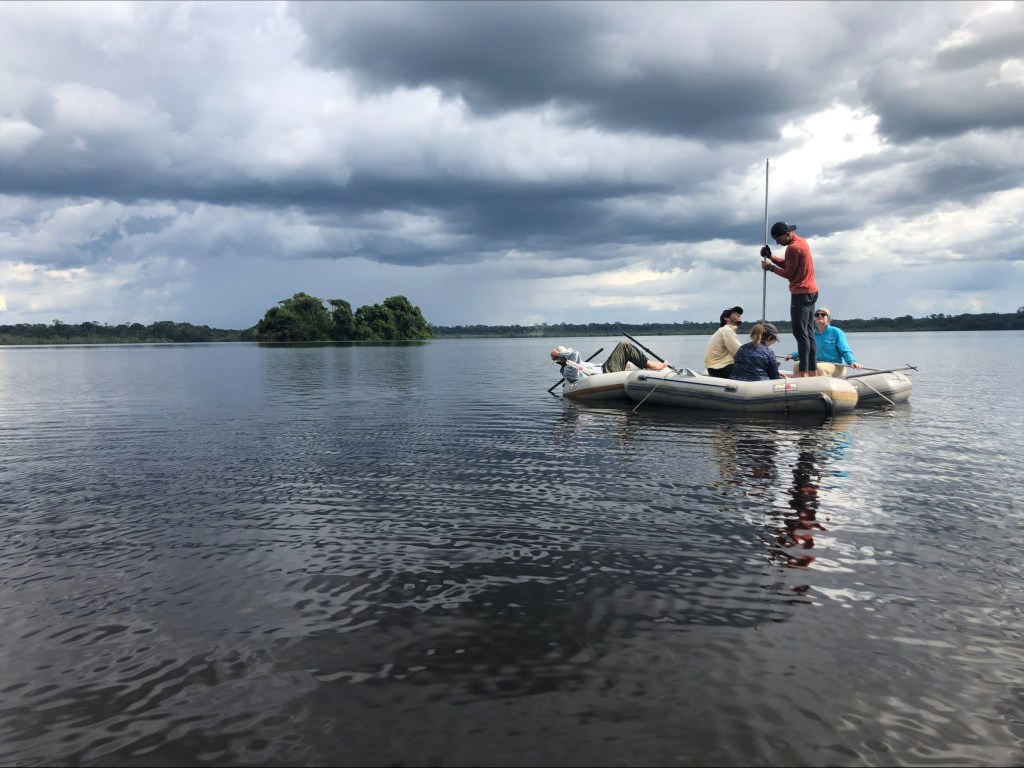
Currently, at Florida Tech, Ansis works on pollen data and other proxies from the sediment cores collected in the tropical Amazon. He investigates the tropical forest changes in relation to the global climate from a historical perspective, particularly during the Last Glacial Period and the Last Interglacial ca. 130 thousand years ago. His work will shed light on the history of dynamics and climate tipping points in the Amazonian rainforest. This research is particularly important in the face of the current global climate crisis and could help to anticipate the tropical forest response to the changing climate in the future.

Another objective of Ansis’s work is to study the pollen signature of human disturbance in the Amazon Basin as a means to model and interpret human presence and activities in the past and to understand human-nature interactions in tropical forest ecosystems in different spatial and temporal scales. For that, he is collaborating with the University of Amsterdam, Institute for Biodiversity and Ecosystem Dynamics, and working on a project aiming to quantify tropical pollen assemblages led by Crystal McMichael.

Ansis is fascinated by the potential revelations that come with the intersection of neoecology and paleoecology and human interactions. His interest in paleoecology, biodiversity, and various natural processes comes through the sense of pursuing a higher purpose for society and the well-being of our planet, and from the concern that humans have altered tropical forests and most other ecosystems in the world to the level of a negative rebound effect. Ansis believes that we must study and understand these ecosystems from different perspectives to decrease the current damage, predict future scenarios and to develop conservation strategies for both nature and human well-being.

Warming, drought, and disturbances lead to shifts in functional composition

June 20, 2023
WDG

Open access:

van der Sande, M.T., Bush, M.B., Åkesson, C.M., Berrio, J.C., Correia Metrio, A., Flantua, S.G.A., Hooghiemstra, H., Maezumi, S.Y., McMichael, C.N.H., Montoya, E., Mosblech, N.A.S., de Novaes Nascimento, M., Peña-Claros, M., Poorter, L., Raczka, M.F. & Gosling, W.D. (2023) Warming, drought, and disturbances lead to shifts in functional composition: A millennial-scale analysis for Amazonian and Andean sites. Global Change Biology. DOI: 10.1111/gcb.16818

Lost forests of the Netherlands

June 13, 2023
WDG

The June 2023 meeting of the Dutch palynological society (Palynologische Kring) took place at the offices of the Dutch National Cultural Heritage Agency (Rijksdienst Cultureel Erfgoed) in Amersfoort. The focus of this meeting was the past forest landscape of the Netherlands. The meeting included the annual report of the society, three scientific talks, and a prize giving for the best MSc thesis.

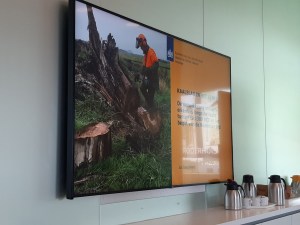
Presentation of Jos Bazelmans showed the huge amount of woody material extracted from Dutch peat bogs.

The annual report of the society showed a healthy finances and membership (>100 members). Two key events from last year were the award of the societies highest award, the Jongmanspenning, to Margaret Collinson for her massive contribution to the field, and the annual excursion; in 2022 this was to Leiden and included visits to Roman archaeological sites.

Kelly van Leeuwen winner of the 2023 Florschütz Award

The scientific part of the meeting was kicked off my Roy van Beek who presented results from his ongoing project on the peatlands of the Netherlands which suggest peatland expansion occurred between 5500 and 3500 years ago (van Beek et al., 2023). The second talk was by our host, Otto Brinkkemper, and traced the history of woodlands across the Netherlands on the basis of macrofossil finds; including huge tree stumps remarkably preserved in peatlands (Bazelmans et al., 2021; Kooistra et al., 2006). The final talk was given by Jos Bazelmans who showed the remarkably high volume of tree stumps that have been recovered from the Netherlands, and how tree rings from these 100s of record are being used to reconstruct forest histories and past climate change. It was interesting to hear that the average age of the tree stumps found was around 250 years, and that some of the trees had lived to around 400 years in exceptional cases.

Kelly with her proud supervisors Stefan Uitdehaag (right), and I (left)

The final section of the meeting was the prize giving. Corrie Barkels, on behalf of the independent judging panel, announced Kelly van Leeuwen as the winner for her thesis entitled “Using soils samples and footwear to improve forensic palynology”. Her thesis was conducted at the University of Amsterdam as part of her MSc Earth Sciences degree and was conducted in collaboration with the Netherlands Forensic Institute. Congratulations Kelly!

Continue Reading

Influences of sea level changes and volcanic eruptions on Holocene vegetation in Tonga

June 8, 2023
WDG

Open access:

Strandberg, N.A., Edwards, M., Ellison, J.C., Steinbauer, M.J., Walentowitz, A., Fall, P.L., Sear, D., Langdon, P., Cronin, S., Castilla-Beltrán, A., Croudace, I.W., Prebble, M., Gosling, W.D. & Nogué, S. (2023) Influences of sea level changes and volcanic eruptions on Holocene vegetation in Tonga. Biotropica. DOI: 10.1111/btp.13231

Dutch palynology meeting

June 6, 2023
WDG

The next meeting of the Palynologische Kring will take place on the afternon of Tuesday 13 June in Amersfoort. There will be scientific seminars from Roy van Beek (Wageningen University & Research), Otto Brinkkemper (Cultural Heritage Agency), and Jos Bazelmans (Cultural Heritage Agency) focused on the development of the Dutch landscape. In addition the prize for best palynological MSc thesis in the Netherlands – the Florschütz Award – will be given out.

To find out more details and how to register click here.

Engaging people with pollen data

May 11, 2023
WDG

Educational activities include use of the Neotoma Database

On Wednesday 11 May 2023 I was delighted to give a online seminar for the African Pollen Database group on integrating palaeoecological data into educational programs. Thanks to Sarah Ivory, Chris Kiahtipes, and Alejandra Domic for inviting me and organizing this series.

I covered topics including the motivation of students, designing a MSc level course, and setting up BSc/MSc research projects. My presentation was centered around my personal experience of running courses for BSc Biology and Future Plant Studies students (Palaeoecology), and for MSc Earth Science and Biological Science students (Environments Through Time) at the University of Amsterdam. It was nice to get a wider perspective from discussion with the audience and to pick up some additional ideas and advice. If you have other thoughts on this topic please feel free to comment on this post.

The entire African Pollen Database online seminar series is now available to watch via the associated YouTube channel. So to find more click here.

APD Workshop: R-Ratepol

April 19, 2023
sji15

Ondrej Mottl and Suzette Flantua will be presenting an African Pollen Database (APD) practical tutorial about working with paleoecological data in R ! Please join us Wed, April 26 at 9am EDT (time zone converter). Please email sji15@psu.edu for the zoom link and instructions.

At this workshop, you will learn to use the new Ratepol package (info here and here):

  • search for APD sites from Neotoma in R
  • begin making age models
  • calculate rates of change for vegetation from pollen records

For more information, check out the schedule below and see past workshops here.

African insights

March 30, 2023
WDG

Plant Ecology & Diversity

Having recently traveled to South Africa as part of the Landscape Dynamics field course run by our graduate school, and to be thinking again about trying to obtain funding to further research in Africa, I thought it might be fun to turn to the journals in which I have an editorial hand (Plant Ecology & Diversity, Vegetation History & Archaeobotany, and The Holocene) and see what new work was coming out on African ecosystem dynamics. From each of these journals I have selected two recent papers to highlight here.

The papers come from across the continent and all have a component of the ecology of the past, but they range in focus from developing methods to extract new insights about past ecological change (Le Moyne et al., 2023) through to the application of our understanding of past ecosystems to the management of conservation areas (Wilkinson et al., 2022).

Vegetation History & Archaeobotany

The study by Le Moyne et al. (2023) examined modern reference material of nine grass species to determine how they might be better identified in the archaeological and palaeoecological record from the phytoliths they produce. Three of the studies use different lines of evidence of past ecological dynamics to explore change over the last few thousands of years.

  • Champion et al. (2023) shed light on past agricultural practices in western Africa (Nigeria) through the examination of macro-botanical evidence from 50 archaeological sites and dating back c. 3500 years, hypothesizing a new route for the spread of pearl millet out of the central Sahara into the central Nigerian savannahs.
  • Prader et al. (2023) present a c. 4000 year geochemical, palynological and and charcoal record from Table Mountain National Park in South Africa, showing changes in the abundance of fynbos and forest plants and how this was modified by people.
  • Hildebrand et al. (2022) collated multiple lines of evidence of past environmental change from eastern Africa to assess changes in human activity during and after the African Humid Period (15,000-5000 years ago), highlighting the complex relationship between changes in human resource acquisition practice (fishing, hunting, gathering, and pastoralism) and environmental change.

The longest timescale perspective is provided by Milton et al. (2022) who investigated plant speciation in the Namib Desert. They combined a phylogenetic, morphometric and experimental genetic approaches to explore the evolutionary history of Senecio flavus and S. engerianus and produce palaeo-distribution models. From these data they suggest that the wider ranged species (S. flavus) is in fact derived from the smaller ranged parent (S. engerianus) and that this separation was caused by aridification during the Pleistocene.

The final paper, Wilkinson et al. (2022), take evidence for past abundances of elephants and compare them with the abundances in national parks today. They argue that modern elephant densities in national parks could be higher than the historical levels and that this could be detrimental to the flora and other fauna in the parks.

References

Continue Reading

APD Workshop: R basics for paleoecologists

February 17, 2023
sji15

Chris Kiahtipes will be presenting a, African Pollen Database (APD), practical tutorial about working with paleoecological data in R for beginners! Please join us Wed, February 22 at 9am EST. Please email chris.kaihtipes@gmail.com for the zoom link.

Also, if you are interested in joining, please follow the set-up guide below before the start of the workshop in order to make sure you are ready to go and follow along in real-time during the workshop!

Blog at WordPress.com.