Job: PhD Caribbean Palaeoecology

September 9, 2022
WDG

The Palaeoecology Research Group within the Department of Archaeology at the Max Planck Institute for Geoanthropology, Jena, Germany is pleased to announce a new vacancy for a doctoral student exploring human-environment interactions in the Caribbean. The position will be based in Jena, Germany for a period of 3 years with the option for extensions and supervised by Dr. Yoshi Maezumi.

The Palaeoecology Research Group analyses palaeoecological and archaeobotanical proxies from sedimentary archives, including pollen, phytoliths, charcoal and stable isotopes to examine topics including the legacy of human land-use on ecosystems, spatio-temporal patterns of natural and human-driven fire activity, and the influence of natural and human disturbance regimes on the biogeographic distribution of plants and animals in past ecosystems.

Closing date: 30 September 2022

For full details and how to apply click here.

For further information contact Dr. Yoshi Maezumi.
Incorporating a palaeo-perspective into Andean montane forest restoration

September 2, 2022
WDG

Open access:

Loughlin, N.J.D., Gosling, W.D., Duivenvoorden, J.F., Cuesta, F., Mothes, P. & Montoya, E. (2022) Incorporating a palaeo-perspective into Andean montane forest restoration. Frontiers in Conservation Science 3, 980728. DOI: 10.3389/fcosc.2022.980728

Mapping Ancient Africa: INQUA Rome 2023

July 18, 2022
WDG

I am delighted to announce that there our session “Mapping Ancient Africa: Climate, Vegetation & Humans” has been accepted for the INQUA congress in Rome (14-20 July 2023).

Abstract: Great uncertainty exists surrounding the link between climate change and hominin evolution, cultural development, and dispersal in and out of Africa. Several hypotheses have been proposed about how environmental conditions in Africa might have driven important developments in human origins over the last 4 million years. These findings link important evolutionary events with environmental change including cooling, drying, and wider climate fluctuations over time. However, key questions remain on the type, speed and driver of climate variability in Africa and how it affected evolution and development, e.g., did changing environment affect resources which consequently lead humans to develop new tools, why did so many early hominin species persist, evolve and/or go extinct, why did our species (Homo sapiens) emerge and survive, and how have we shaped our own environment either intentionally or unintentionally? In this session we look to bring together researchers focused on reconstructing past environments in Africa on the basis of empirical data (palaeoclimatic, palaeoecological, archaeological records) with researchers using modelling approaches (climate, vegetation, dispersal and cultural models). We hope to stimulate research and debate on how past change (climate, ecological, behavioral) shaped modern humans and the role of human niche construction on African environments. This session is linked to the INQUA “Mapping Ancient Africa” project, but we welcome all submissions.

Organizers:

Session sponsored by the INQUA:

INQUAlogo

MSc Earth Sciences: Peru field course 2022

July 15, 2022
WDG

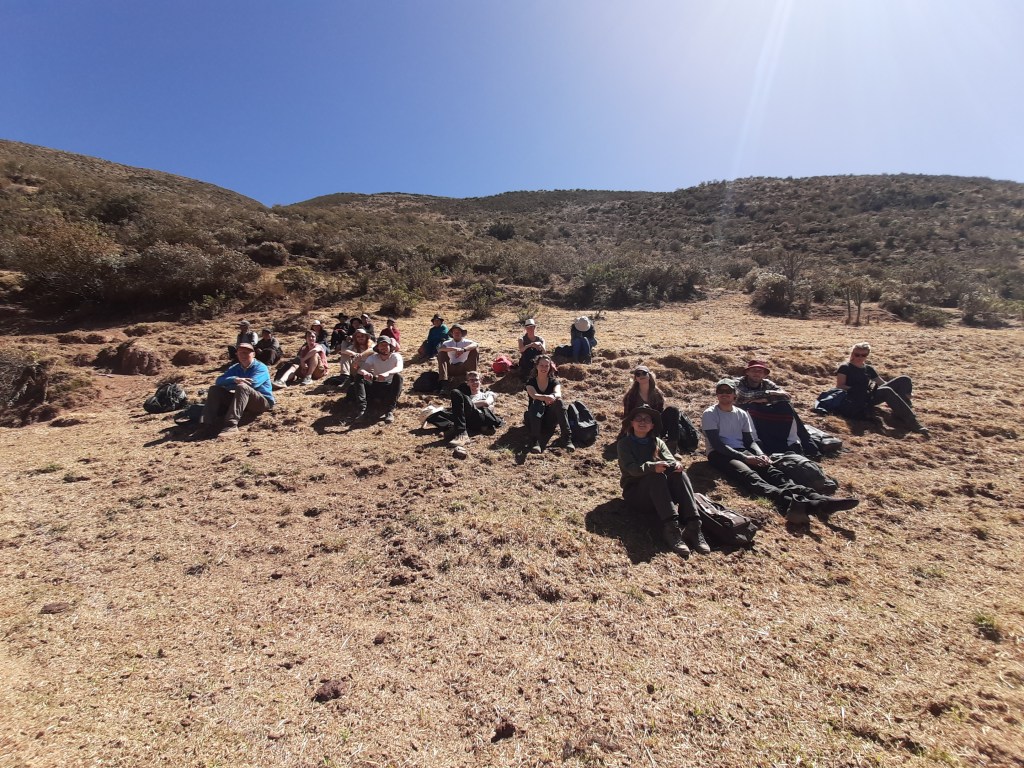
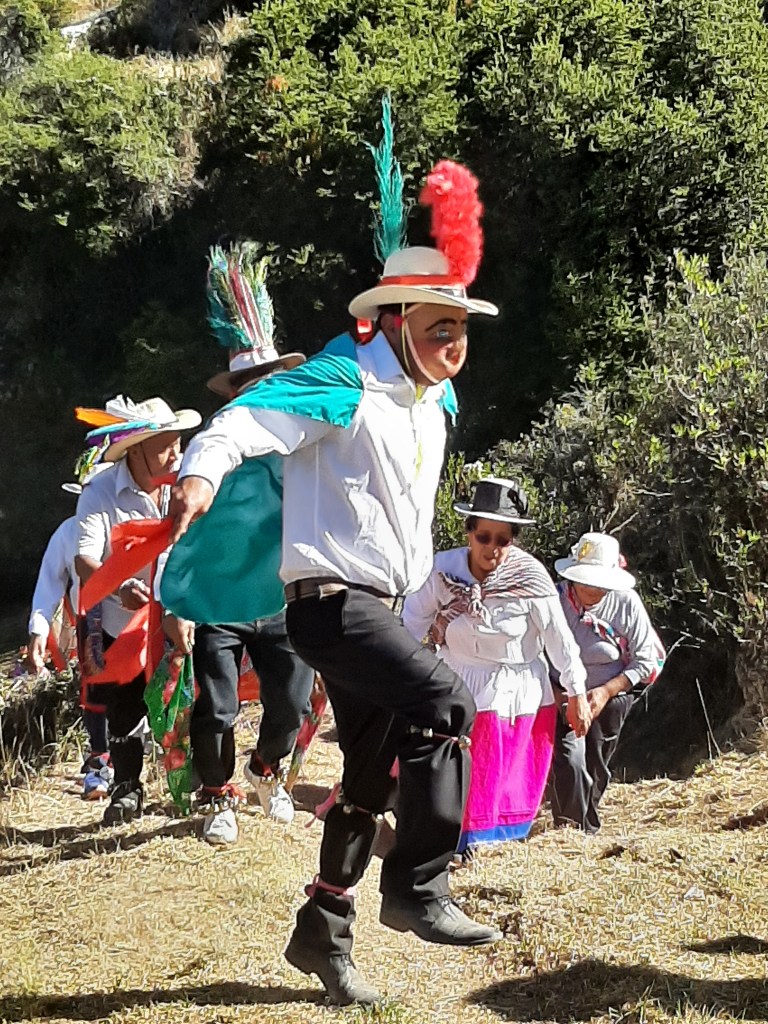
The University of Amsterdam MSc Earth Sciences “Geoecological Systems” field course to Peru took place this year during June and July (2022). A team of 18 students and 4 staff spent four weeks in Miraflores Town (c. 3700 m above sea level) working with, and for, local communities to study geomorphology, geology, land-use, water quality and carbon storage. The students were organized into teams of 3 or 4 each of which tackled a research question in the nearby landscapes that had been developed in conjunction with the local community. Access to the area and embedding within the community was enabled by The Mountain Institute Peru. The student reports will be translated into Spanish who will communicate findings to the community in Miraflores Town.

Want to join us on a future expedition? Check out our degree program here to enroll.

Continue Reading

The legacy of 1300 years of land use in Jamaica

July 9, 2022
WDG

Open access:

Elliott, S., Maezumi, S.Y., Robinson, M., Burn, M., Gosling, W.D., Mickleburgh, H.L., Walters, S. & Beier, Z.J.M. (2022) The legacy of 1300 years of land use in Jamaica. Journal of Island and Coastal Archaeology. DOI: 10.1080/15564894.2022.2078448

On the use of spores of coprophilous fungi preserved in sediments to indicate past herbivore presence

July 8, 2022
WDG

Open access:

Lee, C.M., van Geel, B. & Gosling, W.D. (2022) On the use of spores of coprophilous fungi preserved in sediments to indicate past herbivore presence. Quaternary 5, 30. DOI: 10.3390/quat5030030

This manuscript was developed from a literature review study by Clare Lee conducted as part of her MSc Earth Sciences degree at the University of Amsterdam under the supervision of Bas van Geel.

Palynologishe Kring: Seminar day (May 2022)

June 15, 2022
WDG

On the 19 May the Palynologische Kring (Dutch palynological society) held a hybrid seminar meeting under the theme “Dutch palynologists then and now”.

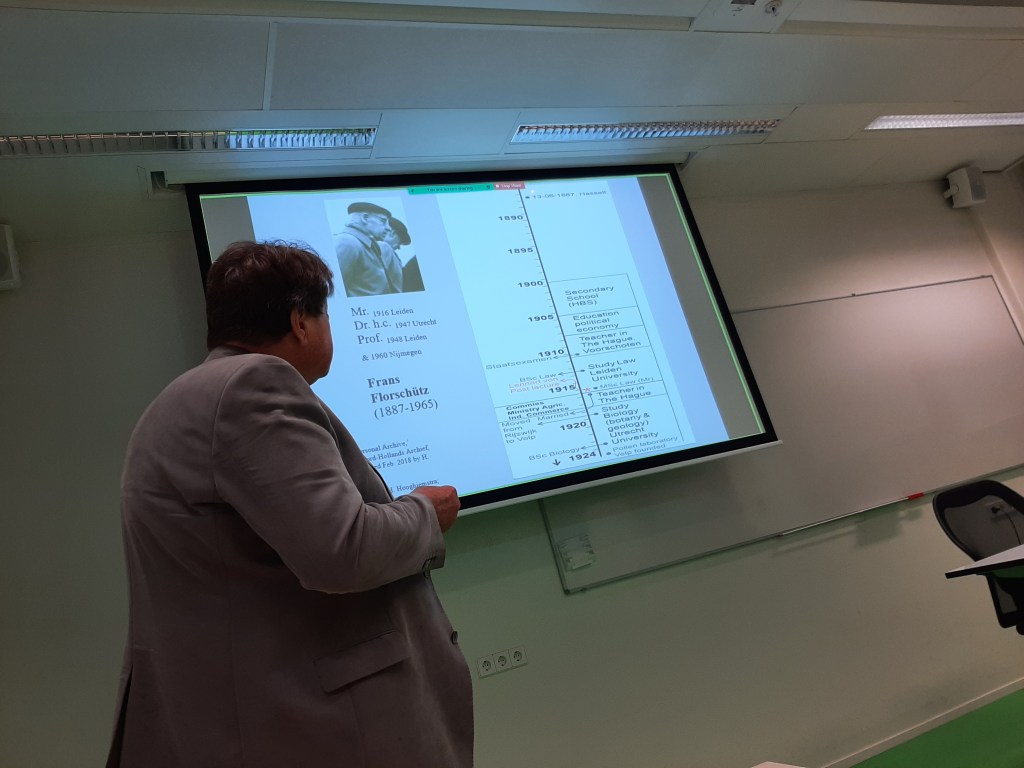
The meeting was opened by Prof. dr. Henry Hooghiemstra (University of Amsterdam) who focused on the “then” and presented a biopic of pioneering Dutch palynologist Frans Florschütz. Florschütz became one of the major figures in establishing palynology within the Netherlands during the 1900s. Originally, he studied political economy and law, but went on to become the Secretary to the Board of Governors of the Agricultural School in Wageningen. From his position in Wageningen Florschütz had a base to develop his interests in palynology and past environmental change. He started work on the seminar work “Nederland in Ijstijd” (The Netherlands in the Ice Age) in 1939 and it was published in 1950. During his career Florschütz also held positions at Utrecht University (obtaining his doctorate), University of Leiden (endowed chair, until 1958) and University of Nijmegen (post retirement). Click here for further information on Frans Florschütz visit.

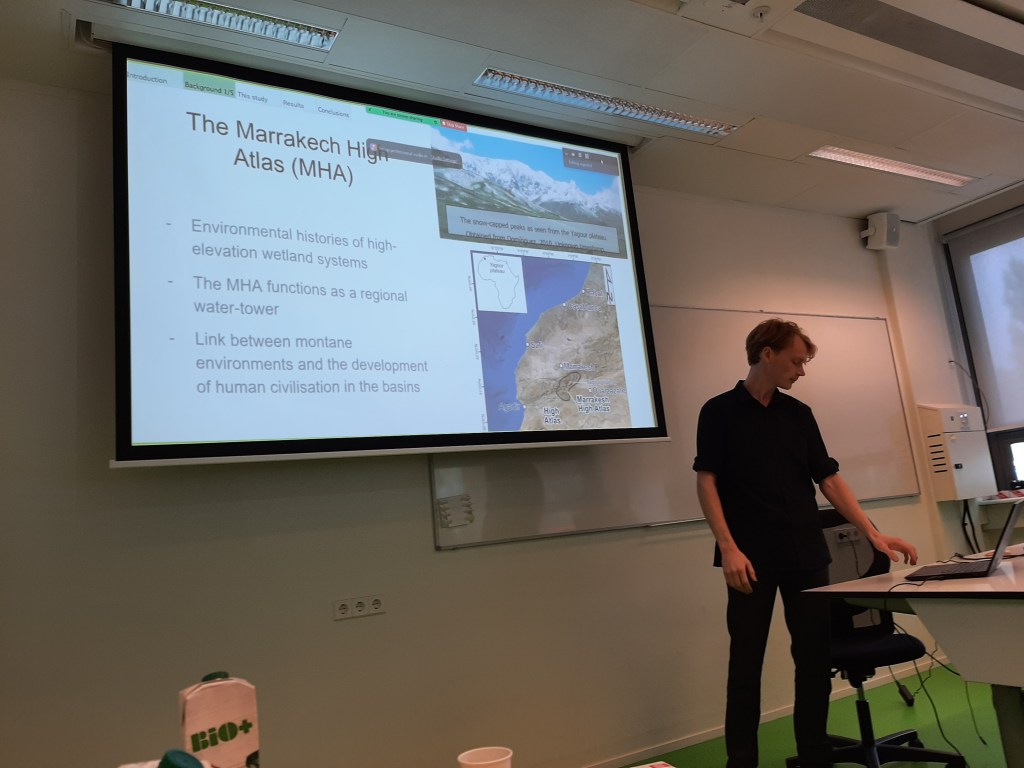
The second part of the meeting focused on the “now” with presentations form three Dutch researchers engaged in research abroad. First up with Eric de Boer (Universidad de Granada, Spain), then Thya van den Berg (University of Hull, UK), and finally Henk Cornelissen (University of Manchester, UK). Eric presented new data on the human and climate impacts on the Iberian Peninsula. Thya presented her work in two parts focused on the new datasets on past environmental change from Yorkshire (UK) and then the development of modelling approached to estimate landscape cover on the basis of pollen datasets. Henk took us to the high atlas of Morocco and showed how pollen and chemical data can be integrated to reveal past human presence and impacts.

The next scheduled event will be in the annual excursion which this year will be to Leiden. For further details and to find out more about the Palynologische Kring visit the web pages here.

Mapping Ancient Africa: Seminar 6

June 8, 2022
WDG

The sixth online Mapping Ancient Africa seminar will take place on Tuesday 21 June at 17:00 CEST

The seminar will be delivered via Zoom. The link for the seminar can be obtained from the MAA Slack page, or from seminar chair and chaired by Lynne Quick.

INQUAlogo

Past vegetation dynamics and their role in past climate changes

May 12, 2022
WDG

On behalf of Manu Chevalier, Anne Dallmeyer, Ulrike Herzschuh, Thomas Hickler, Yoshi Maezumi and Martin Claussen I would like to draw your attention to a special issue of Climate of the Past entitled: “Past vegetation dynamics and their role in past climate changes”. The call for papers for this special issue is now open (closing date: December 2024). See below for full details and how to submit.

Continue Reading

SKOPE

May 10, 2022
WDG

I would like to draw your attention to SKOPE (Synthesizing Knowledge of the Past Environments) project run by R. Kyle Bocinsky, Andrew Gillreath-Brown, Keith Kintigh, Ann Kinzig, Timothy A. Kohler, Allen Lee, Bertram Ludaescher, and Timothy McPhillips and funded by National Science Foundation (USA). They have just launched an online tool that allows the exploration of past environmental change data aimed at archaeologists, ecologists, historians, geographers and planners. Check out the details on their web site:

SKOPE Application Release Announcement

Blog at WordPress.com.