PoA35: Perspectives

December 24, 2021
WDG

The festive period blog post related to the recent volume of Palaeoecology of Africa (published entirely open access online) picks out the four Perspective articles. We included Perspective articles within the volume to place the volume in context and showcase some topical ideas, with the overall objective of stimulating further debate on past environmental change in Africa.

The opening two papers of the volume are both Perspectives. Louis Scott opens the volume with a short history of the Palaeoecology of Africa series. He sketches out the rich and varied history of the publication which, commenced in 1966 as a collection of eight reports (van Zinerden Bakker 1966), includes seven conference proceedings, and has been edited at various times by Eduard Meine van Zinerden Bakker, Joey Coetzee, Klaus Heine and currently Jürgen Runge. The second article, Lézine et al., tracks the rise and revival of the “African Pollen Database” (APD) from its formation in 1996, through to its decline in 2007, and up to its re-initiation in 2019 from which this volume of PoA has sprung. Personally, I think the huge enthusiasm shown to participate in this volume and to contributing to collaborative initiatives like the APD, demonstrate the strength of the field and can only bode well for future research.

The other two Perspective papers showcase nicely some of the motivation behind the enthusiasm for palaeoecological research. Lynne Quick focuses in on the hyper-diverse Cape Floristic Region of southern Africa and what records of past vegetation and climate change can tell us to reveal these origins and assist in the conservation and management of this ecological wonder today. The final perspective, by Lindsey Gillson, rounds off the volume by thinking more broadly about how palaeoecological research can be utilised in the development of conservation policy in Africa. She focuses particularly on how these records can provide insights into drivers of change in the past (climate, fire, and herbivory) and how this can then be used to guide conservation and enrich our understanding how the landscape we see in Africa today came to be.

To find out more download all the articles for free:

Continue Reading
Tenured Assistant Professorship: Climate-vegetation dynamics

December 23, 2021
WDG

We are seeking to recruit an experienced educator and researcher in the field of climate dynamics, linked to Earth system functioning and/or land-surface processes. The position will be tenured, subject to a positive evaluation of your performance during the initial 12-month temporary appointment.

Deadline: 31 January 2022

Find out more and apply:

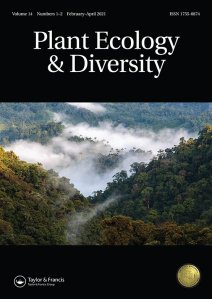
Scarce fire activity in north and north-western Amazonian forests during the last 10,000 years

December 20, 2021
WDG

#Openaccess #Teameffort

Gosling WD, Maezumi SY, Heijink BM, Nascimento MN, Raczka MF, van der Sande MT, Bush MB, McMichael CNH. 2021. Scarce fire activity in north and north-western Amazonian forests during the last 10,000 years. Plant Ecology & Diversity. DOI: 10.1080/17550874.2021.2008040

Mapping Ancient Africa: Video of seminar 2

December 16, 2021
WDG

The second in our series of seminars related to the Mapping Ancient Africa project took place on Monday 13 December. You can now watch the seminar given by Tyler Faith on the Ecology of the Past YouTube channel. Seminar details can be found here.

Rethinking the ecological drivers of hominin evolution

INQUAlogo

PoA 35: Research Articles

December 15, 2021
WDG

The second in my series highlighting papers in the recent volume of Palaeoecology of Africa (published entirely open access online) focuses on the research articles. The research articles make up the ‘guts’ of the volume, comprising 10 of the 24 papers. Three of these are from western Africa (Dinies et al.; Gosling et al.; Lemonnier & Lézine), two from eastern Africa (Githumbi et al.; Kinyanjui et al.), two from central Africa (Richards; Gaillard et al.), and three from southern Africa (Chevalier et al.; Hill & Finch, Hill et al.). These research articles present new data and key insights into past environmental change in Africa, which fall into two broad categories, providing information on: (i) how we can extract information from pollen data sets, and (ii) the processes operating to drive vegetation.

Continue Reading

Looking back to look forward

December 9, 2021
WDG

As a Subject Editor for Plant Ecology & Diversity I would like to take a moment to highlight two recent papers published under the theme “Global Change & Vegetation”.

The first Somoldi et al. takes us back to the roots of the concept of “Potential Natural Vegetation” (PNV) cover which has long been widely used and often debated in the literature. In their research article Somoldi et al. revisit the German text of the article that originally set out this idea (Tüxen 1956) and provide (re-) translated versions of key sections. The purpose of this is, the authors argue, to get a tighter definition and encourage a more precise usage of the term to avoid miss-use and miss-interpretation of the concept. They argue that the PNV concept is still a valid one despite the increasing human modification of landscapes and environments, but that its usage should be restricted more closely to the idea as it was originally formulated by Tüxon.

The second, Huntley & Allen, use palaeoecological data to test the hypothesis related to the expansion of pine woodlands during the Holocene (last 11,700 years) in Scotland. The examination of multiple sites in the Scottish Highlands reveals a dynamic mosaic landscape, and that the trajectory of change was influenced by climate, dispersal and preceding vegetation patterns. This new understanding of trajectories of change can help to anticipate how landscapes in the Scottish Highlands might alter under ongoing climate change.

References and links to the articles are below, please check out the journal for a wide range of articles related to Evolution & Systematics, Global Change & Vegetation Dynamics, Environment & Plant Functioning, Biotic Interactions and Biogeography. We accept articles on all these themes in standard “original research” format, shorter “rapid communications”, longer “reviews” and opinion related “perspectives”. Therefore, if you have a article that fits with these themes please consider submitting to Plant Ecology & Diversity.

Continue Reading

Mapping Ancient Africa: Seminar 2

December 6, 2021
WDG

Tyler Faith

The second of the online seminar series associated with the INQUA funded Mapping Ancient Africa (MAA) project will take place on Monday 13 December at 16:00 (CET).

The seminar will be given via Zoom. The link for the seminar can be obtained from the MAA Slack page, or from seminar chair and MAA hub coordinator Lynne Quick.

For further information on seminars in this series visit the MAA schedule page.

INQUAlogo

PoA 35: Data papers

December 2, 2021
WDG

The recently published volume of the Palaeoecology of Africa series contains a number of different types of papers: research articles, reviews, perspectives and data papers. One of the key reasons I was motivated to become involved in the project was to help mobilise palaeoecological data from Africa towards open access datasets (African Pollen Database, Neotoma). To hopefully get greater recognition to the great work done over the years and to help facilitate synthetic work that will provide a greater understanding of spatial variance in past climate change. Ultimately, four short data papers were included in the volume: an enhanced c. 16,000 year pollen record from the Bale Mountains in Ethiopia (Gil-Romera et al. 2021), two pollen and charcoal record from the southern Cape Coast in South Africa, c. 3200 and 650 years long respectively (du Plessis et al. 2021a; du Plessis et al. 2021b), and a c. 700 year long record from Madagascar (Razanatsoa et al. 2021). The records provide new insights in to landscape scale environmental change driven by both humans and climate. To find out more check out the open access articles and the data at:

Continue Reading

Mapping Ancient Africa: Seminar 1

November 29, 2021
WDG

Martin Trauth

The first of the online seminar series associated with the INQUA funded Mapping Ancient Africa (MAA) project will take place on Monday 6 December at 16:15 (CET).

The seminar will be given via Zoom. The link for the seminar can be obtained from the MAA slack page, or from seminar chair and MAA PI Stephanie Kaboth-Bahr.

For further information on seminars in this series visit the MAA schedule page.

INQUAlogo

Quaternary Vegetation Dynamics

November 17, 2021
WDG

Cover of "Quaternary Vegetation Dynamics: The African Pollen Database"

I am delighted to announce the publication of the new volume in the Palaeoecology of Africa series. I had the privilege to guest edit this with Anne-Marie Lézine and Louis Scott. The final version is now available OPEN ACCESS online.

Gosling, W.D., Lézine, A.-M. & Scott, L., eds. (2021) Quaternary Vegetation Dynamics: The African Pollen Database. Series editor: Runge, J. Palaeoecology of Africa: Volume 35. CRC Press. ISBN: 9780367755089 DOI: 10.1201/9781003162766

Download supporting online material here.

Blog at WordPress.com.