The annual PhD thesis prize from the Koninklijk Nederlandse Botanische Vereniging (Royal Dutch Botanical Association) is now open. The prize of EURO 5000 will be awarded to the best PhD thesis defended between January and December 2024 at a Dutch university. The subject matter of the thesis is broadly defined within the field of botany, and includs topics such as taxonomy, (palaeo- / macro-) ecology, and cell biology.
The aim of this thesis was to provide insight into past human activities in Amazonia, and the long-term forest recovery that followed, using phytolith analysis. The first part of this thesis focused on improving phytolith analysis as a proxy for vegetation changes in Amazonia. The morphological variation of 24 Amazonian palm phytoliths were assessed (Chapter 2) to improve the taxonomic resolution of palm phytolith identification, and results indicate the potential to differentiate Euterpe, Bactris, Oenocarpus, Attalea, Iriartea deltoidea, and Socratea exorrhiza. Chapter 3 demonstrated that phytolith assemblages (from terrestrial soil cores) varied across a gradient of (modern) human disturbance in Surinamese rainforests. In Chapters 4-6, we developed beta regression and GLM models to predict forest cover and biomass changes within 200 m and 1 km of Amazonian lakes, respectively, using grass phytoliths. Applying these innovations in Chapters 5-6 demonstrated that past human activities were on localized scales in Suriname and temporally heterogenous in Ecuador. Palm enrichment of Attalea, Oenocarpus and Astrocaryum occurred within 0 km, 1 km, and 8 km of an archaeological site in Suriname (Chapter 5). In Ecuador, forest cover and biomass ranged between 48-84% and 77-247 Mg/ha, respectively, and the largest decreases (between 1000-1255 CE) were paired with fires (Chapter 6). Overall, the type, intensity, timing, and frequency of disturbances are important factors influencing long-term forest recovery and ecological legacies in Amazonia.
Witteveen, N.H., Kleijwegt, Z.S., Geara, H., Kool, C., Blaus, A., Saenz, L.C., Gomes, B.T., Philip, A., Bush, M.B. & McMichael, C.N.H. (2024) Quantifying past forest cover and biomass changes in the Ecuadorian Amazon. New Phytologist. DOI: 10.1111/nph.20237
This paper is the latest to come from the PhD thesis of Nina Witteveen who defended at the University of Amsterdam earlier in 2024. To find out more about Nina’s PhD click here.
Ivory, S.J., MacDougal, E., Mason, A., Pereboom, E., Garelick, S., Ficken, K., Wooller, M.J., Nakileza, B. & Russell, J. (2024) Highland forest dynamics across equatorial East Africa during the end of the African humid period. Quaternary International. DOI: 10.1016/j.quaint.2024.10.007
Wei, C., Li, M., Mao, L., Mander, L., Jardine, P.E., Gosling, W.D. & Hoorn, C. (2024) A 23-million-year record of morphological evolution within Neotropical grass pollen. New Phytologist. DOI: 10.1111/nph.20214
This paper is the latest to come from the PhD thesis of Caixia Wei who defended at the University of Amsterdam earlier in 2024. To find out more about Caixia’s work click here.
Zuccarelli Freire, V.N., Ziegler, M.J., Caetano-Andrade, V., Iminjili, V., Lellau, R., Rudd, R., Stokes, F., Viegas, D.H., Antonosyan, M. & Jha, D.K. Addressing the Anthropocene from the Global South: Integrating Paleoecology, Archaeology and Traditional Knowledge for COP Engagement. Frontiers in Earth Science 12, 1470577. DOI: 10.3389/feart.2024.1470577
I am Rebecca Lellau, a PhD candidate at the Max Planck Institute of Geoanthropology (MPI-GEA) supervised by Dr. S. Yoshi Maezumi (https://www.shh.mpg.de/person/123125/2164017) and Professor Will D. Gosling. For my work I will use geochemical, palynological and charcoal proxy data from sediment cores from Curaçao to examine the long-term human-environment interactions.
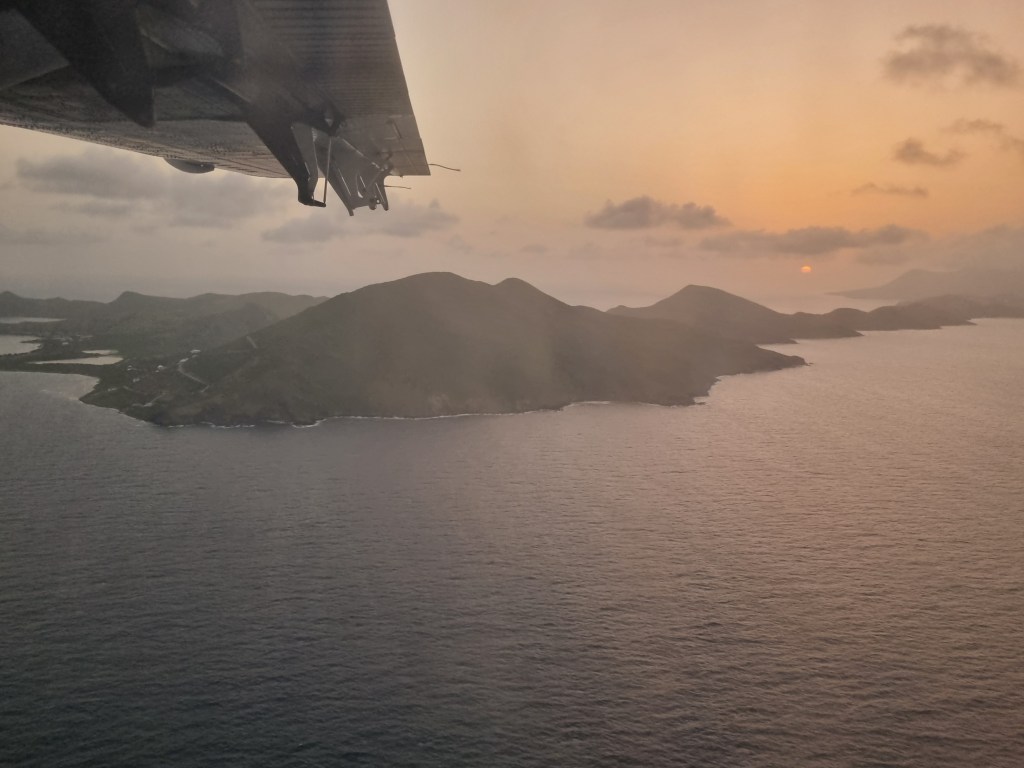
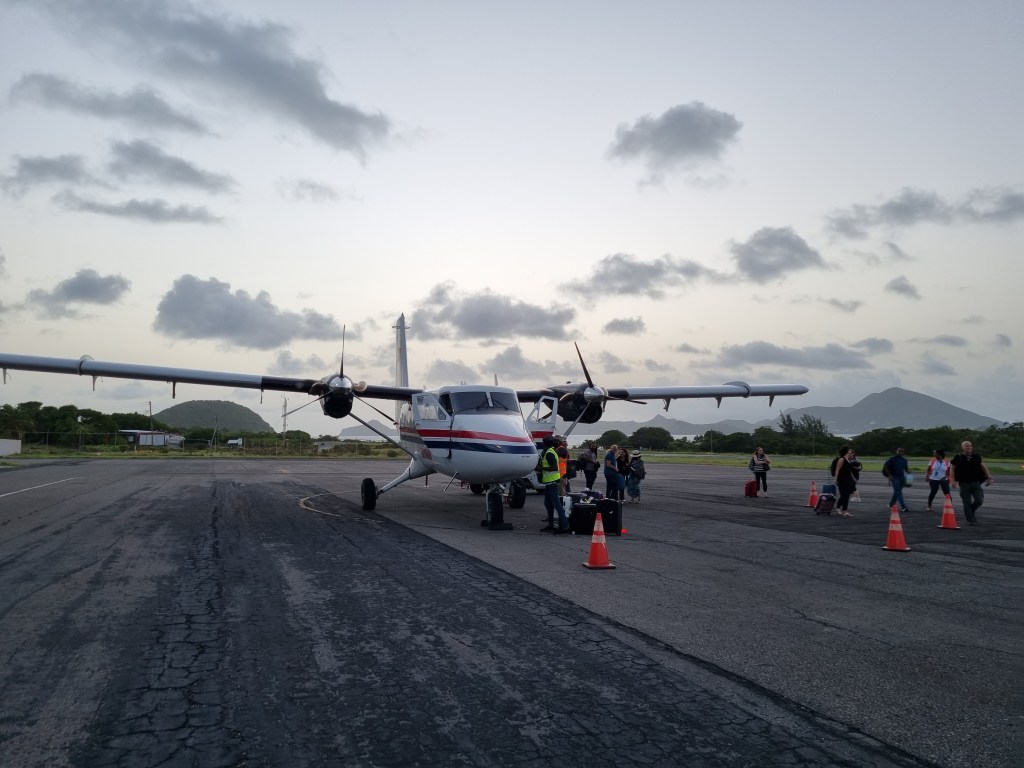
In this blog post, I would like to share with you my first trip to a conference abroad – the International Association for Caribbean Archaeology (IACA) congress, which was also my first stay in the Caribbean in general.
During the seminar afternoon (17 October) we heard four talks. The first from Harm Smeenge and Ariët Kieskamp (both Bosgroep) introduced the sites we were to visit on the excursion the next day. This focused on the landscape ecology and ecological history of the bogs on the eastern slopes of the Veluwe. The second talk, by Roy van Beek (Wageningen University & Research), focused on the Celtic field systems around the Veluwe. He explained the latest archaeological and archaeobotaincal work investigating the age and origins of these field systems. The third presentation was by Jasper Candel (Wageningen University & Research) and focused on the geomorphological features from glacial activity in the Veluwe region and how this has effected the development of mire ecosystems. I (William Gosling) gave the final talk, presenting the outputs of the research theses of Sanna Wessel, Chiara Raino and Roos Dik who all completed projects at the University of Amsterdam and worked together to investigate how different mega-herbivore populations in the Dutch landscape were represented by the dung fungal spores preserved in the soil.
INQUA fellow Alfred Hougnon continues his research into past environmental change in the Dahomey Gap (Benin). In the fourth video documenting his progress a short background to the project, and insights into field work, are given. Field work took place near the Ewe-Adakplame forest in the south east of Benin and involved the recovery of sediments using a Russian corer. The video also shows how interactions and engagement with the local community was developed during the research expedition.
To find out more above Alfreds project read posts on:









 Ecology of the past