Hugo de Vries Prijs winner!

June 18, 2025
WDG

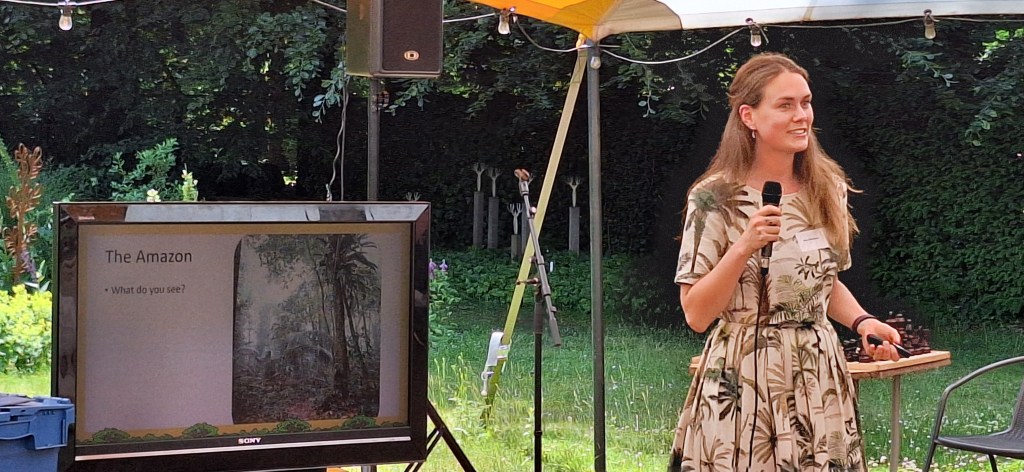
Ecology of the Past blog contributor Nina Witteveen was awarded the Hugo de Vries prize on 13 June 2025 at the Botanic Gardens in Nijmegen. The Hugo de Vries prize is awarded by the KNbv (Royal Dutch Botanical Society) and the Stichting Hugo de Vries fonds (Hugo de Vries foundation) for the best PhD thesis in Botany defended at a Dutch University. This years prize was awarded to Nina for her thesis “Long-term Forest Recovery in Amazonia: Insights from Phytolith Analysis” (University of Amsterdam) which was completed under the supervision of Crystal McMichael.

After much debate the jury decided to award two first prizes this year, with the other prize also going to a tropical PhD thesis. That of Tomonari Matsuo for his thesis “Drivers and mechanisms of tropical secondary forest succession” (Wageningen University & Research).

To find out more about the prize and how to submit a thesis for the award visit: https://www.knbv.eu/hugo-de-vries-prijs/

Follow Nina’s journey into tropical palaeoecology through her blog posts here: https://ecologyofthepast.info/?s=nina+witteveen

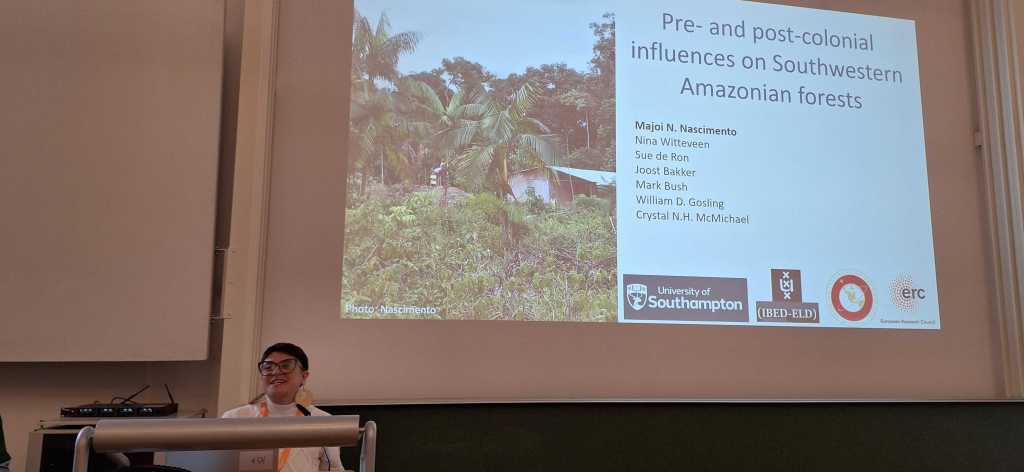
Nina presenting here PhD thesis at the prize giving of the Hugo de Vries award 2025!

Time for topical ecology

March 14, 2025
WDG

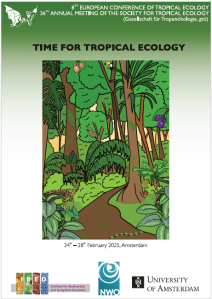
8th European Conference of Tropical Ecology

36th Annual Meeting of the Society for Tropical Ecology

24-28 February 2025, Amsterdam

The 8th European Conference of Tropical Ecology took place in Amsterdam (The Netherlands) from 24 to 28 February 2025. This meeting was organized for the Society for Tropical Ecology. The event was hosted by the Institute for Biodiversity & Ecosystem Dynamics (University of Amsterdam), held at Hotel Casa, and the main sponsor was the NWO (Dutch Science Foundation).

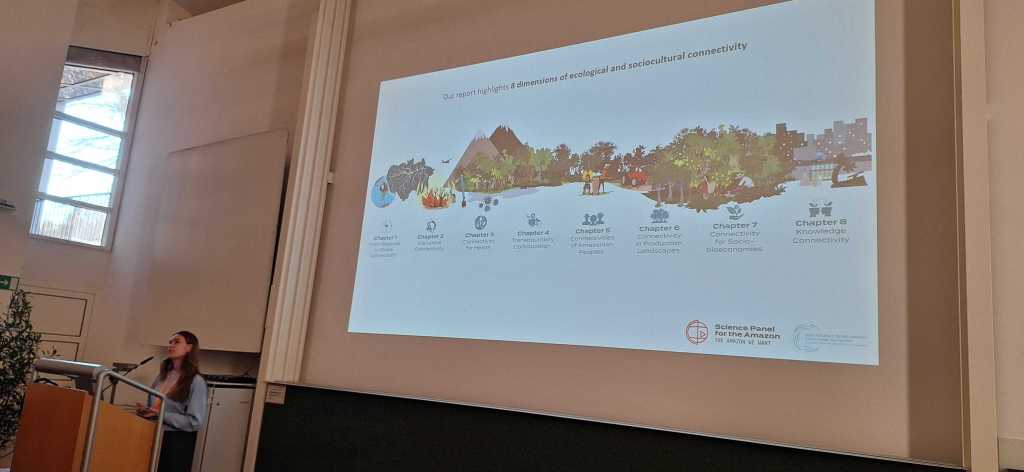
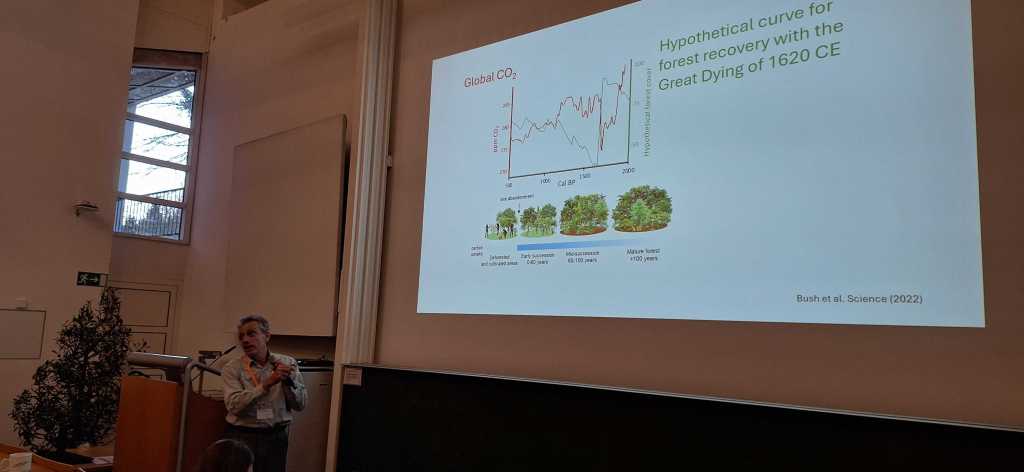
During the conference around 250 scientists delivered 150 oral and 69 poster presentations. The science spanned the full breadth of tropical ecology, ranging from interactions of coral dwelling crabs, through carbon cycling dynamics in forests, to the governance of hunting activity. The six keynote speakers were paired under three topics “Human legacies in the tropics”, “Tropical ecosystem dynamics”, and “Protecting tropical ecosystems”. Within each topic we invited a senior scientist and a ‘rising star’ to provide their perspective on a particularly hot-button issue. If you want to find out more about what was presented all the abstracts are now published, open access, in the Society for Tropical Ecology’s journal Ecotropica.

Abstract booklet

Open access:
Gosling, W.D. & McMichael, C.N.H., eds. (2025) Time for tropical ecology: Abstracts of the 8th European Conference of Tropical Ecology, Amsterdam, The Netherlands; 24.-28.2.2025. The Society for Tropical Ecology, Ecotropica, 26 (1-2): 1-222. https://doi.org/10.30427/ECOTROP202501

International Association for Caribbean Archaeology (IACA), 30th bi-annual Congress

October 27, 2024
luminousking7dc3963c1f

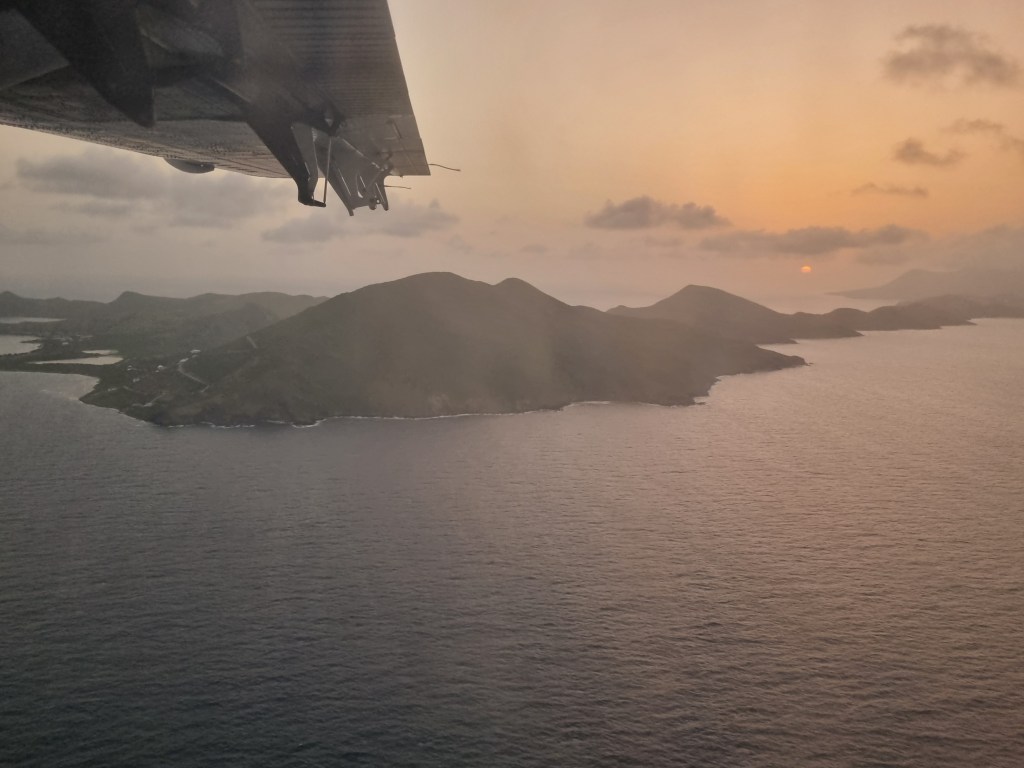
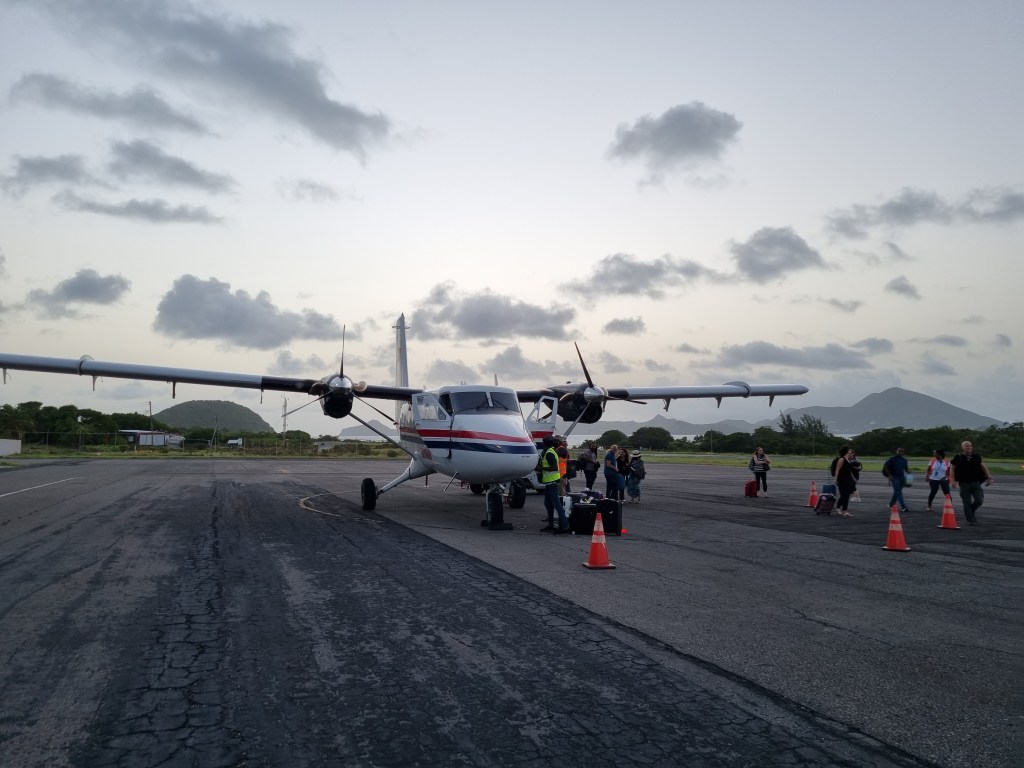
13.-17. August 2024, Nevis 

Hello everyone, 

I am Rebecca Lellau, a PhD candidate at the Max Planck Institute of Geoanthropology (MPI-GEA) supervised by Dr. S. Yoshi Maezumi (https://www.shh.mpg.de/person/123125/2164017) and Professor Will D. Gosling. For my work I will use geochemical, palynological and charcoal proxy data from sediment cores from Curaçao to examine the long-term human-environment interactions. 

In this blog post, I would like to share with you my first trip to a conference abroad – the International Association for Caribbean Archaeology (IACA) congress, which was also my first stay in the Caribbean in general. 

Continue Reading

Past environments of the Veluwe

October 20, 2024
WDG

On the 17 and 18 October 2024 the Palynologische Kring (Dutch Palynological Society) held a seminar afternoon and excursion near Apeldoorn in the Netherlands.

During the seminar afternoon (17 October) we heard four talks. The first from Harm Smeenge and Ariët Kieskamp (both Bosgroep) introduced the sites we were to visit on the excursion the next day. This focused on the landscape ecology and ecological history of the bogs on the eastern slopes of the Veluwe. The second talk, by Roy van Beek (Wageningen University & Research), focused on the Celtic field systems around the Veluwe. He explained the latest archaeological and archaeobotaincal work investigating the age and origins of these field systems. The third presentation was by Jasper Candel (Wageningen University & Research) and focused on the geomorphological features from glacial activity in the Veluwe region and how this has effected the development of mire ecosystems. I (William Gosling) gave the final talk, presenting the outputs of the research theses of Sanna Wessel, Chiara Raino and Roos Dik who all completed projects at the University of Amsterdam and worked together to investigate how different mega-herbivore populations in the Dutch landscape were represented by the dung fungal spores preserved in the soil.

Continue Reading

Mapping Ancient Africa: Scientists

August 14, 2024
WDG

During the Mapping Ancient Africa writing workshop in Kenya (3-6 June 2024) Stefanie Kaboth-Bahr conducted a series of short interviews with the scientists attending. In this, final, instalment of the interviews the thoughts of the instructors on the course are presented. Watch all the Mapping Ancient Africa videos on the Mapping Ancient Africa YouTube Playlist.

The instructors

Bruk Lemma (Free University of Berlin, Germany)

Rahab Kinyanjui (National Museums of Kenya, Kenya & Max Plank Institute for Geoanthropology, Germany)

Continue Reading

Mapping Ancient Africa: Scientists

August 13, 2024
WDG

During the Mapping Ancient Africa writing workshop in Kenya (3-6 June 2024) Stefanie Kaboth-Bahr conducted a series of short interviews with the scientists attending. Below you can find part 2 (of 2) of the interviews with the participants in the workshop. Watch the videos to find out their scientific stories and top tips for academic writing. Watch all the Mapping Ancient Africa videos on the Mapping Ancient Africa YouTube Playlist.

The participants (part 2 of 2)

Ruth Kiely (University of Amsterdam, Netherlands)

Husna Mashaka (Arizona State University, USA & National Museums of Kenya, Kenya)

Continue Reading

Mapping Ancient Africa: Scientists

August 12, 2024
WDG

During the Mapping Ancient Africa writing workshop in Kenya (3-6 June 2024) Stefanie Kaboth-Bahr conducted a series of short interviews with the scientists attending. During the interviews she asked the participants and instructors to describe their scientific background, what had motivated them to take part in the writing workshop, and what they thought the most important thing they had gained from it. You can now meet the first four of these scientists now by watching the videos below, or catch up with all the latest videos on the Mapping Ancient Africa YouTube Playlist.

The participants (part 1 of 2)

Olugbenga Boboye (University of Ibadan, Nigeria)

Angela Effiom (University of the Witwatersrand, South Africa)

Continue Reading

SASQUA conference

June 6, 2024
WDG

South African research trip (part 1 of 3)

By Jelle Kraak

As part of my MSc Biological Sciences (University of Amsterdam) research project entitled “Assessing the effect of human induced fire regime changes on vegetation in the Drakensberg mountains” (for further details click to see previous post). I’ve travelled to Africa, where I’ll be staying a month. During this mini blogpost series I’ll take you with me on my travels! 

In the first week of my visit here, I along with my supervisor Prof. Trevor Hill and students from the University of Kwa-Zulu Natal went to visit the biennial SASQUA (Southern African Society for Quaternary Research) congress.

During the first poster session, I presented my poster which went into detail on how we are developing a proxy to reconstruct past fire using micro-Fourier Transformed Infrared Spectroscopy (µFTIR). These reconstructed fire temperatures can then be compared with phytolith or pollen data to assess the effects of different fire temperatures on local vegetation over time. The presentation and poster were well received!

After my poster presentation there were two more congress days which were filled with interesting talks and beautiful posters.

Continue Reading

Mapping Ancient Africa: Writing workshop

June 5, 2024
WDG

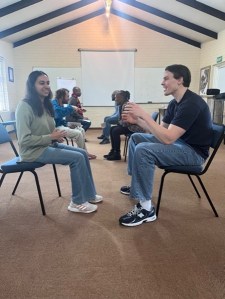
The Mapping Ancient Africa (MAA) writing workshop is currently in full swing in Kenya. Running from 3 June until the 6 June 2024 a diverse range of skills related to academic publishing is being delivered by our international team, including: structuring a scientific article, managing references and revision strategies. There is also plenty of time set aside for writing and getting feedback from more experienced academic writers. The manuscripts being developed at the workshop are being designed to be submitted to the MAA special issue of Quaternary International.

Scientific writing in action:

Continue Reading

Phytoliths, starch grains and diatoms

May 29, 2024
WDG

Caroline Goossens receives the Florschütz Award.

On Friday 24 May 2024 the Palynologische Kring (Dutch palynological society) held a seminar series and laboratory workshop at the Institute for Biodiversity & Ecosystem Dynamics (University of Amsterdam). During the afternoon we had the annual meeting of the society, the presentation of our MSc Thesis prize, four seminars and two laboratory demonstrations. The MSc thesis prize “Florschütz Award” was won by Caroline Goossens (VU Amsterdam) for her thesis entitle: “An Eemian-Early Weichselian sequence in the Amersfoort Basin, the Netherlands”; the project was supervised by Natalie Van der Putten, Cees Kasse and Jeroen Schokker. We hope that Caroline will present her thesis at a future Palynologishe Kring meeting.

Teye Aukes presenting on the diatoms of ancient Rome

The talk series was kicked off by Nina Witteveen (University of Amsterdam) who presented part of her PhD thesis (currently awaiting defense), entitled: “Long-term forest recovery in Amazonia insights from phytolith analysis”. Nina discussed the impact of past peoples on the vegetation of Suriname based on her work identifying phytoliths in soil samples collected at varying distances from an archaeological site. The second talk was given my Amanda Henry (Leiden University) who demonstrated how the analysis of starch grains extracted from archaeological context can provide insights in to past diets. She used these evidences to suggest that early humans and Neanderthals had a similar diversity of plants in their diets. The third talk was given by University of Amsterdam MSc researcher Teye Aukes and focused upon his identification of diatoms from an swampy lagoon environment near Ostia (Italy). He drew conclusions from these data about the antiquity of salt production in ancient Rome. The final talk was given online by Welmoed Out (Moesgaard Museum) who presented a detailed analysis of inter- and intra-analyst variability in phytolith morphometric analysis.

After the seminars we moved upstairs to the microscope laboratory where Nina Witteveen and Ana Smuk (University of Groningen) showed off phytoliths from their study site in South America and the Netherlands.

Some of the Palynologische Kring members enjoying some refreshment after the event.
Blog at WordPress.com.