An early start at 06:00 this morning to get to Kogyae with sufficient time to collect and deploy all traps across three sites (30 traps in total) and return to FORIG within a single day. We arrived on site at around 10:30, and after some deliberations as to which guide knew exactly where the plots we needed to reach, we were on our way to the first site.
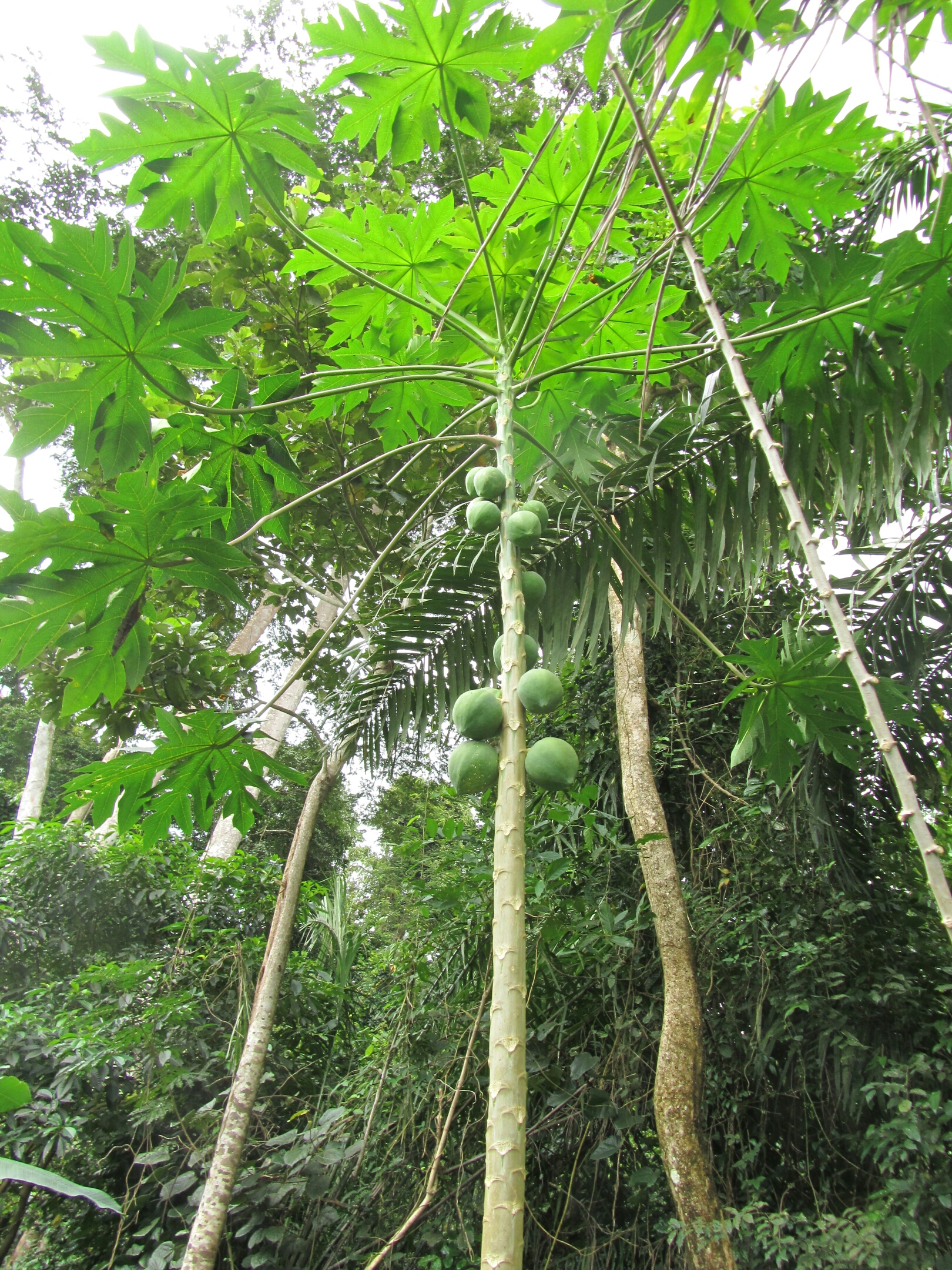
The first site was the savannah plot, with a wide open canopy and grasses above head height. Immediately the difference to the forest at Bobiri was striking (image below). All 10 traps deployed here last year were successfully located, retreived and replaced with fresh traps.
The next stop was the transition plot at Kogyae, representing a mid-point between savannah and forest habitat. Again, all 10 traps were easily located, retreived, and redployed (Image below). The grass here was noticeably shorter in height…
A fairly quiet day today back at base in FORIG. Collating field data collected during yesterdays trip to Bobiri, tidying up the collected pollen traps, and preparing kit and equipment for tomorrows trip to Kogyae. We also need to pack some supplies and clothing etc because we may need to stay overnight somewhere nearby to the field site – it is an 3 hour drive from FORIG in Fumesua, so may not be able to travel there and back in a single day. The option of staying at the field station at Kogyae is not available because a group from Oxford University who are also out here are running a 10 day campaign at Kogyae this week, so the camp is full to the brim.
Today we visited the field sites at Bobiri butterfly and nature reserve. In total we collected and redeployed 20 pollen traps; 10 at each of two separate sites (SNR and 50-year logged).
It was great to get a feel for the first of the sites on this project, and helps put the analytical results into context. These forests really are an exciting habitat to explore.
Day three of the fieldwork campaign saw us form a production line of pollen trap making: Lottie = chief sealant operator and cotton stuffer; Adele = Cap trimmed and fitter; Wes = Noose cuter and net trimmer. In total ro traps were manufactured in just one day.We rewarded ourselves with dinner out at the local hotel, watched a game of football on TV, and a beer – all in all, a pretty good day!
The second day of our fieldwork saw us; transfer from Accra to Fumesua where FORIG is located (approximately 20 km south of Kumasi); meet up with FORIGs deputy director Dr Stephen Adu-Bredu to discuss fieldwork and outreach plans; and settle in to FORIG for the next two weeks.
The next two days will involve building pollen traps ready for deployment next and finalising the detailed day-to-day plan of work.
The latest round of fieldwork in Ghana is underway. Adele and myself are travelling out to collect pollen traps deployed last year as part of Adeles PhD research. We will be revisiting the sites in Ankasa, Bobiri and Kogyae that Adele and Phil visited last year. This time we are also accompanied by Lottie who will be delivering workshops on outreach activity engagement and the palaeoecology represented in the sediment record of Lake Bosumtwi.
Flying into land at Accra in the twilight we passed over a storm cell, with some fantastic convective clouds illuminated by flashes of lightning within. Once out of the airport, we were taken through the hustle and bustle of Accra streets, alive with evening activity. Finally reaching our destination for the night, the FORIG guesthouse. All three members of our party readily made for bed to get a good nights sleep before tomorrows journey to Kumasi.
Students examining a sediment core extracted with a Russian corer
Last week, Will – our new associate professor at the University of Amsterdam – joined us on the field residential module of the undergraduate “Paleoecology” course; 7 days exploring the sediments and vegetation of the Twente region of the Netherlands. The experience provided Will with a lot of information on Dutch language, landscapes, and students; which should be useful to him next year as he will be coordinating the course!
Students examining peat exposures.
During this very intensive (4-week) paleoecology course, students get background lectures in past environmental change, learn to identify microfossils in the laboratory (pollen and chironomids), and go on the excursion to experience fieldwork. The field module involves excursions during the day, when students have to identify plant species indicative of different vegetation types in relation to soil nutrient availability and moisture content. The evenings are reserved for the students own paleoecological research investigation; this year students were reconstructing the vegetation history and climate change during the late-glacial from a lake sediment core from Germany. Once data collection was completed the students had to interpret the pollen assemblages they found using the knowledge of modern day ecosystems they gained throughout the week. On the final evening they presented their work to the whole group. The final results they achieved were quite impressive.
Students presenting findings from the days work
I am very curious as to what the course will be like next year, led by Will, and how he will tweak and turn it to his liking.
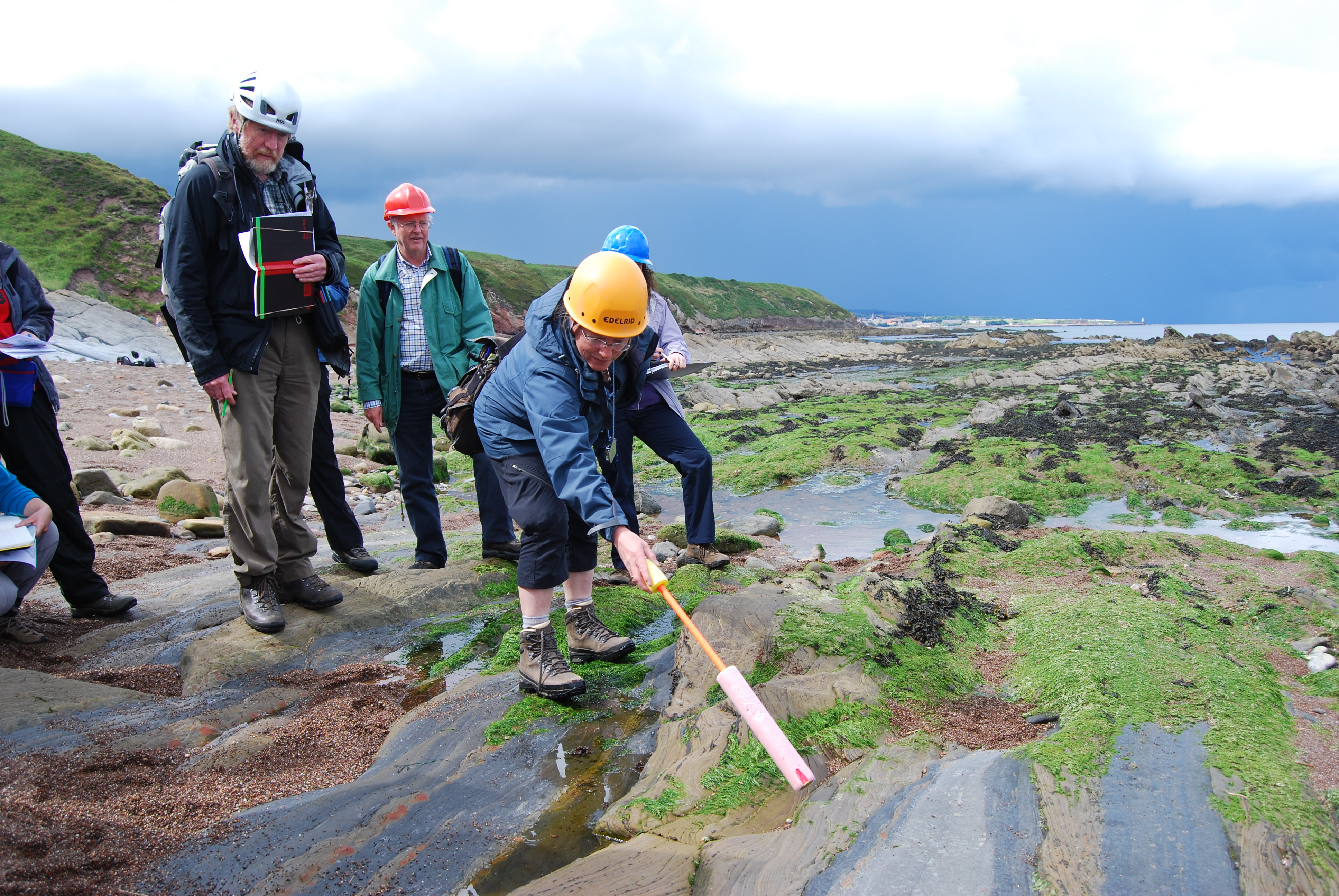
My final teaching job for The Open University was to help deliver the “Sedimentary Rocks & Fossils in the Field” section of the Level 2 Practical Science module (SXG288) offered by the Science Faculty. I have been involved in all three presentations of this section of the SXG288 module, which will now cease to be offered, and a number of other Earth and environmental science residential schools over the last 9 years.
Having the opportunity to engage directly with students and enthuse them face-to-face about the subject I specialise in is a privilege I have gained a lot from. Furthermore, my over-riding impression from the students I have taught is that they feel they benefit greatly from the opportunity to explore first hand the concepts and subjects which they have previously studied in books and online. Based on my experiences on “Sedimentary Rocks and Fossils”, and other modules as both a tutor and a student, I am convinced that to effectively teach geological, geographical, environmental and ecological subjects effectively an element of field-based teaching is required.
Last week I went to the University of Nottingham for the third BES Macroecology Special Interest Group annual meeting. Macroecology concerns itself with ecological patterns and processes at large spatial and/or temporal scales, and so is a natural place to link palaeoecological research with that of modern ecologists and biogeographers. The conference took place over two days, and comprised a mix of 5 minute lightning talks, longer invited talks (including two keynotes by Catherine Graham of Stony Brook University, New York) and discussion sessions.
The lightning talks covered a wide range of subjects, including maximising phylogenetic diversity in the Kew Seed Bank, outstanding problems with species distribution modelling, morphological variability in Madagascan tenrecs, and latitudinal gradients in pollination mechanism. The breakout discussion groups focused on questions inspired by Edge.org, such as ‘Which ecological concepts are ready for retirement?’ and ‘What should worry macroecologists most?’; I led a group discussing ‘Should macroecology be more interdisciplinary?’ (yes, but with caution was our rather non-committal answer).
There are plans to hold next year’s Macroecology SIG meeting at the Centre for Macroecology, Evolution and Climate (CMEC) at the University of Copenhagen, and I’d like to encourage palaeoecologists to consider attending. Chatting to the delegates at the Nottingham meeting, there certainly is a growing interest in ecological change over longer timescales and the role of history in shaping modern biotas, and so palaeoecologists have a lot to offer to these sorts of research areas. Copenhagen’s got to be a nice place for a conference as well…




 Ecology of the past