This week I will give a lecture on the University of Amsterdam, Institute for Interdisciplinary Studies, BSc Big History course. This course sets out with the large ambition of covering “How the histories of the cosmos, life, Earth and human societies influence each other and shape important aspects of the world together?” The small component of this that I am involved in relates to the understanding of past environmental change and how humans have shaped the landscapes we see around us today.
Related to the topic of past environmental change Prof. Henry Hooghiemstra (University of Amsterdam), and the Big History team, have produced a short video “How are civilizations influenced by climate change?”. In this video a introduction to how we can obtain information on past environmental change from the sedimentary record is given, and examples of changing landscapes and cultures in the Netherlands and Mexico are discussed.
You can find more Big History content in the University of Amsterdam Big History MOOC (Massive Online Open Content) by clicking here.
Mapping Ancient Africa Quaternary International special issue article #4
#openaccess
Boisard, S., Wren, C.D., Timbrell, L. & Burke, A. (2025) Climate frameworks for the Middle Stone Age and Later Stone Age in Northwest Africa. Quaternary International 716, 109593. DOI: 10.1016/j.quaint.2024.109593
To find the complete list of articles in the Mapping Ancient Africa special issue of Quaternary International click here.
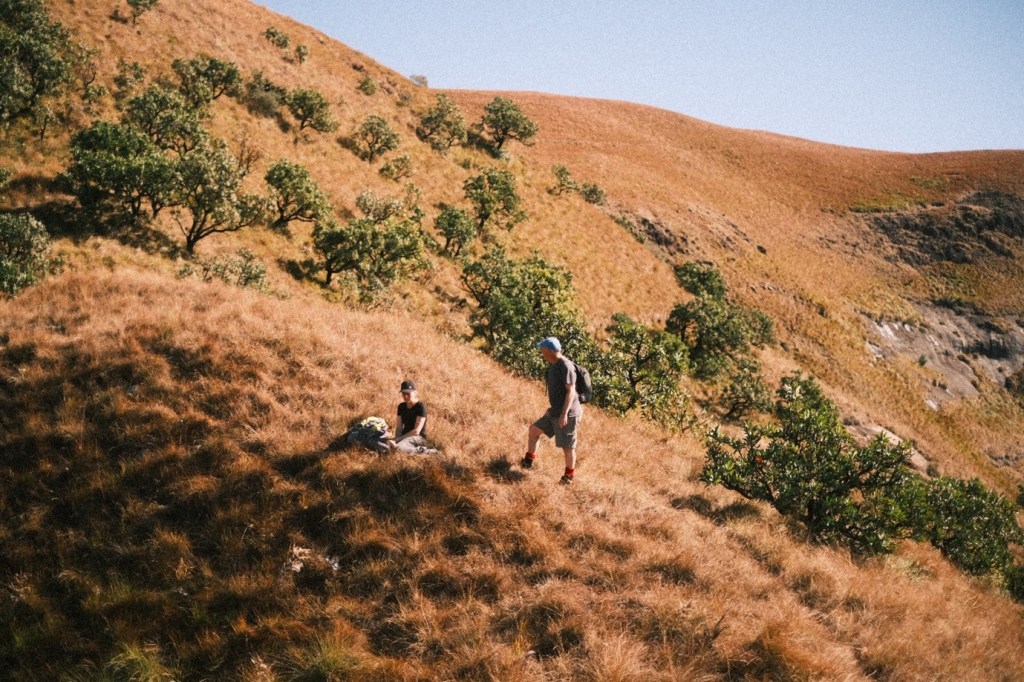
As part of my MSc Biological Sciences research project at the University of Amsterdam I travelled to Africa, where I first presented the early findings of my research at the SASQUA congress (blog post 1) in Oudtshoorn (Western cape), before heading to the University of Kwa-Zulu Natal (blog post 2). Here I met up with local experts and prepared for the upcoming fieldwork, which the previous parts of this blog series covered. Now, the time has come for the final and best part, about my fieldwork in the absolutely gorgeous Drakensberg mountains.
Aims: As the samples for my research had already been collected earlier by my supervisors Prof. Dr. Jemma Finch & Prof. Dr. Trevor Hill for the University of Kwa-Zulu Natal, our initial goal was to collect various samples (charcoal, sediment cores, etc) for the next students. During my time at the university of Kwa-Zulu natal, however, we realized that it would be great to collect a bunch of C3 and C4 grass species, to extract phytoliths (amorphous silica particles formed in plant tissues) from, which would help with the interpretation of our data. This then became our new focus. To achieve this goal we visited the Drakensberg twice, one day trip in the weekend, and one trip with an overnight stay.
Day 1
After a night of utterly terrible sleep (I was alone on the AirBnB property, the gate did not lock due to the cold, and our dogs started barking at something (someone!?) at 2AM), I woke up at 6AM to get ready for the long day ahead of us. Jemma came to pick me up at the, bringing coffee with her, which I really appreciated. We then picked up Trevor at their place and began our drive towards the mountains. I had not seen much of the landscape in the Kwa-Zulu Natal province, which turned out to be very compared to the Western Cape. Whereas the western cape had fynbos vegetation (very similar to the Mediterranean, KZN was more savanna like. There was grass everywhere the eye could see, except for the patches of spruce, planted by humans. Halfway through the drive the Drakensberg mountains came into view, which was stunning. We then drove through some small villages, until we finally arrived at the Berg.
Costanzo, S., Zerboni, A., Cremaschi, M. & Usai, D. (2025) Mapping Early Holocene to contemporary surface processes and human landscapes west of the lower White Nile (central Sudan). Quaternary International 715, 109592. https://doi.org/10.1016/j.quaint.2024.109592
To find the complete list of articles in the Mapping Ancient Africa special issue of Quaternary International click here.
The annual PhD thesis prize from the Koninklijk Nederlandse Botanische Vereniging (Royal Dutch Botanical Association) is now open. The prize of EURO 5000 will be awarded to the best PhD thesis defended between January and December 2024 at a Dutch university. The subject matter of the thesis is broadly defined within the field of botany, and includs topics such as taxonomy, (palaeo- / macro-) ecology, and cell biology.
The aim of this thesis was to provide insight into past human activities in Amazonia, and the long-term forest recovery that followed, using phytolith analysis. The first part of this thesis focused on improving phytolith analysis as a proxy for vegetation changes in Amazonia. The morphological variation of 24 Amazonian palm phytoliths were assessed (Chapter 2) to improve the taxonomic resolution of palm phytolith identification, and results indicate the potential to differentiate Euterpe, Bactris, Oenocarpus, Attalea, Iriartea deltoidea, and Socratea exorrhiza. Chapter 3 demonstrated that phytolith assemblages (from terrestrial soil cores) varied across a gradient of (modern) human disturbance in Surinamese rainforests. In Chapters 4-6, we developed beta regression and GLM models to predict forest cover and biomass changes within 200 m and 1 km of Amazonian lakes, respectively, using grass phytoliths. Applying these innovations in Chapters 5-6 demonstrated that past human activities were on localized scales in Suriname and temporally heterogenous in Ecuador. Palm enrichment of Attalea, Oenocarpus and Astrocaryum occurred within 0 km, 1 km, and 8 km of an archaeological site in Suriname (Chapter 5). In Ecuador, forest cover and biomass ranged between 48-84% and 77-247 Mg/ha, respectively, and the largest decreases (between 1000-1255 CE) were paired with fires (Chapter 6). Overall, the type, intensity, timing, and frequency of disturbances are important factors influencing long-term forest recovery and ecological legacies in Amazonia.
Witteveen, N.H., Kleijwegt, Z.S., Geara, H., Kool, C., Blaus, A., Saenz, L.C., Gomes, B.T., Philip, A., Bush, M.B. & McMichael, C.N.H. (2024) Quantifying past forest cover and biomass changes in the Ecuadorian Amazon. New Phytologist. DOI: 10.1111/nph.20237
This paper is the latest to come from the PhD thesis of Nina Witteveen who defended at the University of Amsterdam earlier in 2024. To find out more about Nina’s PhD click here.
Ivory, S.J., MacDougal, E., Mason, A., Pereboom, E., Garelick, S., Ficken, K., Wooller, M.J., Nakileza, B. & Russell, J. (2024) Highland forest dynamics across equatorial East Africa during the end of the African humid period. Quaternary International. DOI: 10.1016/j.quaint.2024.10.007
Wei, C., Li, M., Mao, L., Mander, L., Jardine, P.E., Gosling, W.D. & Hoorn, C. (2024) A 23-million-year record of morphological evolution within Neotropical grass pollen. New Phytologist. DOI: 10.1111/nph.20214
This paper is the latest to come from the PhD thesis of Caixia Wei who defended at the University of Amsterdam earlier in 2024. To find out more about Caixia’s work click here.









 Ecology of the past