Introducing Nina Witteveen

April 6, 2018
WDG

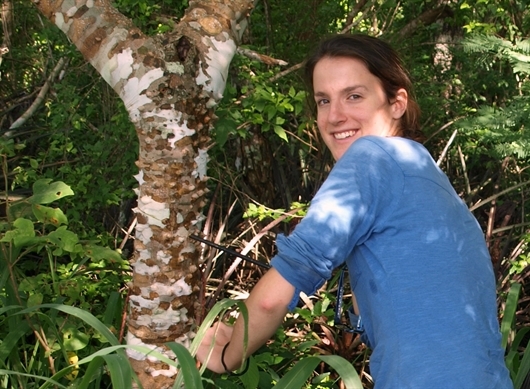
My name is Nina Witteveen and I’m doing a research project for my master (Biological Science) with Crystal McMichael and William Gosling. I’m analyzing phytoliths to reconstruct the vegetation changes of Campo Libre (Napo, Ecuador) of the past 30,000 years. It is so exciting to count phytoliths of such an old age!

Simon Scholz is currently doing a charcoal analysis and two years ago, Maaike Zwier performed a physical analysis in the sediment. With all these results combined, I will investigate how climate changes and human influence have changed the vegetation of Campo Libre. Hopefully this research will give more insight into the effect of a changing climate on this biodiversity hotspot!

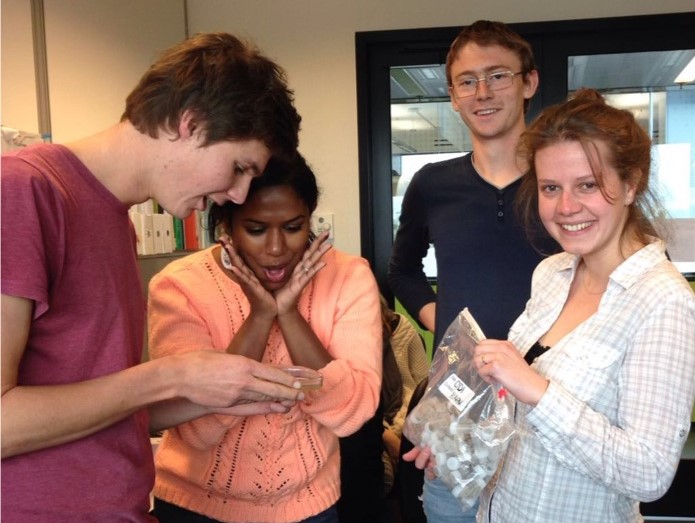
I’ve completed my thesis for the Biology bachelor at the UvA under the supervision of Crystal and Will. Together with other students we performed phytoliths, pollen and charcoal analysis from sediment of Well-Aaijen (Limburg, the Netherlands). More specifically, I’ve looked at the vegetational changes during the transition from hunter-gatherers to farmers through pollen and phytolith analysis. I’m very happy to be working with Crystal and Will again, this time in a more tropical setting!

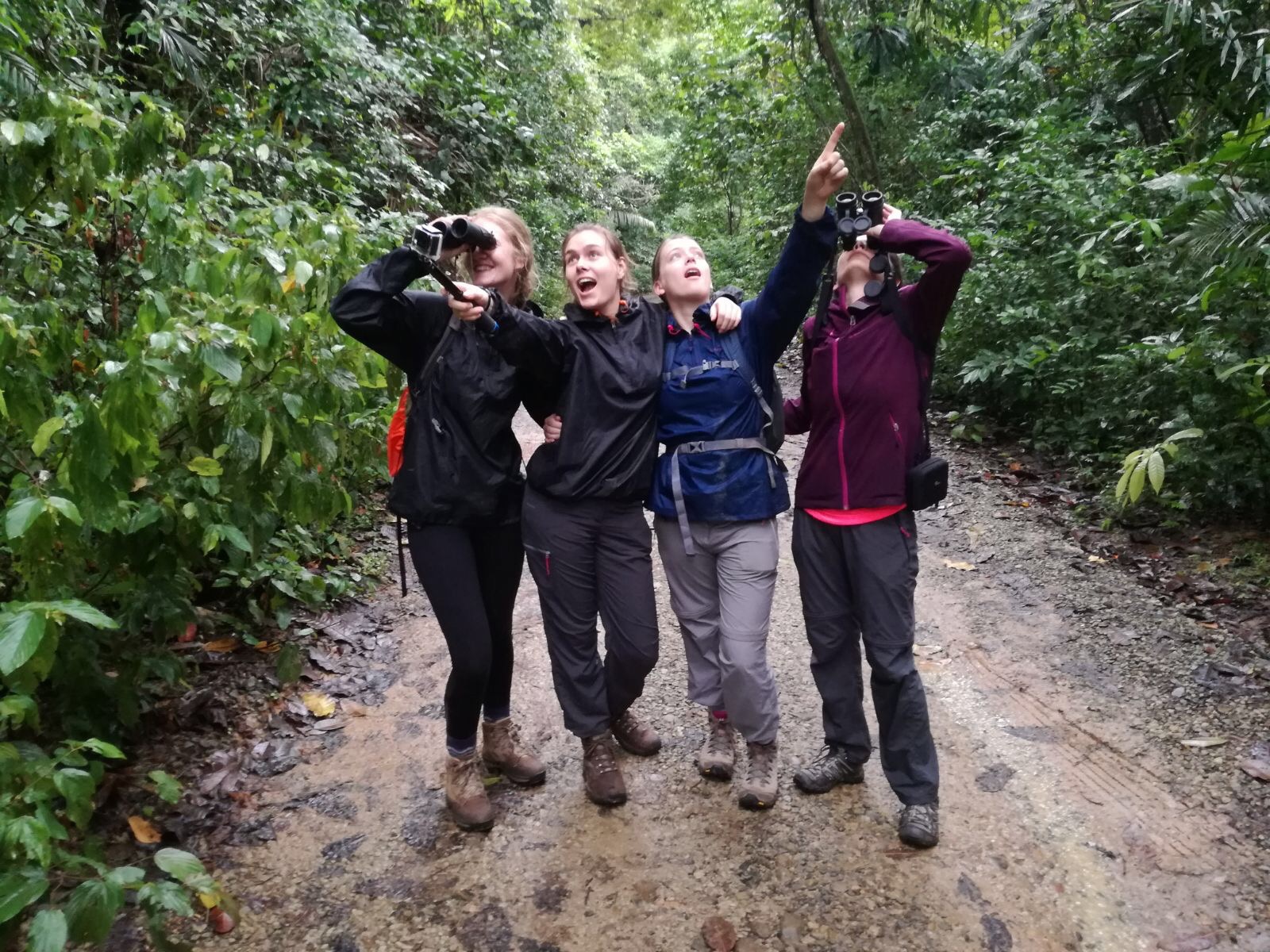
In January of this year, I travelled to Panama with Veerle Vink, Britte Heijink and Crystal McMichael. It was a great experience! Surrounded by Howler Monkeys, we made our way through streams and Geonoma palms to collect soil surface samples for future phytolith analysis. Definitely a highlight of my fieldwork so far! I am now back in the microscope lab, and always up for a (paleo)chat 🙂

 

Long-Term Vegetation Dynamics in a Megadiverse Hotspot

February 20, 2018
WDG

Open access:

Montoya, E., Keen, H.F., Luzuriaga, C.X. & Gosling, W.D. (2018) Long-term vegetation dynamics in a megadiverse hotspot: The Ice-Age record of a pre-montane forest of central Ecuador. Frontiers in Plant Science 9, 196. doi: 10.3389/fpls.2018.00196

Amazonian coring isn’t boring

February 2, 2018
WDG

By Seringe Huisman (MSc Biological Sciences, Institute for Biodiversity & Ecosystem DynamicsUniversity of Amsterdam)

Hello all! You might have been wondering if I died in the middle of Amazonian nowhere, since I haven’t come back to writing a blog after we left for fieldwork in July. Given we were in an Amazonian region full of venomous snakes that could have been the case, but the good news is I just didn’t get around writing it because I got carried away by the findings of my project! We actually had a very successful field trip – apart from some minor issues like the lake swallowing equipment, sinking waist-high into the mud each step of our 7 hour long ‘trail’ to the lakes, and almost not getting my precious samples through airport security.

Continue Reading

Tribute to Daniel Livingstone and Paul Colinvaux

January 26, 2018
WDG

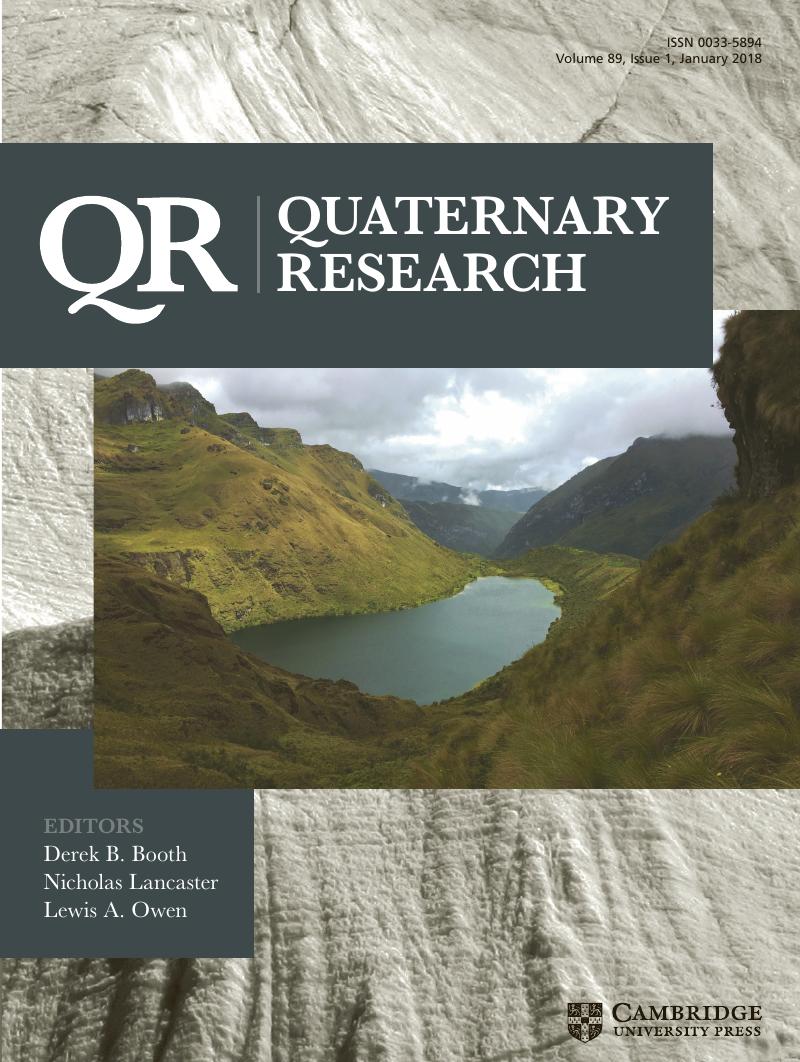
Mark Bush and I are proud to announce that a tribute to Prof. Daniel Livingston and Prof. Paul Colinvaux has recently been published in Quaternary Research. Dan and Paul were both pioneers of tropical pal(a)eoecology and both died in the spring of 2016 . To mark their passing Mark and I have guest edited ten new papers on palaeoecology drawn from researchers, and regions, of the tropics in which Dan and Paul worked (Bush & Gosling, 2018). We would like to thank Quaternary Research Senior Editor Derek Booth for giving us this opportunity and assisting greatly in the process of compiling the manuscripts. We would also like to thank all to contributing authors for their hard work and dedication to the project. We hope that you will enjoy reading the manuscripts and find them a fitting tribute to the life and work of these two great researchers.

Quaternary Research
Special Issue: Tribute to Daniel Livingstone and Paul Colinvaux
Volume 89 – Special Issue 1 – January 2018 Continue Reading

Job: Post-doctoral researcher in Palaeoecology

November 30, 2017
cmcmicha

Job: Post-doctoral researcher in Neotropical Palaeoecology
Location: Institute for Biodiversity & Ecosystem Dynamics, University of Amsterdam
Duration: 3 years
Deadline for applications: 15 January 2018

We are seeking to recruit a Neotropical palaeoecologist to join the recently funded “The past peoples of Amazonia: Assessing ecological legacies” project (PI Dr. Crystal McMichael, funding NWO, based within the Department of Ecosystem & Landscape Dynamics). The project aims to reconstruct cultural histories from lake sediments in northwestern Amazonia, and link past human activities with modern ecological observations. The project involves analyzing microfossils (including pollen, phytoliths, and charcoal), and the development of a transfer function that estimates past human impacts in tropical forest systems.

We are particularly looking for a candidate with  expertise and experience, in:

  • Fieldwork in remote areas.
  • Neotropical pollen.
  • Quantitative analysis, including familiarity with R and Geographical Information Systems.
  • Academic publication.

For more details and how to apply click here.

Landscape-scale drivers of glacial ecosystem change in the montane forests of the eastern Andean flank, Ecuador

October 20, 2017
WDG

Open acess, online:

Loughlin, N.J.D., Gosling, W.D., Coe, A.L., Gulliver, P., Mothes, P. & Montoya, E. (2017) Landscape-scale drivers of glacial ecosystem change in the montane forests of the eastern Andean flank, Ecuador. Palaeogeography, Palaeoclimatology, Palaeoecology. DOI: 10.1016/j.palaeo.2017.10.011

More on “Persistent effects of pre-Columbian plant domestication on Amazonian forest composition”

October 20, 2017
WDG

Crytsal McMichael (University of Amsterdam)

Discussion on human impacts on Amazonian forest…

McMichael, C.H., Feeley, K.J., Dick, C.W., Piperno, D.R. & Bush, M.B. (2017) Comment on “Persistent effects of pre-Columbian plant domestication on Amazonian forest composition”. Science 358. DOI: 10.1126/science.aan8347

Junqueira, A.B., Levis, C., Bongers, F., Peña-Claros, M., Clement, C.R., Costa, F. & ter Steege, H. (2017) Response to Comment on “Persistent effects of pre-Columbian plant domestication on Amazonian forest composition”. Science 358. DOI: 10.1126/science.aan8837

Rubicon project to link fossil pollen with plant traits

July 20, 2017
WDG

Dear Ecology of the past blog readers,

This time you are reading a message from a non-expert in paleoecology. My name is Masha and I will spend the next two years on a very exciting postdoctoral fellowship funded by NWO (Dutch National Science Foundation) under their Rubicon scheme in close collaboration with William Gosling (University of Amsterdam).

Continue Reading

Introducing: Seringe Huisman

July 3, 2017
WDG

Seringe Huisman

Hi all! My name is Seringe (Dutch for lilac flower), and unsurprisingly I am a biology student. I completed my BSc Biology at the VU University, specializing in ecology. Being fascinated by tropical rainforest since I was a kid, I attended a Tropical Ecology course at the University of Amsterdam (UvA), resulting in a research project with Crystal McMichael from the Palaeoecology & Landscape Ecology group on the late-Holocene fire history of western Amazonia. Besides performing this palaeoecological project, focusing on the aspect of ancient human activity, I followed courses of Latin America Studies to broaden my perspectives on the current socio-environmental complexity and conservation status of the area. This year, I have gotten the amazing opportunity to join Crystal McMichael on a fieldwork expedition to the Ecuadorian Amazon!

Seringe Huisman in the field...

Seringe Huisman in the field…

The fieldwork will be part of my Master’s thesis, elaborating on the regional patterns of vegetation composition changes in relation to human disturbance. I will be taking sediment cores from two lakes in the Sangay region of Ecuador, perform charcoal and phytolith analysis to reconstruct fire and vegetation assemblages over the late Holocene and compare the results to previously established records across western Amazonia. While I am currently attending the MSc Biological Sciences Limnology & Oceanography Master’s track at UvA, I could not help but directing my first project into Paleoecology again! My field trip is largely made possible by obtaining €1150 of grants through the Treub-Maatschappij and the Amsterdam University Fund, for which I am very grateful.

I am super excited to be heading to Ecuador soon, and will be back in a month with field stories, mosquito bites and hopefully some suitable sediments!

Seringe Huisman and palaeoecology friends

Seringe Huisman and palaeoecology friends

Blog at WordPress.com.