Grass pollen from Lake Bosumwti picked for individual chemical analysis
Abstract submission is now open for the XIX International Union for Quaternary Research (INQUA) Congress. “Ecology of the past” researchers will be there and are hosting a special session, entitled Organisms and environments: Frontiers in palaeoecological technique development, at which we hope to bring together a wide range of palaeoecologists working on novel proxy development. Members of the “Ecology of the past” group will be showcasing recent findings on the environmental significance of pollen chemistry change through time; linked to the 500,000 years of solar irradiance, climate and vegetation change in tropical West Africa project (Fraser et al., 2014). Please take a look at our session and consider submitting YOUR abstract today!
For information on abstract submission click here. Closing date for abstract submission 20 December 2014.
For further information on our session click here, or “Continue reading” below…
We’ve got a bumper crop of palaeoecological film making for you today, with three videos uploaded to our very own ‘Ecology of the Past’ Youtube channel. We’ve got an interview with Will Gosling, talking about the Bosumtwi pollen chemistry project and his own background and career (it’s a timely and somewhat poignant addition to the channel, because this is Will’s last day at The Open University before heading off to Amsterdam). Also posted are research presentations by Frazer Bird and Hayley Keen, which were filmed during the PhD student conference on 21st May. For the first time at the Open University these presentations were carried out in the Three Minute Thesis (3MT®) format.
Our next video to be uploaded to the ‘Ecology of the past’ Youtube channel is a short interview with Wes Fraser, Co-Investigator on the Bosumtwi project and developer of the pollen chemistry ultraviolet-B proxy. Wes talks about his role on the project, his background, and what excites him most about this current research. Similar ‘talking heads’ style interviews will follow over the coming weeks for each of the key researchers on the project.
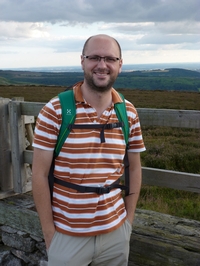
My first fieldwork from the OU, in 2005, was pollen trapping on the Galapagos. Here I am looking beardy on Bainbridge.
February was an exciting month for me principally because of the finalization of my move to the University of Amsterdam (UvA) where I will become head of Paleo and Landscape Ecology in September. The decision to leave The Open University (OU) has been a difficult one. When I joined the OU as a RCUK Research Fellow in Ecosystem Science in 2005 I would not have believed that I would be in a position to take on a job such as the one in Amsterdam only nine years later. Building the group here during the last nine years has been a lot of fun and I have got to work with some great people. Stand out moments include:
Obtaining my first grant as Principle Investigator (c. US$20,000 from the National Geographic for field work in Bolivia),
Recruiting, and graduating, my first PhD research students (Joe Williams and Macarena Cardenas),
Being invited to participate in large international research efforts (notably the Lake Bosumtwi project),
Co-editing my first book (Bush et al., 2011), having my first student to publish a paper getting it in Science (Cardenas et al., 2011), and helping to write a popular science text co-published by the Natural History Museum (Silvertown et al., 2011)
There have been many more amazing things here but I don’t want to swamp this post with a retrospective of my OU career…
Ongoing excitement within the PCRG is happening on a number of fronts:
Hayley Keen: “Continual pollen counting, second lot of Argon dating done, and first set of wood macrofossils back and ready for identification!”
Frazer Bird: “At the start of September I began working as a technician as part of Encarni’s project. I am looking at the midges from the core we collected together on our last field trip. Things are going well, although the midges are hard to find in the older sections the preservation in early sequences is great. The resolution of this core looks to be fantastic also so and hopefully we will get some interesting results when we compare all the proxies. Away fromthe lab I presented at INTECOL 2013 in London, The talk seemed to go down well and was noted as highly commended by the judging panel. Great publicity all round for the midges!!!”
Bryan Valencia: Has been on field work in Peru during this time he presented a talk on climate change to the Asociación para la Conservación de la Cuenca Amazónica, and gave interviews to local journalists and two TV stations. He also collected sediments from two locations, and manged to obtain a new US visa. He is now working on the final stages of submitting his thesis.
Phil Jardine: Phil has been busy ordering in microscopes and other equipment for the Lake Bosumtwi project (the first of which arrived today), and setting up the trip to Ghana that he’ll be going on with new PhD student Adele Julier in late October. He’s also been attempting to learn more about geochemistry, which has proved challenging.
Lake Pindo: We have finally the results of 6 samples radiocarbon dated from NRCF through our collaborator Dr Pauline Gulliver, and we have sent 4 more to “range find” the key interval of interests for the FORSENS project. We have started the midges’ analysis although it seems this going to be focused to the upper 4 meters of sediment. We would like to discern possible preservation issues in tropical records for this proxy. Some samples for a preliminary screening looking for diatoms ahve been collected and sent to the new FORSENS collaborator Teresa Vegas-Vilarrúbia. MS samples have been also collected for the first three drives and we hope to run this analysis next month.
Lake Banos: We have started the pollen prep. for the upper section of the record.
Management tasks: We are now ready for the tropical record Lake Marcacocha pollen prep., collaborating with an ongoing project lead by Alex Chepstow-Lusty. On a different topic, I have started the organisation of department seminars, so I would like to highlight if you have any potential speaker, please contact me.
Publications: a co-authorship in a paper published in Perspectives in Plant Ecology, Evolution and Systematics authored by Valentí Rull and his research group in the Botanical Institute of Barcelona is now available on line (click here)
William Gosling: “I have been promoted to Senior Lecturer (hooray),started work on the new level 2 environmental science module, been working on a new paper from the Erazo study site, and had a holiday!”
My name’s Phil Jardine, and I’ve recently joined the Palaeoenvironmental Change Research Group as a post-doc, on the NERC-funded ‘500,000 years of solar irradiance, climate and vegetation changes’. For this project I’ll be analysing the chemistry of pollen grains from a 500,000 year long sediment record from Lake Bosumtwi in Ghana, with the aim of generating a long-term historical record of solar irradiance.
Before coming to the Open University I was based at the University of Birmingham, where I did PhD and post-doc research on North American pollen records from the early Palaeogene (~65 – 45 million years ago). For this work I was particularly interested in the role of climate in driving changes in plant communities, especially during a rapid global warming event 55 million years called the Paleocene-Eocene Thermal Maximum (PETM). Having worked for some time now on pretty old material, I’m looking forward to researching something a bit more recent – if you can call the last 500,000 years recent – and going out to Ghana and looking at real, live, tropical plants.
If you would like to get in touch about the Lake Bosumtwi project, or something else pollen related, please feel free to get in touch.
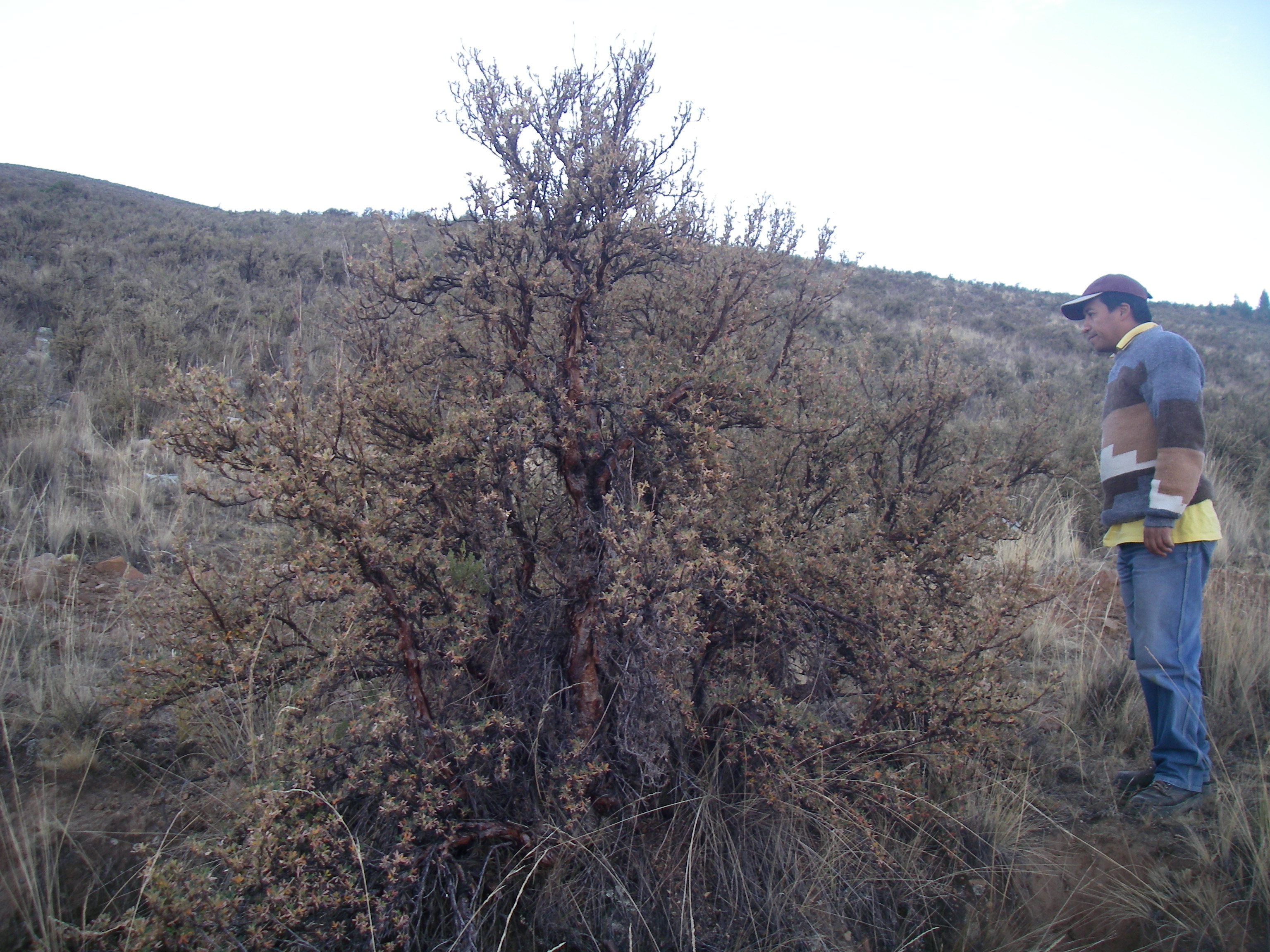
Woodland resources in the high Andes have varied through the last 5000 years and influenced human societal development. The relationship between people and natural resources in the Andes is explored in the recently published Gosling & Williams (2013); http://dx.doi.org/doi:10.1177/0959683613496296
In July we have managed to get a number of individual blog posts out so teaching activity on summer school, publications and conference reports have already been covered. Behind the scenes progress in the lab has continued despite the hot weather:
Frazer has commenced writing of his Chironomid training data set paper, and analysis of a fossil chironomid record.
Hayley has been plugging away at the analysis of pollen from Mera, and has got the first of her wood macrofossil samples prepared for thin sectioning (fingers crossed next month we may start to get some identifications on these!).
Lottie, Natalie and Bryan are keeping their supervisors very busy with reading material as they continue a pace with writing up.
Phil is setting up the Bosumtwi pollen chemistry project (we now have an offical grant code!) and is settling in; hopefully he should be moved down to MK very soon!
And Encarni is multi tasking and organising everything as usual 🙂
A growing body of evidence suggests that plants alter their chemical composition in relation to the amount of incoming solar radiation (“insolation“) they are exposed to during life. Chemical changes are induced in order to provide protection against the deleterious effects of ultraviolet (UV) radiation; a relatively small, but important component of the total solar spectrum. UV radiation is linked with a range of detrimental biological effects, primarily stemming from damaged DNA. As sessile organisms, plants need to employ various mitigation mechanisms to prevent/reduce damage induced by UV radiation. Such mechanisms include effective DNA repair pathways, physiological adaptations, and UV-absorbing compounds. It is this last mechanism, UV-absorbing compounds (UACs), that is discussed here.
Lycopodium spore chemistry can be divided into two distinct groups; aliphatic components and phenolic components.
Particpants on the Numerical Analysis course 2012: Lottie Miller, Guiomar Sanchez, Maria Rubio, John Douglass and Sonia Jaehnig (left-right). Photo courtesy of Manuela Milan.
The course provided an introduction to the methods, guidance as to when to use the techniques and then outlined the assumptions, limitations and strengths of the various methods. The need to fully understand the techniques applied before attempting to critically evaluate the results was also strongly emphasised.
The course consisted of lectures covering measures of dispersion, cluster analysis, dendrograms, regression analysis, tree models, gradient analysis, transfer functions, time series and hypothesis testing. Afternoon practical computer classes involved using R, C2 and CANOCO to implement the various techniques covered in the lectures.
Overall the course was a great introduction to statistical analysis which I would certainly recommend for anybody working with complex and noisy datasets. In the next few days I will be using my newly learnt R skills to run indirect gradient analysis such as PCA, CA, DCA and NMDSCAL to search for environmental gradients within my data.
Numerical Analysis of Biological and Environmental Data training couse is an annual event and was held at UCL, on 14-25th May 2012. For more information about the course see Gavin’s website or read his blog From the bottom of the heap.
COMMENT ON THE USE OF NITROGEN ISOTOPES IN PALAEOLIMOLOGICAL STUDIES As a component of my doctoral research, I am examining nitrogen (N) isotopes within sediments obtained from Lake Bosumtwi (West Africa). Below I review and comment on the key uses and limitations of using N isotopes to interpret past environmental change with particular reference to lake sediments. Discussion is based on the key text by Talbot (2001).
REFERENCE
Talbot, M.R. 2001. Nitrogen isotopes in palaeolimnology. Tracking environmental change using lake sediments. Volume 2. Physical and geochemical methods (ed. by W.M. Last and J.P. Smol), pp. 401-439. Kluwer Academic Press, Dordrecht.
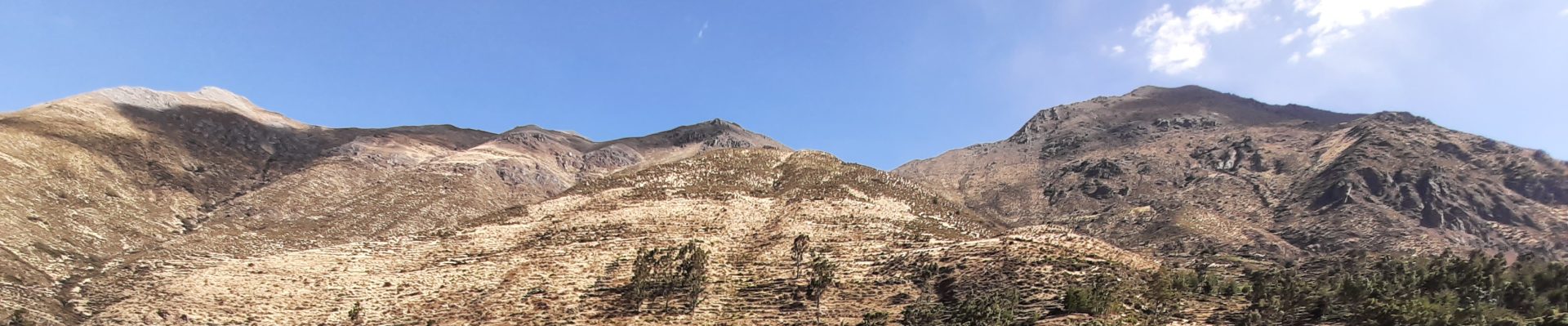
 XIX INQUA Congress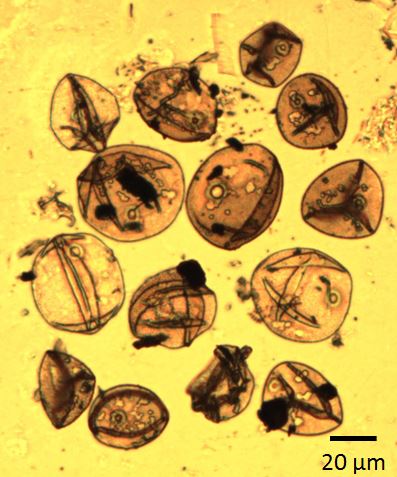




 Ecology of the past