
Keen PhD Thesis 2015

September 30, 2015
WDG

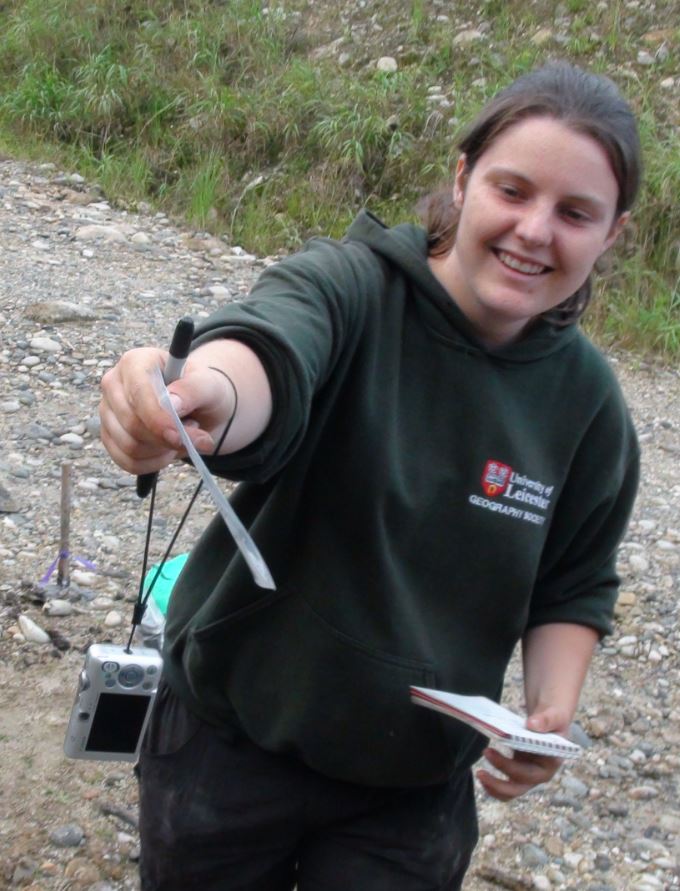
Hayley Keen getting excited about sediments during fieldwork in Ecuador (2012). Photo: J. Malley

Hayley Keen getting excited about sediments during fieldwork in Ecuador (2012). Photo: J. Malley

Keen, H.F. (2015) Past environmental change on the eastern Andean flank, Ecuador. PhD Thesis, Department of Environment, Earth & Ecosystems, The Open University.

Abstract
The eastern Andean flank of Ecuador (EAF) contains some of the world’s most biodiverse ecosystems. Andean montane forests are threatened due to anthropogenic pressures and both current and projected climate change. This thesis examines the palaeoecological history of two stratigraphic sequences (Mera Tigre West [MTW] and Mera Tigre East [MTE]) obtained from the Ecuadorian modern lower montane forest. The sediments preserved were analysed using eight analytical techniques, allowing an insight into the ecosystem’s potential response to projected changes derived from their past responses. Palaeoecological studies on the EAF are rare, and those that do exist are debated relating to: i) the inference of robust ecological data from pollen records in floristically diverse locations, and ii) the past source area of sediments preserved in fluvially exposed sequences, potentially leading to contamination with older material.

A statistical sub-sampling tool was developed (debate i), capable of producing statistically robust count sizes for each pollen sample; MTW and MTE count sizes ranged from 196-982 showing the diversity within sequences. The depositional environment of MTE was analysed, investigating sediment provenance throughout (debate ii). Results found that large scale volcanic events were critical in the preservation of the sediments, whereas fluvial influence caused a regional sediment source area in the upper stratigraphy, impacting on the palynological interpretation of MTE. Pollen records demonstrated the presence of a diverse vegetation community with no modern analogue at MTE (abundant taxa (>15 %): Hedyosmum, Wettinia, Ilex) and upper montane forest at MTW (Alnus, Hedyosmum, Podocarpus). Fire was not the main driver for the vegetation reassortment at either site (MTW correlation coefficient: -0.37, MTE: 0.16). The two sites have demonstrated the EAF plays host to floristically dynamic ecosystems, susceptible to drivers of change (fire and landscape) and should be considered when predicting the montane forests’ future response to environmental change.

Supervisors: Dr. William D. Gosling (The Open University/University of Amsterdam), Dr. Encarni Montoya and Dr. Sarah Sherlock (both The Open University).
Examiners: Dr. Dunia Urrego (University of Exeter), and Prof. David Gowing (The Open University).
Chair: Dr. Mark Brandon (The Open University).

To borrow a copy from The Open University Library click here.

Publications (so far): Continue Reading

JOB: PhD candidate in Palaeoecology & Landscape Ecology

July 28, 2015
WDG

UvAInstitute for Biodiversity & Ecosystem Dynamics
Faculty of Science

University of Amsterdam

Characterization of Neotropical ecosystems by their modern pollen spectra and organic chemical composition

  • Develop skills in pollen identification, pollen chemical characterization, and the analysis of organic biomarkers.
  • Examine ecological variation across an altitudinal gradient of nearly 4000 meters on the tropical western Andean flank.
  • Improve understanding of how ecosystems function in a biodiversity hotspot, and how they might be identified in the fossil record.

Mashpi (25)The considerable biodiversity of Neotropical ecosystems is under pressure from projected climate change and human activity. Modern ecosystems can be characterized by their pollen rain and organic chemistry, which can in turn provide information about ecosystem health and functioning. However, little is known about how pollen assemblage and chemical composition (of pollen and plants) vary along environmental gradients. Altitudinal transects provide an opportunity to study a range of environments and ecosystems with a relatively small geographic area. By improving our understanding of modern ecosystems we can improve our interpretation of fossil records, and consequently better understand how modern ecosystems came into being.

The main objectives of this PhD project are to:

  1. Generate the first modern pollen assemblage and chemical data set for the Neotropics,
  2. Characterize the landscape-scale variation in pollen assemblage and chemistry composition, and
  3. Identify the key environmental drivers that determines pollen assemblage and chemistry composition variation.

Publication date: 27 July 2015
Closing date: 18 September 2015
Level of education: University (Masters)
Hours: 38 hours per week
Salary indication: €2,125 to €2,717 gross per month
Vacancy number: 15-286

Applications should be emailed to application-science@uva.nl, with in the subject line the position you are applying for and vacancy number (15-286). Please make sure all your material is attached in only one pdf. Applications should include a detailed CV including educational experiences, a list of research projects and/or publications, a letter of motivation, relevant work experience, and the names and contact addresses of two academic referees from whom a reference for the candidate can be obtained.

For more details, including information on how to apply, click here (UvA), or here (via academic transfer).

For further information visit the Palaeoecology & Landscape Ecology web pages, or contact Dr. William D. Gosling  directly.

Andean bear

April 30, 2015
WDG

WDG's avatarPalaeoenvironment

Bear-zoomOn our first field day three of the XPERT team (Valerie, Barry and Sarah) claim  they saw an Andean or spectacled bear (Tremarctos ornatus) in the paramo of the Cayambe-Coca National Park… Valerie did manage to provided some supporting evidence in the way photos.

An Andean bear, or a black dog? An Andean bear, or a black dog? (photo: van den Bos)

For more information on Andean bears visit: Andean bear foundation

View original post 20 more words

Sediment coring in Lake Erazo

April 14, 2015
WDG

XPERT field school is underway…

stxal8's avatarPalaeoenvironment

Lake Erazo Sediment coring on Lake Erazo. Photo by Valerie van den Bos (who spent the flight over reading a book on how to take the perfect photo)

By Alexandra Lee and Nick Primmer

To study the palaeo-environmental record of the Andean cloud forest, sediment cores were taken from the recently discovered Erazo lake. In mixed conditions of blazing sun and pouring rain, 14 researchers, one bus driver and several Ecuadorian guides hauled what felt like a ton of equipment up to the lake 2,300 m asl. In the centre of the lake, a wooden coring platform was mounted between two boats securely anchored at three positions. Using a modified Livingston corer with a drop hammer, five cores were successfully recovered from the lake up to a maximum depth of two metres. The main challenge encountered was the stability of the platform which resulted in several complications limiting the number of cores…

View original post 29 more words

Frazer on climate change & insects – AGU video

September 8, 2014
WDG

Frazer Matthews-Bird’s video on his PhD research examining long-term (>50 year) climate change from fossil insects (chironomids) has been shortlisted for the American Geophysical Union (AGU) student competition prize. Please watch Frazer’s video and “Like”; the most liked video will win free entry into the AGU Fall meeting 2014.

View all the videos on the AGU YouTube channel.

Past environmental change in the Amazon basin – AGU video

September 8, 2014
WDG

Hayley Keen’s video “Past environmental change in the Amazon basin” has been shortlisted for the American Geophysical Union (AGU) student video prize. Please watch and like Hayley’s video; top “Liked” videos will win entry to the AGU 2014 Fall meeting.

View all the videos on the AGU YouTube channel.

6th Workshop on Non-Pollen Palynomorphs

July 9, 2014
encarnimontoya

POSTER: Non-Pollen Palynomorphs in Ecuador: Starting from scratch

OUR POSTER: Non-Pollen Palynomorphs in Ecuador: Starting from scratch

Tallinn University
18-20 June 2014

Last month I had the opportunity of attending the 3-days non-pollen palynomorphs (NPP) workshop that was held at the Tallinn University, Estonia. It was perfectly organised by Tiiu Koff and Egle Avi among other members of the university, as it was a join workshop of Cladocera remains (XII Subfossil Cladocera workshop; 16-18th June) and NPP (18-20th June). Unfortunately, I was just present in the NPP workshop, so my comments will be focus on it.

With around 40 participants, we greatly enjoyed the discussions that came up about the state-of-the-art of this broad and interesting proxy and its implications for archaeology, palaeolimnology, and different aspects of ecology like human landscape management, biodiversity and conservation, or community assemblages. Current methodological problems like taxonomy, standardisation of lab techniques, etc., were also debated.

Opening and key lectures were from Bas van Geel and Emilie Gauthier, showing the development of this discipline over the last 40 years, and a great example of multi-proxy project aimed to study the human arrival and impact in Greenland respectively. Besides oral and poster presentations, last day there was a microscope session, very useful for sharing knowledge and uncertainties! In our specific case, Will, Hayley and I contributed with a poster titled “Non-pollen palynomorphs in Ecuador: starting from scratch”.

Personally, among the things I most like from the NPP meetings is the friendly and close environment, where everyone is more than glad to help others, regardless the experience. Following this feeling of small and scattered group of people dealing with the same issues, we used to do a final remark session every workshop raising the advances and inconveniences found so far, updating our NPP papers repository (managed by Antonella Miola), and addressing future directions as a group (for instance, we have now our own project in ResearchGate, thanks to Lyudmila Shumilovskikh!). In this particular workshop, I was very happy when I found out that Tallinn University has a green policy (paper free), and they replaced book abstracts etc., by iPads to follow the workshop schedule.

Although these meetings are normally biannual, next conference location and date is yet to be decided, but we hope to have the chance to join this very friendly and supporting community again. In addition, there will be a NPP session in the next European Palaeobotany and Palynology congress, tobe held in University of Padova (Italy), next August 2014. We encourage people with all kind of experience (or lack of) to attend further events.

Cardenas PhD thesis 2011

May 20, 2014
WDG

Cárdenas, M.L. (2011) The response of western Amazonian vegetation to fire and climate change: A palaeoecological study. PhD Thesis, Department of Earth & Environmental Sciences, The Open University.

MLC Ecuador (2008)

MLC Ecuador (2008)

Abstract:

Amazonia is one of the most biodiverse regions of the world, a reputation largely earned by the floristic richness of western Amazonia, namely the Ecuadorian Andes. In particular, montane cloud forest in western Amazonia on the Andean flank has been identified as of high ecological value because of its large floristic diversity. Unfortunately, montane forests’ biodiversity have suffered a strong detrimental impact due the ongoing human activity and climate change. Consequently, understanding the dynamics of montane forest and identifying the main factors that control them is fundamental to manage and protect these ecosystems.

This thesis focuses upon paleoecological data obtained from organic sediments from Erazo (Ecuador), located today within the lower montane forest. Examination of modern vegetation and pollen rain close to Erazo revealed florist variation at the kilometer scale related to human disturbance. Modern data provided the basis for interpreting the fossil record. Radiometric dating of interbedded volcanic ash indicates the sediments were deposited c. 324,000-193,000 years ago, well before the arrival of humans in America. Fossil pollen and wood preserved within organic sediments suggest that the composition of the forest was different to modern and changed significantly during the middle Pleistocene. Taxonomic changes in the fossil pollen assemblage, coupled with the presence of Podocarpus spp. macrofossils within the sediments, indicate that temperatures reached c. 5oC cooler than modern. Given the timing and magnitude of vegetation cha

nge observed in the Erazo sediments it therefore seems likely that the variations were instigated by global temperature changes associated with Marine Isotope Stage (MIS) 9 and the MIS 7-6 transition from interglacial-glacial conditions.

The palaeoecological data from Erazo indicate that far from being a relatively stable ‘museums’ tropical forests are in fact dynamic systems undergoing long term floristic re-assortment as well as being susceptible to abrupt short term floristic reorganization.

Supervisors: Dr. William D. Gosling , Dr. Sarah Sherlock, Dr. Vincent Gauci (all The Open University), Prof. Toby Pennington (Royal Botanic Gardens Edinburgh), and Dr. Imogen Poole (University of Aberdeen).

Examined by: Dr. Juan-Carlos Berrio (University of Leicester), and Prof. Simon Kelley (The Open University).

To borrow a copy from The Open University Library click here.

Continue Reading

PCRG January

February 12, 2014
WDG

January 2014 has been pretty mad for me but included presenting a poster at the Quaternary Research Association annual meeting, and taking on the role of chair of the British Ecological Society Eduaction, Training and Careers Committee“.

Tardigrade egg found in Ghanaian pollen trap by Adele

Tardigrade egg found in Ghanaian pollen trap by Adele

Here is a summary of what other people have been up to:

  • Lottie Miller: submission and approval of thesis corrections (hooray), working on British Ecological Society grant application.
  • Hayley Keen: is finishing up lab work (macro charcoal – done, XRF – done, wood macrofossils – thin sectioned, awaiting identification, pollen – just 4 more samples!); and dealing with minor review revisions to first submitted paper (hooray).
  • Frazer Bird: finished the data collection for two Ecuadorian lakes (Banos and Pindo) and will hopefully begin to write up this data soon; attended the NERC stats course (very useful; would advise everyone to try and get on it).
  • Nick Loughlin: has split and logged the sediment cores recovered from Lake Huila (Ecuador) during recent fieldwork, and begun preparing the samples for pollen.
  • Adele Julier: has been preparing pollen trap samples from Ghana and  learning tropical pollen.
  • Emily Sear: has mostly been on holiday and we are still waiting for the post card! She has also been working at getting results that make sense from the MS2.
  • Phil Jardine:   has been oxidising spores to see what it does to the chemistry, generating FTIR data with the oxidised samples and starting the numerical analysis, and editing film footage from the 2013 Ghana trip.
  • Encarni Montoya: has been doing pollen lab and analysing pollen from Baños, and comparing the midges trends from Pindo and Baños with Frazer.
  • Wes Fraser: Reported back to Royal Society on finding from research grant – paper containing exciting results to follow in next couple of months.
Some pollen from Adele's pollen traps in Ghana

Some pollen from Adele’s pollen traps in Ghana

We have also had 4 papers published with 2014 dates on them:

  • Cárdenas, M.L., Gosling, W.D., Pennington, R.T., Poole, I., Sherlock, S.C. & Mothes, P. (2014) Forests of the tropical eastern Andean flank during the middle Pleistocene. Palaeogeography, Palaeoclimatology, Palaeoecology, 393: 76-89. doi: 10.1016/j.palaeo.2013.10.009
  • Fraser, W.T., Watson, J.S., Sephton, M.A., Lomax, B.H., Harrington, G., Gosling, W.D. & Self, S. (2014) Changes in spore chemistry and appearance with increasing maturity. Review of Palaeobotany and Palynology, 201, 41-46. doi:10.1016/j.revpalbo.2013.11.001
  • Miller, C.S. & Gosling, W.D. (2014) Quaternary forest associations in lowland tropical West Africa. Quaternary Science Reviews, 84, 7-25. doi: 10.1016/j.quascirev.2013.10.027
  • Sayer, E.J., Featherstone, H.C. & Gosling, W.D. (2014) Sex & Bugs & Rock n Roll: getting creative about public engagement. Trends in Ecology & Evolution, 29, 65-67. doi: 10.1016/j.tree.2013.12.008
Blog at WordPress.com.