When I first heard about this class in Peru, I had no idea that I was going to experience so much in such a short period. Our goal was to visit two lakes in Peru and raise sediment cores for paleoecology. The first lake that we went to was Laguna Huayabamba, which sits at about 3250 m elevation in the La Libertad region of the Peruvian Andes.
However, getting to this lake was no easy task. Before the hike even started, we had to obtain the necessary permits and permission from the local people. After several days of visiting different town officials and waiting for approval, we could set out on our adventure.
The month-long palaeoecology module at UvA is coming to an end. We have had two weeks of lectures and microscope work, an introduction to quantitative palaeoecology, and we just finished a week of fieldwork in Twente, which is in the easternmost part of the Netherlands.
Students working in the field (photo: M. Groot)
Will Gosling and I tried something new for the field excursion this year. We split the class into eight groups, and gave each group a set of pollen and phytolith samples from an ‘unknown location’. Unknown in this context means being from one of the eight primary sites that we would visit during the field excursion. The students were required to perform vegetation surveys and characterize soils at each of the primary sites that we visited. The goal of each group was to figure out which location their set of ‘unknown’ samples came from. Basically, we had them doing forensic palynology, with idea that they could then better visualize the different vegetation assemblages seen in the palaeoecological records. Continue Reading
Characterization of Neotropical ecosystems by their modern pollen spectra and organic chemical composition
Develop skills in pollen identification, pollen chemical characterization, and the analysis of organic biomarkers.
Examine ecological variation across an altitudinal gradient of nearly 4000 meters on the tropical western Andean flank.
Improve understanding of how ecosystems function in a biodiversity hotspot, and how they might be identified in the fossil record.
The considerable biodiversity of Neotropical ecosystems is under pressure from projected climate change and human activity. Modern ecosystems can be characterized by their pollen rain and organic chemistry, which can in turn provide information about ecosystem health and functioning. However, little is known about how pollen assemblage and chemical composition (of pollen and plants) vary along environmental gradients. Altitudinal transects provide an opportunity to study a range of environments and ecosystems with a relatively small geographic area. By improving our understanding of modern ecosystems we can improve our interpretation of fossil records, and consequently better understand how modern ecosystems came into being.
The main objectives of this PhD project are to:
Generate the first modern pollen assemblage and chemical data set for the Neotropics,
Characterize the landscape-scale variation in pollen assemblage and chemistry composition, and
Identify the key environmental drivers that determines pollen assemblage and chemistry composition variation.
Publication date: 27 July 2015 Closing date: 18 September 2015
Level of education: University (Masters)
Hours: 38 hours per week
Salary indication: €2,125 to €2,717 gross per month
Vacancy number: 15-286
Applications should be emailed to application-science@uva.nl, with in the subject line the position you are applying for and vacancy number (15-286). Please make sure all your material is attached in only one pdf. Applications should include a detailed CV including educational experiences, a list of research projects and/or publications, a letter of motivation, relevant work experience, and the names and contact addresses of two academic referees from whom a reference for the candidate can be obtained.
For more details, including information on how to apply, click here (UvA), or here (via academic transfer).
So we’re back from a hot and humid Ecuador to the joys of a British winter. Ecuador is an amazing country and the diversity of the flora and fauna surpasses anything that I have experienced before. Continue Reading
Hello! I’m Adele and I started my PhD about a week ago. It’s been a little intense but I can almost find the lab without a map now, so it is probably time to introduce myself.
I’ll be studying pollen-vegetation relationships in Ghana, as part of the NERC funded project ‘500,000 years of solar irradiance, climate and vegetation changes’. This means I’ll be using pollen traps to figure out how pollen outputs vary between (and sometimes within) different vegetation types in Ghana. I will also be trying my hand at chemotaxonomy and video making. I’m heading out to Ghana (along with Phil Jardine) in just over a week to do my first lot of field work which will involve seeing the plots, collecting existing traps, replacing them with new ones, and setting up some new sites. I’m very excited.
Four new workstations installed in the Past Environmental Change microscope lab
Excitement in February saw the arrival of a new research grant within the PCRG, to look at pollen and spore chemistry from Lake Bosumtwi (watch this space for new post-doc and PhD studentship positions), and (just in time) the expansion of benches in the microscope lab which will ensure that the new people will have spaces to sit in! In addition, we had a paper published with long time friends and collaborators at the University of Leeds; Roucoux et al. (2013).
Despite the disruption of the lab refit Hayley and Frazer have been cracking on with pollen and chironomid analysis. Encarni and Frazer returned from field work in Ecuador and half the samples have so far made it back to The Open University; we now wait with anticipation for customs to release the other box!
Four shiny new workstations from the other side – woo
Two NERC algorithm funded PhD studentships are currently available with the PCRG. The projects are focused on understanding past environmental change in west tropical Africa and Amazonian-Andean Ecuador. Both projects will involve field work and build on on-going research within the lab.
Closing date 31/01/2013
One project will work on samples collected during fieldwork in 2012 near Papallacta (Ecuador).
Further project details and how to apply below… Continue Reading
The second part of our Ecuadorian expedition took in lakes and sections close to the towns of Papallacta and Cosanga. The variation in climatic conditions was marked as we experienced first hand the transition from freezing fog and driving rain to burning sun and heat within a few tens of kilometers as we travelled from >4000 m down to around 1000 m elevation.
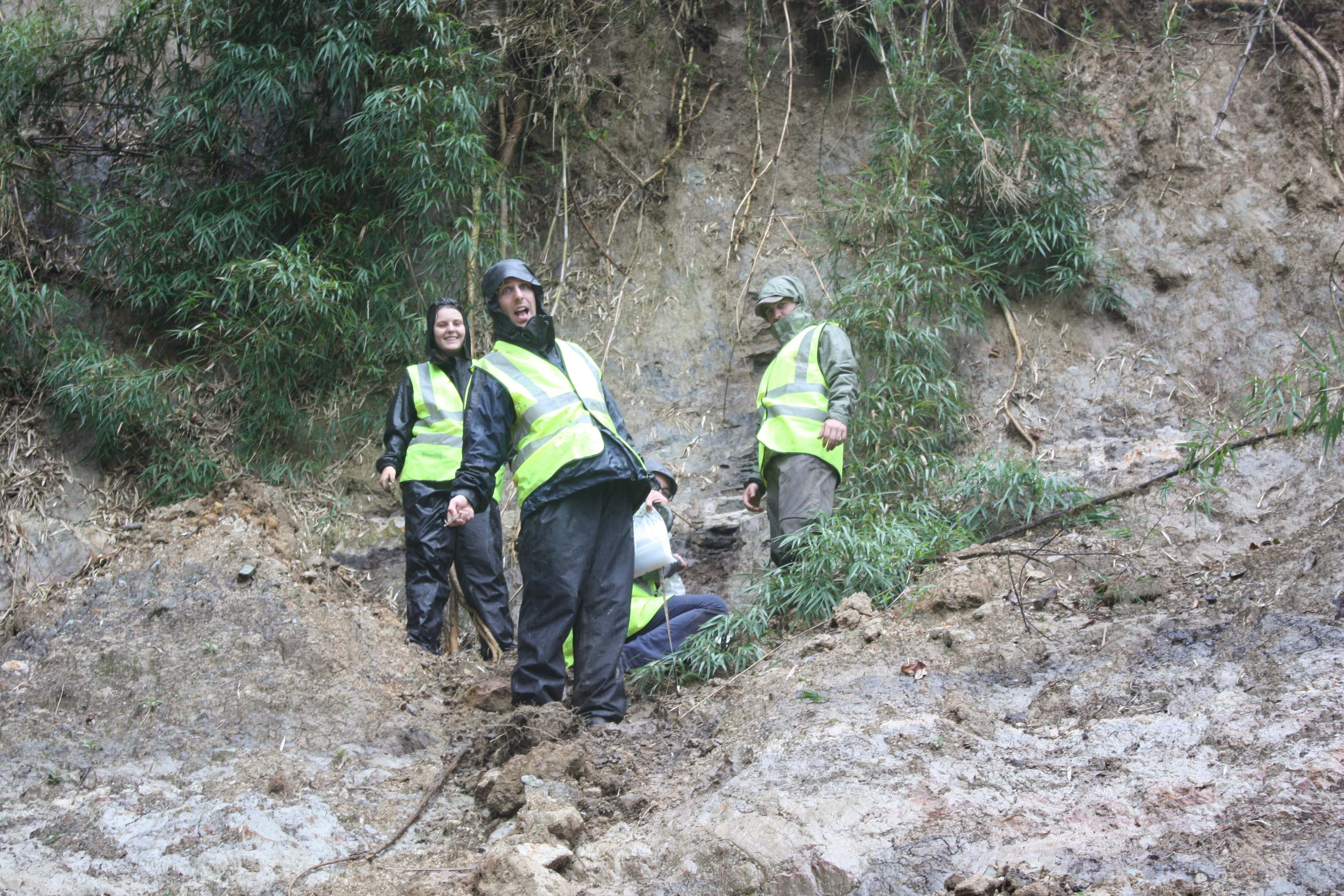
Sampling the sedimentary section at Vinillos was hampered by a tropical downpour. Sediments recovered from here include volcanic ash, mud slide deposits including large wood macrofossils and fine grained organic sediments probably deposited in still water environments.
Preparing to recover a short core from a pond near the antenas at Cujuca. Short cores will be used for Chironomid analysis.
Tomorrow we will attempt to recover short cores from two more lakes. Then our final few days here in Ecuador will be spent visiting partners and packing up.
The first half of our field work expedition to Ecuador has now been completed. We had a very successful visit to Mera collecting samples from three new sections and recovered short cores from four lakes.
The sediment sections have yielded many wood macrofossils and samples for pollen analysis. It is anticipated that these will shed light on the nature of tropical vegetation during the last glacial period and before. Some of these samples will be analyzed by Hayley as part of her PhD research.
The sedimentary section found near Mera contained layers of crushed forest beneath volcanic ash. These “forest beds” provide a snapshot of vegetation in the landscape at the time of eruption. Part of plants growing on the landscape thousands of years ago are clearly preserved in the sediment.







 Ecology of the past