Time for topical ecology

March 14, 2025
WDG

8th European Conference of Tropical Ecology

36th Annual Meeting of the Society for Tropical Ecology

24-28 February 2025, Amsterdam

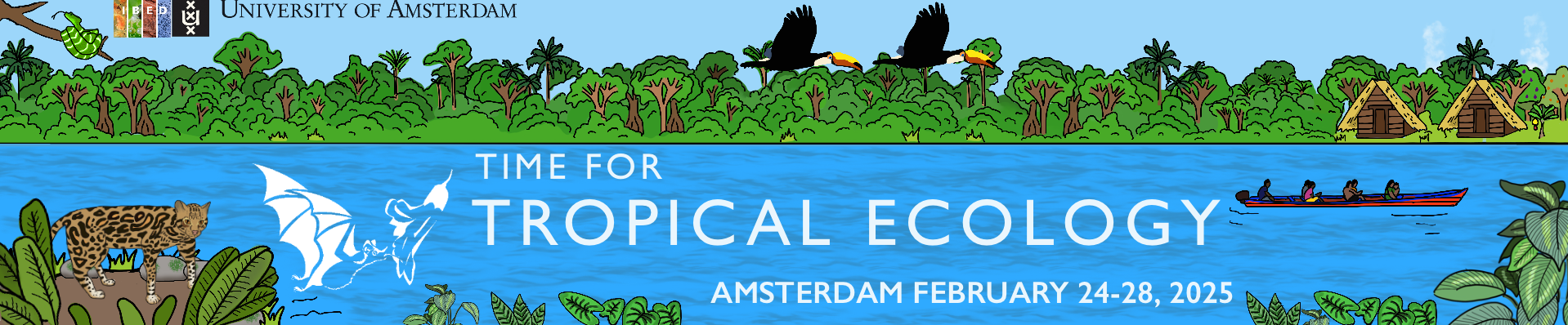
The 8th European Conference of Tropical Ecology took place in Amsterdam (The Netherlands) from 24 to 28 February 2025. This meeting was organized for the Society for Tropical Ecology. The event was hosted by the Institute for Biodiversity & Ecosystem Dynamics (University of Amsterdam), held at Hotel Casa, and the main sponsor was the NWO (Dutch Science Foundation).

During the conference around 250 scientists delivered 150 oral and 69 poster presentations. The science spanned the full breadth of tropical ecology, ranging from interactions of coral dwelling crabs, through carbon cycling dynamics in forests, to the governance of hunting activity. The six keynote speakers were paired under three topics “Human legacies in the tropics”, “Tropical ecosystem dynamics”, and “Protecting tropical ecosystems”. Within each topic we invited a senior scientist and a ‘rising star’ to provide their perspective on a particularly hot-button issue. If you want to find out more about what was presented all the abstracts are now published, open access, in the Society for Tropical Ecology’s journal Ecotropica.

Abstract booklet

Open access:
Gosling, W.D. & McMichael, C.N.H., eds. (2025) Time for tropical ecology: Abstracts of the 8th European Conference of Tropical Ecology, Amsterdam, The Netherlands; 24.-28.2.2025. The Society for Tropical Ecology, Ecotropica, 26 (1-2): 1-222. https://doi.org/10.30427/ECOTROP202501
European Conference of Tropical Ecology: Registration Open

November 14, 2024
WDG

We are excited that more than 250 abstracts have been submitted for the 8th European Conference of Tropical Ecology “Time for Tropical Ecology” in Amsterdam. Furthermore, we are delighted to announce the NWO (the Dutch Science Foundation) as the main sponsors of the event. The conference is being organised by the Institute for Biodiversity & Ecosystem Dynamics (University of Amsterdam) on behalf of the European Society of Tropical Ecology. The conference will take place in February 2025 at a central location in the city (Hotel Casa).

We have an exciting program emerging including keynotes from three ‘rising star’ and three ‘senior’ scientists, a conference dinner (House of Watt), and a photo competition with prizes! Throughout the program we hope to create a vibrant atmosphere for the discussion of cutting edge research into the tropical regions of planet Earth.

You can be a part of this event by registering now. Early bird rate is valid until: 18 December 2024

Palaeoecology Reference Collection

August 19, 2024
WDG

I am delighted to be able to report that the “Palaeoecology Reference Collection” housed at the Institute for Biodiversity & Ecosystem Dynamics (University of Amsterdam) is now listed as part of the national ecological research infrastructure of the Netherlands. It is great to get recognition for this important collection. Elements of the collection are available digitally and we continue to work to find resources to improve our physical and digital collections. To find out more about the ecological resources in the Netherlands visit the “Ecological research infrastructures in the Netherlands” or the specific “Palaeoecology Reference Collection” web pages.

MSc Earth Sciences: Peru field course 2024

July 10, 2024
WDG

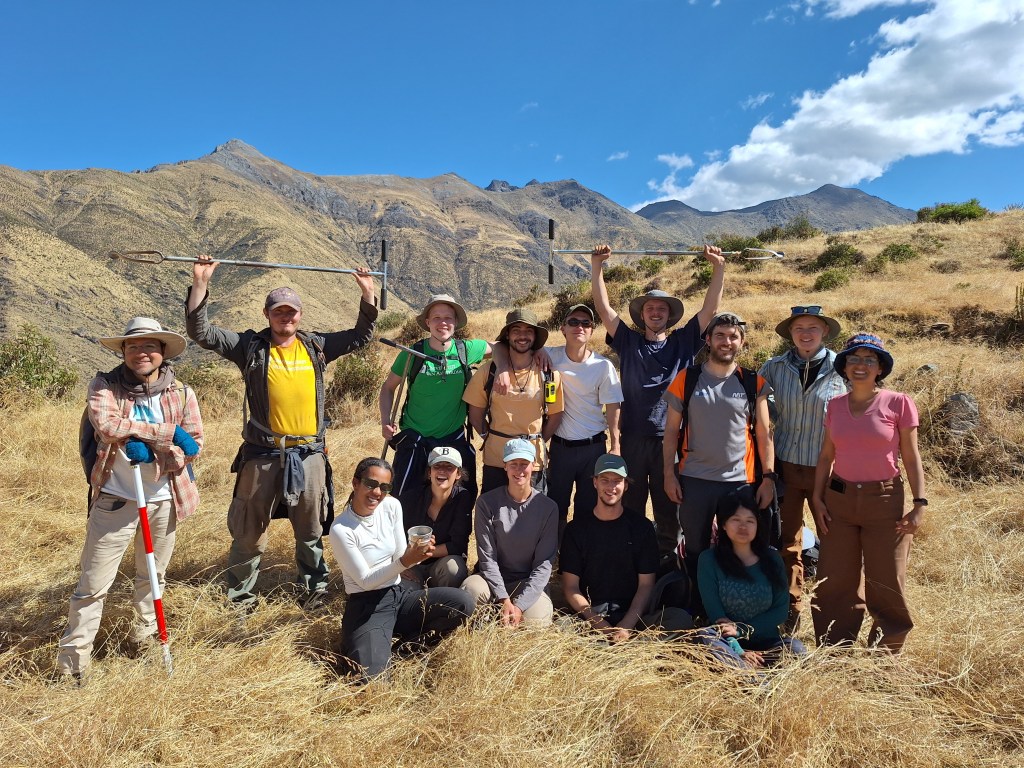
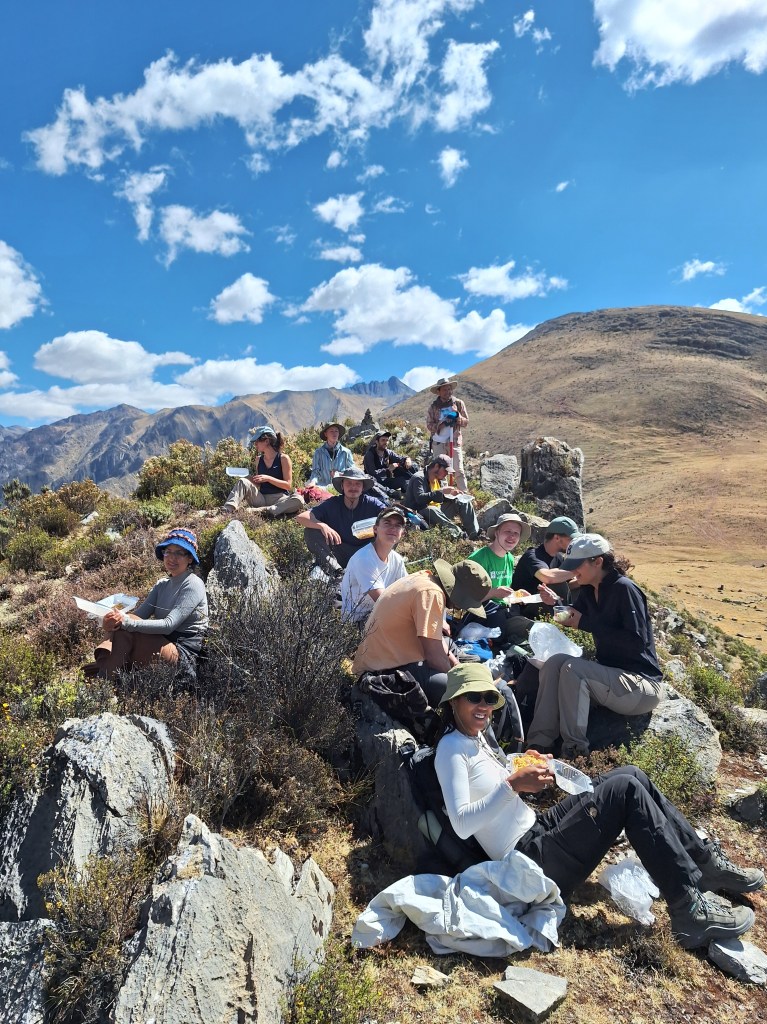
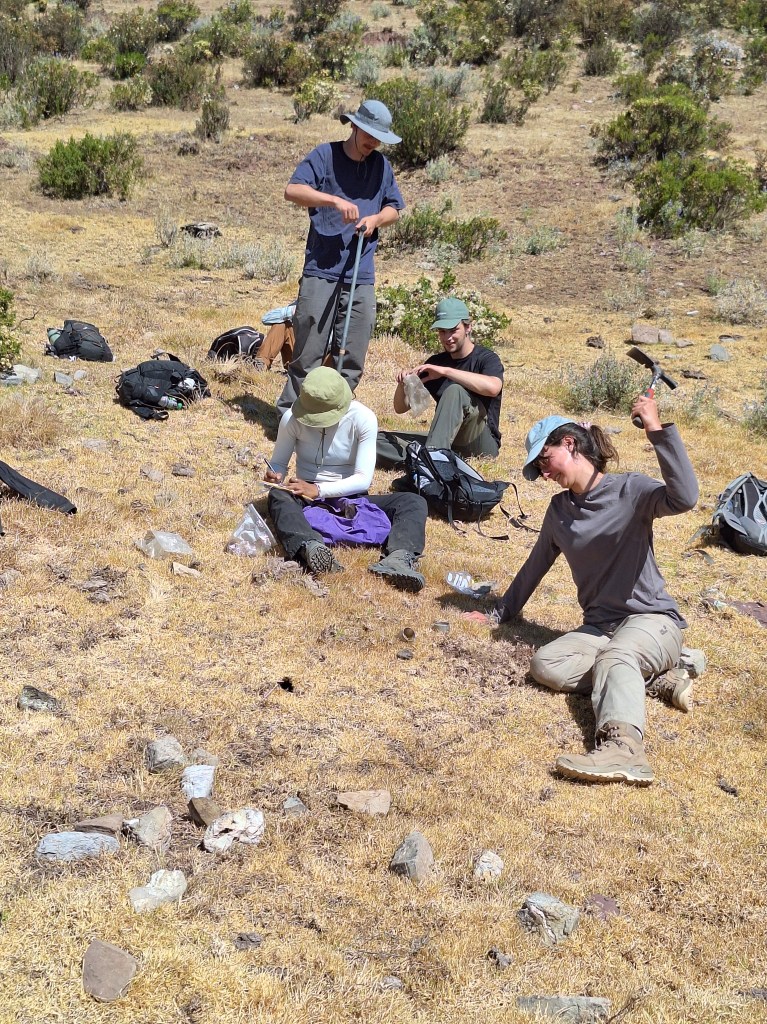
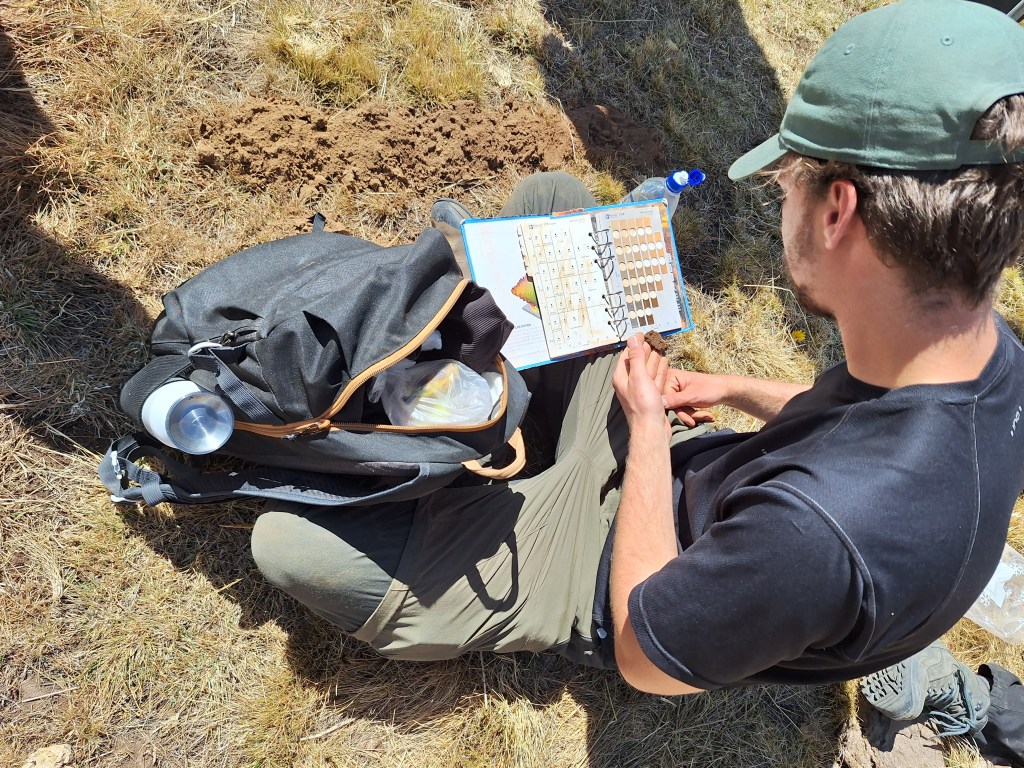
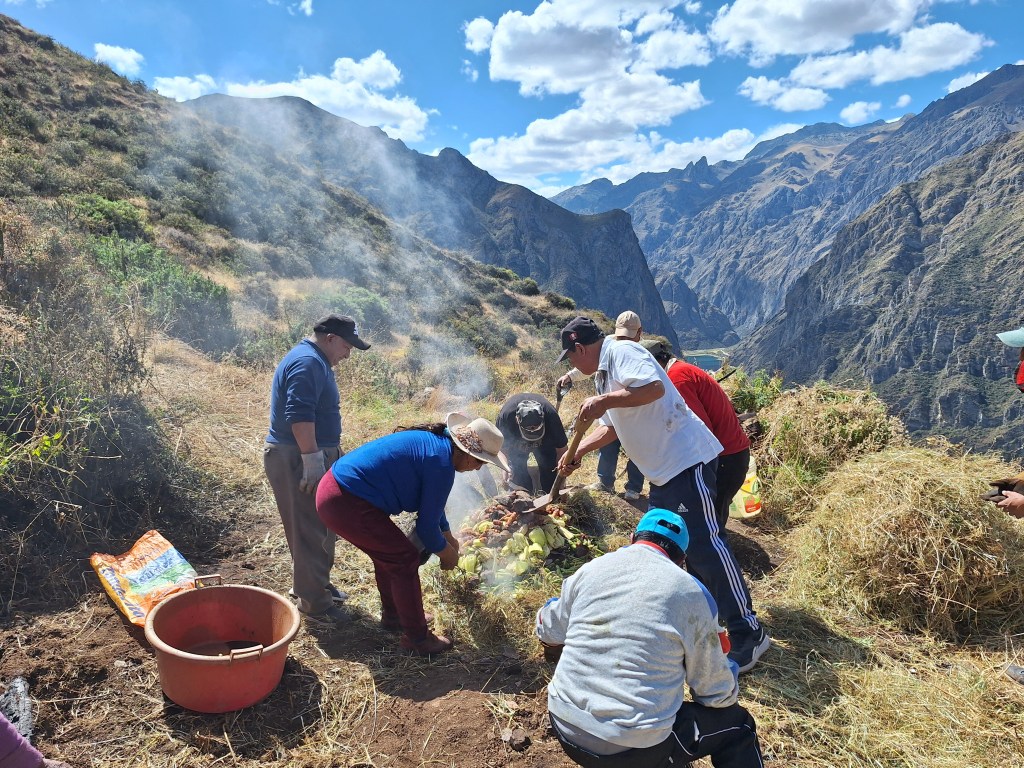
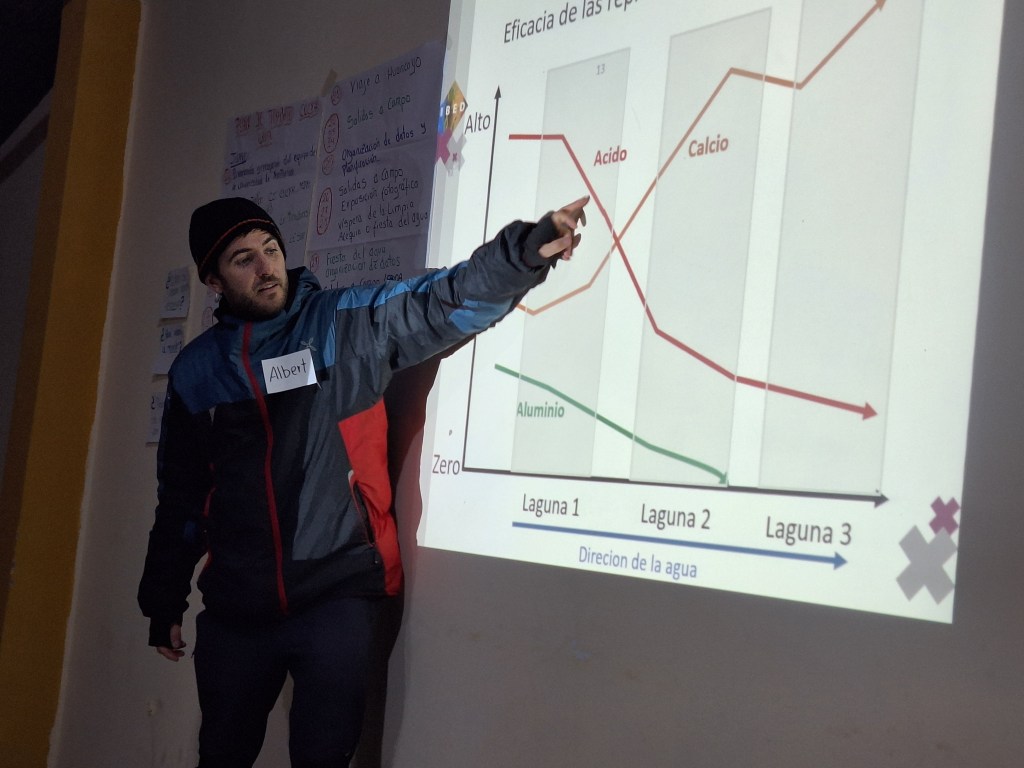
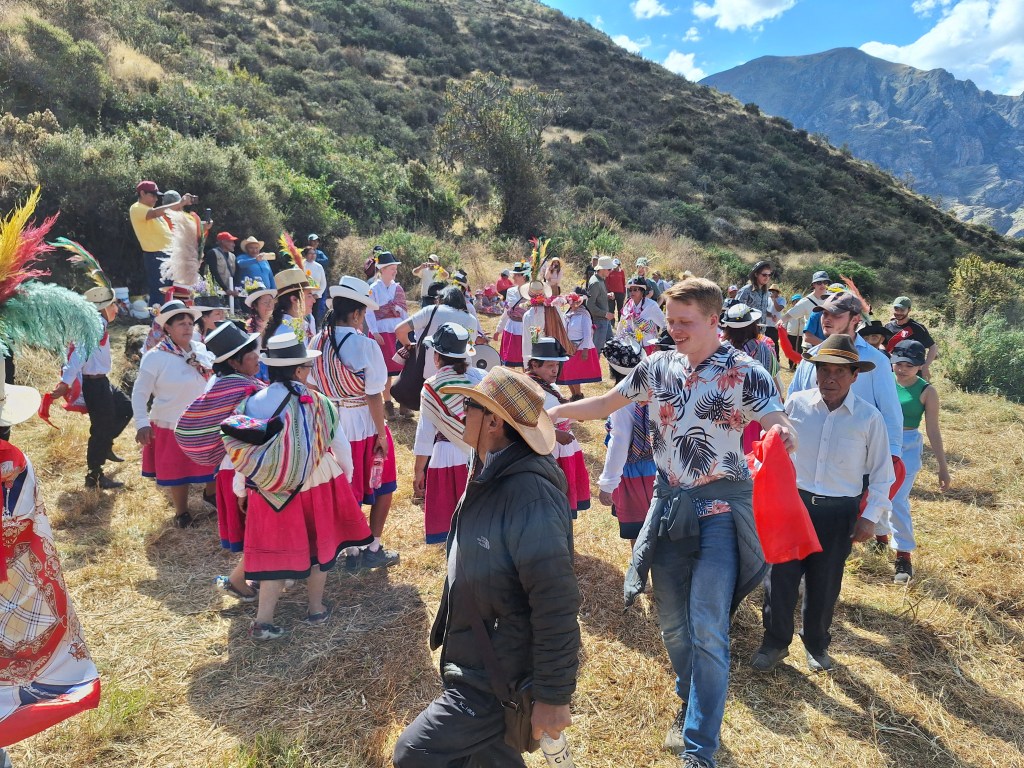
The University of Amsterdam MSc Earth Sciences “Geoecological Systems” field course took place this year in Miraflores (Peruvian Andes) during June and July. Eighteen students, including three from Peruvian institutions, spent four weeks exploring the high Andes. During this time the students developed scientific projects to address interests of the local population related to soil quality, environmental pollution, water resources and cultural heritage. Access to the area and embedding within the community was enabled by The Mountain Institute Peru. During the course the students gained extensive ‘hands on’ field experience, developed teamworking skills and discovered the benefits of a participatory approach to research.

This course runs once every two years (to find out about the 2022 expedition click here). Want to join us on a future expedition? Check out our degree program here to enroll.

Images from the University of Amsterdam Peru field course 2024

SASQUA conference

June 6, 2024
WDG

South African research trip (part 1 of 3)

By Jelle Kraak

As part of my MSc Biological Sciences (University of Amsterdam) research project entitled “Assessing the effect of human induced fire regime changes on vegetation in the Drakensberg mountains” (for further details click to see previous post). I’ve travelled to Africa, where I’ll be staying a month. During this mini blogpost series I’ll take you with me on my travels! 

In the first week of my visit here, I along with my supervisor Prof. Trevor Hill and students from the University of Kwa-Zulu Natal went to visit the biennial SASQUA (Southern African Society for Quaternary Research) congress.

During the first poster session, I presented my poster which went into detail on how we are developing a proxy to reconstruct past fire using micro-Fourier Transformed Infrared Spectroscopy (µFTIR). These reconstructed fire temperatures can then be compared with phytolith or pollen data to assess the effects of different fire temperatures on local vegetation over time. The presentation and poster were well received!

After my poster presentation there were two more congress days which were filled with interesting talks and beautiful posters.

Continue Reading

Phytoliths, starch grains and diatoms

May 29, 2024
WDG

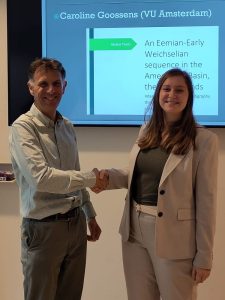
Caroline Goossens receives the Florschütz Award.

On Friday 24 May 2024 the Palynologische Kring (Dutch palynological society) held a seminar series and laboratory workshop at the Institute for Biodiversity & Ecosystem Dynamics (University of Amsterdam). During the afternoon we had the annual meeting of the society, the presentation of our MSc Thesis prize, four seminars and two laboratory demonstrations. The MSc thesis prize “Florschütz Award” was won by Caroline Goossens (VU Amsterdam) for her thesis entitle: “An Eemian-Early Weichselian sequence in the Amersfoort Basin, the Netherlands”; the project was supervised by Natalie Van der Putten, Cees Kasse and Jeroen Schokker. We hope that Caroline will present her thesis at a future Palynologishe Kring meeting.

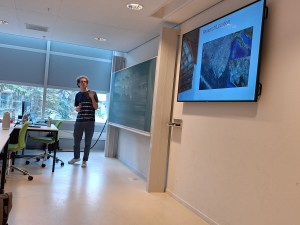
Teye Aukes presenting on the diatoms of ancient Rome

The talk series was kicked off by Nina Witteveen (University of Amsterdam) who presented part of her PhD thesis (currently awaiting defense), entitled: “Long-term forest recovery in Amazonia insights from phytolith analysis”. Nina discussed the impact of past peoples on the vegetation of Suriname based on her work identifying phytoliths in soil samples collected at varying distances from an archaeological site. The second talk was given my Amanda Henry (Leiden University) who demonstrated how the analysis of starch grains extracted from archaeological context can provide insights in to past diets. She used these evidences to suggest that early humans and Neanderthals had a similar diversity of plants in their diets. The third talk was given by University of Amsterdam MSc researcher Teye Aukes and focused upon his identification of diatoms from an swampy lagoon environment near Ostia (Italy). He drew conclusions from these data about the antiquity of salt production in ancient Rome. The final talk was given online by Welmoed Out (Moesgaard Museum) who presented a detailed analysis of inter- and intra-analyst variability in phytolith morphometric analysis.

After the seminars we moved upstairs to the microscope laboratory where Nina Witteveen and Ana Smuk (University of Groningen) showed off phytoliths from their study site in South America and the Netherlands.

Some of the Palynologische Kring members enjoying some refreshment after the event.

Teunissen van Manen PhD thesis 2020

April 11, 2024
WDG

Teunissen van Manen, M.L. (2020) Plant wax n-alkane biomarkers in the tropical Andes (Ecuador). PhD Thesis, University of Amsterdam, Amsterdam. ISBN: 9789491407857

Abstract

Developing new applications for plant wax n-alkane biomarkers can deepen our understanding of ecosystem history. In this thesis I study modern and sedimentary n-alkane signals, sourced along the tropical Andes, to better understand how they can be used as a proxy for past environmental change. The overarching question addressed in this thesis is: what do n-alkane patterns extracted from sedimentary records reflect? Specifically, I address:• Do environmental or taxonomic factors dominate the n-alkane signal?• Does the n-alkane signal alter as the plant material degrades?• How much of the n-alkane variability can be explained by our analytical protocols?I find that the taxonomic and environmental signals of n-alkane patterns are entangled, especially in leaf n-alkanes. Soil n-alkane patterns reflect environmental conditions at the site, but the results cannot rule out a taxonomic signal in soil n-alkane patterns. I also find that, as the source material degrades (leaves), the n-alkane patterns are altered. Although the n-alkane signal is recognizable as having plant origin, there is a reduction in n-alkane pattern variability and the metric for degradation becomes an increasingly important descriptor of the n-alkane pattern shifts observed in soils and sediments. I find evidence that the metric for degradation can be used as proxy for past environmental change, but the application of this n-alkane signal proxy is not straightforward. Finally, I find there is little understanding of how much extraction and measurement protocols contribute to the n-alkane pattern variability and what implications this has on interpretations of the n-alkane signal.

Handel: http://hdl.handle.net/11245.1/716e0c42-7bc7-4270-9d76-e4c556c51e1a

Cuesta PhD thesis 2019

April 9, 2024
WDG

Cuesta C., F.X. (2019) Global environmental changes in the high tropical Andes. PhD Thesis, University of Amsterdam, Amsterdam. ISBN: 9789491407758

Abstract

The high tropical Andes harbours vital ecosystems that sustain biodiversity, carbon storage, and environmental service provision for millions of people. They are identified as one of the most vulnerable terrestrial ecosystems to global environmental changes, particularly to climate change and land use conversion. Despite their vulnerability and the importance of global biodiversity conservation and Andean societies, they are among the least studied ecosystems in the world. In this thesis, I studied the patterns of summit plant community’s across the tropical section of the Andes. Further, I studied what environmental factors influence plant community composition, species diversity, and thermal niche traits in high tropical alpine ecosystems. Based on the thermal niche traits, I assessed the potential vulnerability of species and communities to climate warming, considering the effect of the climate variability hypothesis on the species niche breadths. Further, I synthesised the current state of knowledge and assessed the current and projected landscape changes in the high Andes due to the combined effect of glacier retreat and climate warming. I reviewed documented glacier changes and landscape evolution over past decades to millennia and assessed projected future glacier shrinkage until 2100 for two case studies in the Andes of Ecuador and Peru. I also evaluated the capacity of high Andean ecosystems to recover from land use changes using the aptitude to store and take up carbon together with plant diversity. Lastly, I carried out an applied research analysis aimed at informing conservation policy formulation in continental Ecuador through defining critical areas for biodiversity conservation.

Handel: http://hdl.handle.net/11245.1/c97e30b0-90d7-4363-9d33-50d288089712

What has biogenic silica ever done for us?

April 3, 2024
WDG

Siliceous Microfossils Meeting

  • Date: Friday 24 May 2024
  • Location: Institute for Biodiversity & Ecosystem Dynamics, University of Amsterdam

Program

  • 13:00-14:00 – Palynologische Kring society annual meeting
  • 14:00-14:15 – Coffee
  • 14:15-15:45 – Seminar series
    • Using phytolith analysis to detect palm enrichment in Amazonia Nina Witteveen (University of Amsterdam)
    • Starch grains as indicators of plant food consumption in Neanderthals and Early Modern Humans Amanda Henry (University of Leiden)
    • Paleoenvironmental history of an archaeological lagoon in Central Italy: Insights from diatom analysis Majoi Nacimiento, Teye Aukes & Jan Sevink (University of Amsterdam)
  • 15:45-17:30 – Laboratory activities
    • Advances in topical phytolith identification Nina Witteveen (University of Amsterdam)
    • Finding Suitable Grounds – combining the on/off site approach through phytolith investigation in Flevoland Ana Smuk (Rijksuniversiteit Groningen)

If you are not already a member and would like to attend please contact the society via email or the web portal: https://www.palynologischekring.nl/contact/

To find out more about the Palynologische Kring click here to visit the web site.

New funding opportunity for African researchers

November 8, 2023
WDG

A new funding stream is about to open up (1 December 2023) to support African scientists to carry out PhD research at Dutch universities. The GROW research programme (Graduate Research on Worldwide Challenges) will fund 51 PhD positions to be based at one of five Dutch universities, including with the Institute for Biodiversity & Ecosystem Dynamics, at the University of Amsterdam.

To find out more click here.

Applications open 1 December 2023 and close 31 January 2024.

Blog at WordPress.com.