The Ecology of the Past: Inagueral lecture

January 12, 2023
WDG

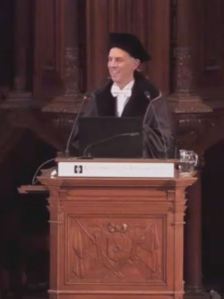
William Gosling giving his oratie “The Ecology of the Past” at the Aula (University of Amsterdam), 22 December 2022.

On the 22 December I gave my oratie (inaugural lecture), entitled “The Ecology of the Past”, related to my appointment as Professor of Palaeoecology & Biogeography at the University of Amsterdam. I really enjoyed the opportunity to mark this personal milestone with some many colleagues, friends and family. In case you missed the event you can watch it online via the universities portal by clicking here (or on the photo).

Note: (1) to flip between seeing the slides and the video feed just click on the screen, (2) running time of lecture until 50 minutes.

Reference

Gosling, W.D. (2022) The Ecology of the Past
Inaugural speech, University of Amsterdam.

Mapping Ancient Africa: Video of seminar 8

December 19, 2022
WDG

The seventh Mapping Ancient Africa online seminar took place on Thursday 15 December 2022. The seminar was delivered by Chantal Kabonyi (University of Bukavu) and chaired by Manu Chevalier (University of Bonn). The presentation was delivered in French with English slides.

  • Les trois derniers millénaires d’histoire environnementale autour du lac Kivu: De la dorsale congolaise à la dorsale congo-Nil 
  • [The last three millennia of environmental history around Lake Kivu: From the Congolese ridge to the Congo-Nile ridge]

Details of this seminar can be found here. You can find more Mapping Ancient Africa seminar videos on the “Ecology of the Past” YouTube channel.

INQUAlogo

University of Amsterdam Toga!

December 1, 2022
WDG

Yesterday I picked up my Professorial Toga from Togamakerij Rhebergen on the Amsteldijk in Amsterdam. For me it was quite a moment as this item symbolizes so much work over so many years, and is thanks to the help, support and training of so many people. I am looking forward to my Oratie (inaugural lecture) on the 22 December and celebrating further with friends and family. I hope that you will agree that the hard work was worth it to have the privilege to wear this gown, and personal thanks to Helen Sahin of Togamakerij Rhebergen for making such a beautiful item of clothing for me!

Mapping Ancient Africa: Seminar 8

November 21, 2022
WDG

I am pleased to announce that the eighth online Mapping Ancient Africa seminar will take place on 15 December 2022 (17:00-18:00 CET)

Speaker: Chantal Kabonyi (University of Bukavu)
Title: Les trois derniers millénaires d’histoire environnementale autour du lac Kivu: De la dorsale congolaise à la dorsale congo-Nil [The last three millennia of environmental history around Lake Kivu: From the Congolese ridge to the Congo-Nile ridge]

NOTE: This will be a duel language presentation with the presentation given in French and slides containing English text.

The seminar will be delivered via Zoom. The link for the seminar can be obtained from the MAA Slack channel or by contacting the chair of this seminar Manu Chevalier. If you want to know more about the Mapping Ancient Africa project visit our web pages and please do not hesitate to get in contact if you want to get involved.

INQUAlogo

Mapping Ancient Africa: Video of seminar 7

November 11, 2022
WDG

The seventh Mapping Ancient Africa online seminar took place on Thursday 10 November 2022. The seminar was delivered by Manu Chevalier (University of Bonn) and showcased his new publication entitled: An introduction to the Climate REconstruction SofTware (CREST) model.

Details of this seminar can be found here. You can find more Mapping Ancient Africa seminar videos on the “Ecology of the Past” YouTube channel.

INQUAlogo

Reference

  • Chevalier, M. (2022) crestr: an R package to perform probabilistic climate reconstructions from palaeoecological datasets. Climate of the Past 18, 821-844. DOI: 10.5194/cp-18-821-2022
  • crestr An R package to perform probabilistic palaeoclimate reconstructions from palaeoecological datasets https://mchevalier2.github.io/crestr/

Inaugural lecture: The ecology of the past

November 9, 2022
WDG

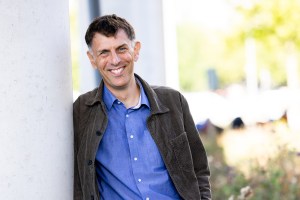
William D. Gosling ©KIRSTENVANSANTEN

I am delighted to announce that the inaugural lecture for my becoming Professor of Palaeoecology & Biogeography will take place at the Aula (Lutherse kerk) of the University of Amsterdam on the 22 December 2022 (16:30). If you would like to attend this event please let me know (via email) before 1 December 2022 so that an appropriate level of catering can be organized.

For further details visit the university web site here.

For my contact details visit my university web page here.

New insights from a Poaceae pollen morphological study in the Amazon

November 8, 2022
WDG

Open access:

Wei, C., Jardine, P.E., Gosling, W.D. & Hoorn, C. (2023) Is Poaceae pollen size a useful proxy in palaeoecological studies? New insights from a Poaceae pollen morphological study in the Amazon. Review of Palaeobotany and Palynology 308, 104790. DOI: 10.1016/j.revpalbo.2022.104790

Mapping Ancient Africa: Seminar 7

October 26, 2022
WDG

I am pleased to announce that the seventh online Mapping Ancient Africa seminar will take place on 10 November 2022 (17:00-18:00 CET – please note change of clocks from summer time) 

The seminar will be delivered via Zoom. The link for the seminar can be obtained from the MAA Slack channel or by contacting the chair of this seminar William Gosling. If you want to know more about the Mapping Ancient Africa project visit our web pages and please do not hesitate to get in contact if you want to get involved.

INQUAlogo

Mapping Ancient Africa: INQUA congress support

October 4, 2022
WDG

The Mapping Ancient Africa (MAA) project is offering five bursaries to help African based and/or early career researchers^ attend the up coming INQUA Rome congress. Each bursary will around Euro 1000 and should be used towards covering the cost of registration, accommodation and/or travel for the congress.

Application criteria:

  • Abstract submitted to INQUA Rome congress either to the Mapping Ancient Africa session, or to another session on a related topic (Deadline 1 November 2022).
  • Commitment to contributing an article for consideration to be published in the proposed MAA special issue of Quaternary International; for frame of references of the MAA project click here.

To apply submit the following information via emails to William Gosling as the corresponding Principle Investigator of the project. Applications should be clearly marked MAA-Application-YourName in the subject line:

  • Evidence of submission of an abstract to the INQUA Rome congress (copy of confirmation email and abstract).
  • Letter of motivation, including fit of the proposed article to the MAA aims and goals and statement of commitment to submit an article for consideration to be published in the Mapping Ancient Africa special issue of Quaternary International^^ (not more than 1 page)
  • Short academic CV, including highlight of up to 5 published articles indicating the scientific importance and your role in the publication (not more than 2 pages).

In the event of more applications being received than funding is available awards will be made by the MAA team (PIs and co-PIs) on the basis of the fit of the research to the MAA aims and goals. To receive funding receipts for all the expenses incurred will need to be provided (following INQUA regulations).

Deadline for application: 7 November 2022

Announcement of funding: 14 November 2022

INQUAlogo

^ following definition for Early Career Researchers (ECR) or Developing Country Researchers (DCR) provided by INQUA.

^^ please note that no guarantee of final publication is given or implied by this commitment. All submitted manuscripts will be subject to the usual rigorous peer review procedures for the journal.

Mapping Ancient Africa: Seminar 6 (take 2)

September 30, 2022
WDG

Following the postponement of our previous seminar I am pleased to announce the next Mapping Ancient Africa (MAA) seminar (the new number 6 in the series) will take place on Thursday 6 October at 17:00 (CEST).

  • Speaker: Verena Foerster (Universität zu Köln)
  • Title: Pleistocene climate variability in eastern Africa influenced hominin evolution
  • Related publication: Foerster, V., Asrat, A., Bronk Ramsey, C., Brown, E.T., Chapot, M.S., Deino, A., Duesing, W., Grove, M., Hahn, A., Junginger, A., Kaboth-Bahr, S., Lane, C.S., Opitz, S., Noren, A., Roberts, H.M., Stockhecke, M., Tiedemann, R., Vidal, C.M., Vogelsang, R., Cohen, A.S., Lamb, H.F., Schaebitz, F. & Trauth, M.H. (2022) Pleistocene climate variability in eastern Africa influenced hominin evolution. Nature Geoscience. DOI: 10.1038/s41561-022-01032-y

The seminar will be delivered via Zoom. The link for the seminar can be obtained from the MAA Slack channel or by contacting the chair of this seminar Stefanie Kaboth-Bahr. If you want to know more about the Mapping Ancient Africa project visit our web pages and please do not hesitate to get in contact if you want to get involved.

INQUAlogo
Blog at WordPress.com.