Palaeoecology course UvA 2022

September 15, 2022
WDG

The University of Amsterdam (UvA) palaeoecology course is underway. The course is part of the BSc Biology program and the “Earth & Ecology” minor of the BSc Future Planet Studies.

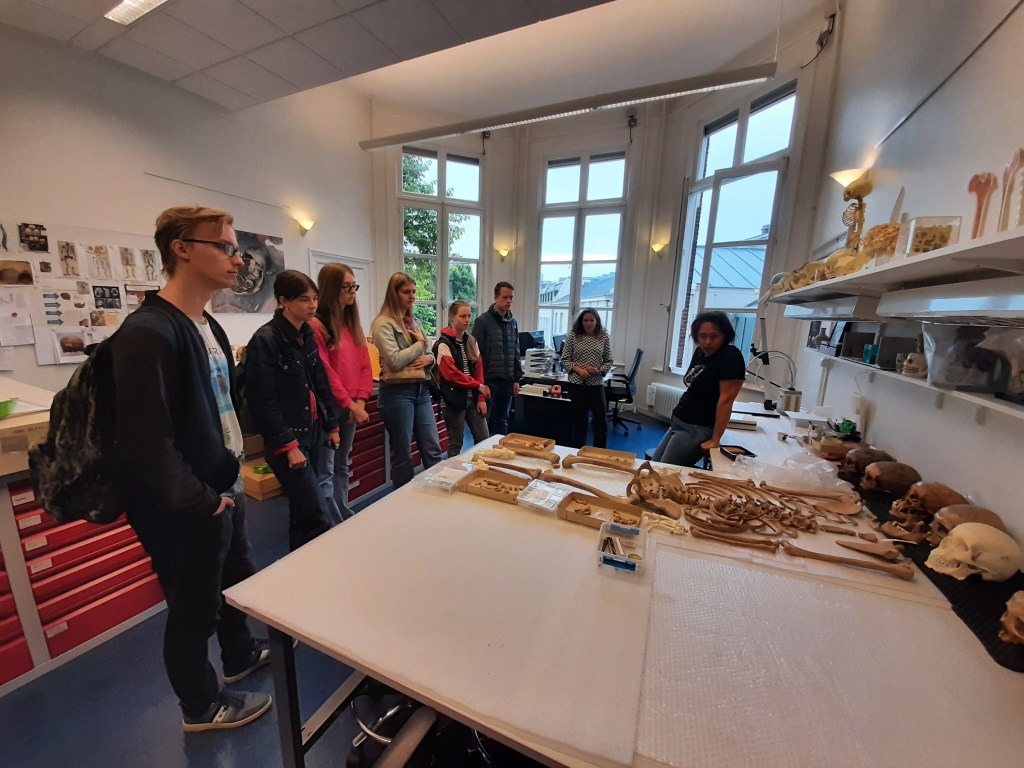
Week 1 (last week) we got everyone up to speed with the fundamentals of palaeoecology (including: key principles, depositional environments, dating methods) and laboratory skills (pollen, phytolith and macrofossil identification). This week (week 2) we are out and about (coring sediments, surveying vegetation and visiting the archaeology department). By the end of the week the students will (should!?) have generated sufficient data in the laboratory and field to be able to identify the location from which their mini-project “mystery slides” were taken. Next week (week 3) will be number crunching to generate the statistical support for their ideas and inferences.

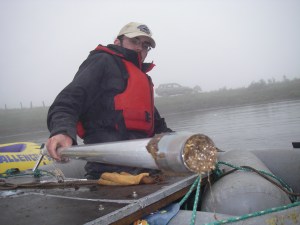
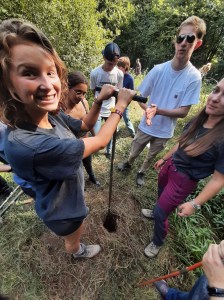
Students collecting sediments using a Russian corer at Langenboom (September, 2022). These samples were recovered in collaboration with the BosGroep Zuid Nederland as part of an ongoing project to gain new insights into the nature of the past landscape in the Netherlands and aid conservation efforts.

Characterising Dutch forests, wetlands and cultivated lands on the basis of phytolith assemblages

September 13, 2022
WDG

Open access:

de Wolf, I.K., McMichael, C.N.H., Philip, A.L. & Gosling, W.D. (2022) Characterising Dutch forests, wetlands and cultivated lands on the basis of phytolith assemblages. Netherlands Journal of Geosciences 101, e17. DOI: 10.1017/njg.2022.14

This paper started off as a research thesis undertaken by Iris de Wolf at the University of Amsterdam as part of her BSc Biology degree in 2018. The project was supervised by Crystal McMichael and William Gosling and has subsequently been further developed. If you are student or researcher interested in undertaking a similar type of projects please get in touch.

Listen to Iris’s journal podcast speaking about the subject here.

Job: PhD Caribbean Palaeoecology

September 9, 2022
WDG

The Palaeoecology Research Group within the Department of Archaeology at the Max Planck Institute for Geoanthropology, Jena, Germany is pleased to announce a new vacancy for a doctoral student exploring human-environment interactions in the Caribbean. The position will be based in Jena, Germany for a period of 3 years with the option for extensions and supervised by Dr. Yoshi Maezumi.

The Palaeoecology Research Group analyses palaeoecological and archaeobotanical proxies from sedimentary archives, including pollen, phytoliths, charcoal and stable isotopes to examine topics including the legacy of human land-use on ecosystems, spatio-temporal patterns of natural and human-driven fire activity, and the influence of natural and human disturbance regimes on the biogeographic distribution of plants and animals in past ecosystems.

Closing date: 30 September 2022

For full details and how to apply click here.

For further information contact Dr. Yoshi Maezumi.

Incorporating a palaeo-perspective into Andean montane forest restoration

September 2, 2022
WDG

Open access:

Loughlin, N.J.D., Gosling, W.D., Duivenvoorden, J.F., Cuesta, F., Mothes, P. & Montoya, E. (2022) Incorporating a palaeo-perspective into Andean montane forest restoration. Frontiers in Conservation Science 3, 980728. DOI: 10.3389/fcosc.2022.980728

MSc Earth Sciences: Peru field course 2022

July 15, 2022
WDG

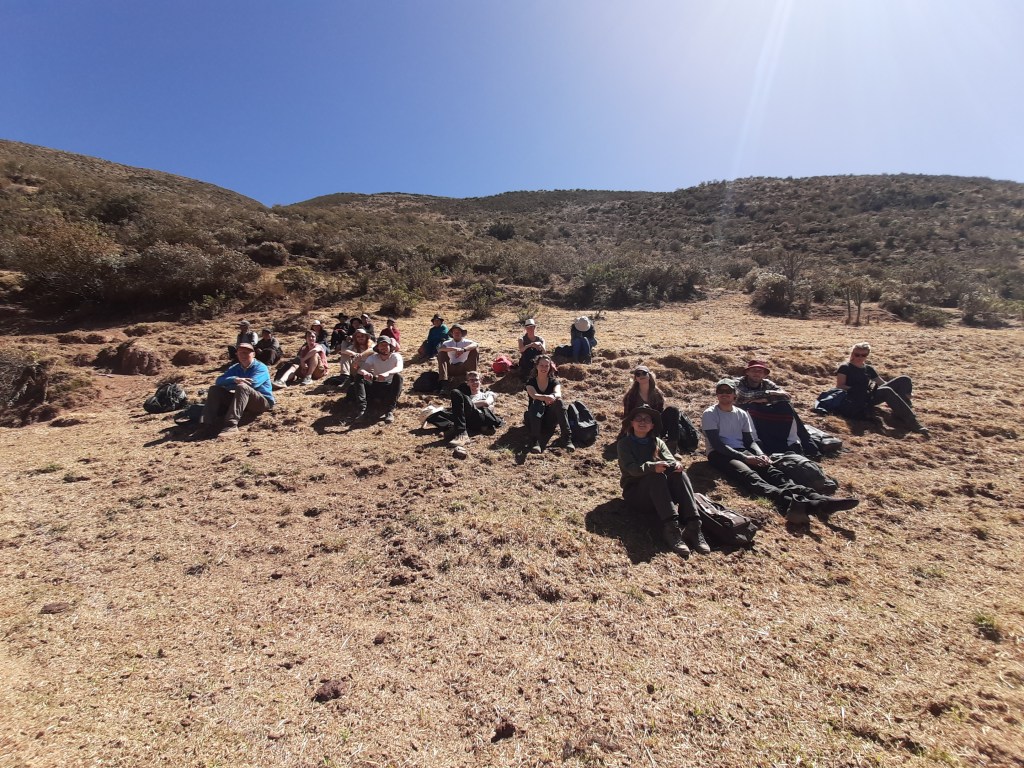
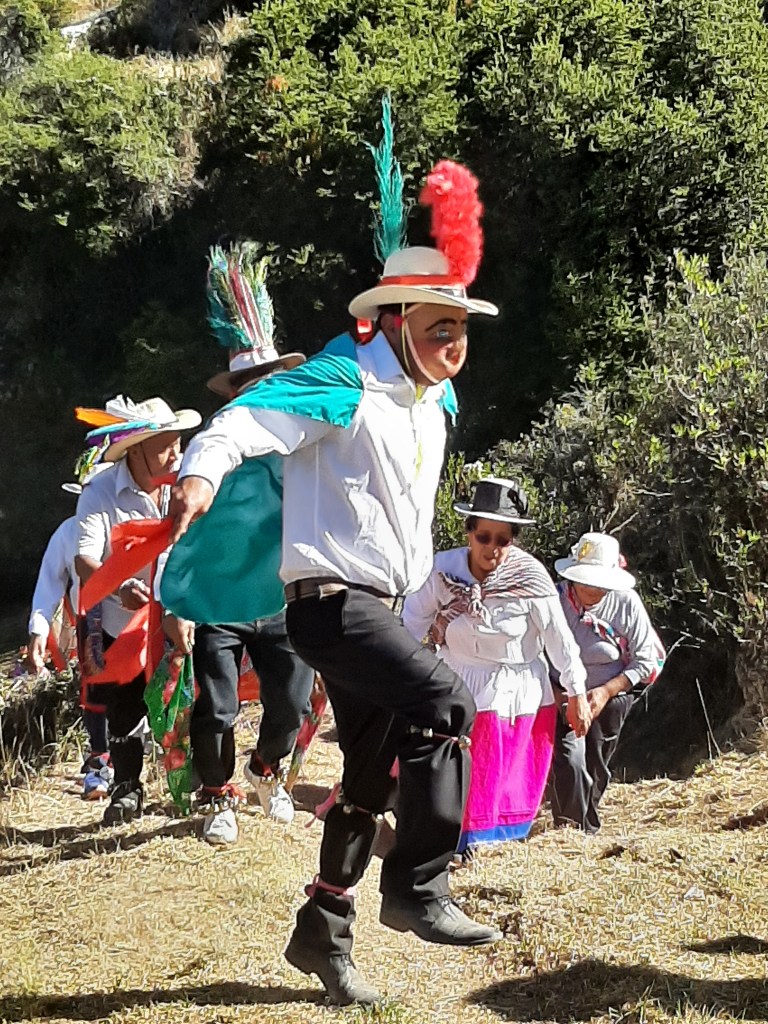
The University of Amsterdam MSc Earth Sciences “Geoecological Systems” field course to Peru took place this year during June and July (2022). A team of 18 students and 4 staff spent four weeks in Miraflores Town (c. 3700 m above sea level) working with, and for, local communities to study geomorphology, geology, land-use, water quality and carbon storage. The students were organized into teams of 3 or 4 each of which tackled a research question in the nearby landscapes that had been developed in conjunction with the local community. Access to the area and embedding within the community was enabled by The Mountain Institute Peru. The student reports will be translated into Spanish who will communicate findings to the community in Miraflores Town.

Want to join us on a future expedition? Check out our degree program here to enroll.

Continue Reading

The legacy of 1300 years of land use in Jamaica

July 9, 2022
WDG

Open access:

Elliott, S., Maezumi, S.Y., Robinson, M., Burn, M., Gosling, W.D., Mickleburgh, H.L., Walters, S. & Beier, Z.J.M. (2022) The legacy of 1300 years of land use in Jamaica. Journal of Island and Coastal Archaeology. DOI: 10.1080/15564894.2022.2078448

The origin of alkaline fen in the Mosbeek Valley in the Netherlands is due to human impact rather than a natural development

April 21, 2022
WDG

Smeenge, H., Kooijman, A., Brinkkemper, O., Mars, H.d., Mauquoy, D. & van Geel, B. (2022) The origin of alkaline fen in the Mosbeek Valley in the Netherlands is due to human impact rather than a natural development. The Holocene 09596836221088230. DOI: 10.1177/09596836221088230

A palaeoecological perspective on the transformation of the tropical Andes by early human activity

March 8, 2022
WDG

Bush, M.B., Rozas-Davila, A., Raczka, M., Nascimento, M., Valencia, B., Sales, R.K., McMichael, C.N.H. & Gosling, W.D. (2022) A palaeoecological perspective on the transformation of the tropical Andes by early human activity. Philosophical Transactions of the Royal Society B: Biological Sciences 377, 20200497. https://doi.org/10.1098/rstb.2020.0497

Blog at WordPress.com.