The PDRA project will descover more about past vegetation and climate change in Lake Bosumtwi (Ghana)
We are seeking a PDRA to study past climate and vegetation change in tropical West Africa as part of the NERC-funded “500,000 years of solar irradiance, climate and vegetation changes” project. You will join a multidisciplinary collaborative research team and will work with an international network of project partners. The project will utilise cutting-edge organic geochemical techniques to generate the longest continuous record of fossil pollen chemistry change. The study will build upon previous research into the sediments recovered from Lake Bosumtwi (Ghana). The data generated will shed new light on the role of climate in driving vegetation change in the tropics.
You will already hold a PhD, or be near to completing your PhD, in a relevant scientific discipline with a background in the Earth or Environmental sciences. You must have substantial experience of organic geochemistry or tropical palynology, with well-developed self-management skills and the ability to prioritise effectively.
The PDRA will work with an associated PhD student looking at modern pollen-vegetation relationships in the same region.
The PDRA will be part of an international team; partners based at University of Nottingham, Oxford Brooks University, Imperial College London, Oxford University, University of Texas at Austin and the Forestry Research Institute of Ghana
Understanding how vegetation responded to past climate change requires the development of well constrained relationships between living floras, environment and climate. This project will help constrain the great uncertainty which exists as to how tropical ecosystems are represented in the fossil record by examining the relationship between modern vegetation and the pollen it produces. The project will analyse modern pollen rain using a combination of traditional microscopic analysis [1] and cutting edge geochemical techniques [2]. We anticipate that the findings will provide new insight into past vegetation and climatic change.
For further information on the project and how to apply see the full advert: NERC PhD advert. Prior to applying please check eligibility for NERC funding by clicking here.
Closing date: 25th April, interviews will be held at The Open University during May.
Two NERC algorithm funded PhD studentships are currently available with the PCRG. The projects are focused on understanding past environmental change in west tropical Africa and Amazonian-Andean Ecuador. Both projects will involve field work and build on on-going research within the lab.
Closing date 31/01/2013
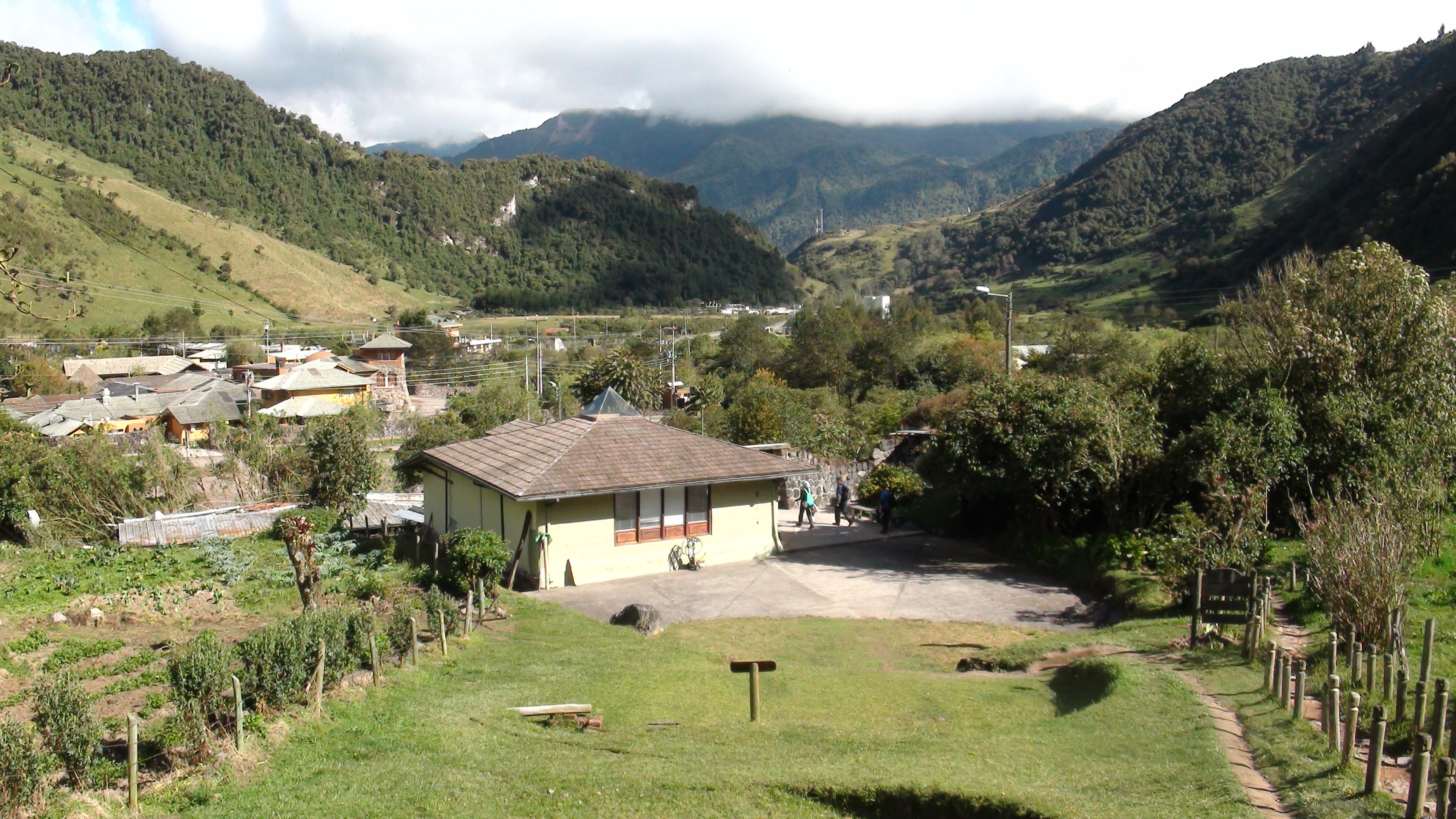
One project will work on samples collected during fieldwork in 2012 near Papallacta (Ecuador).
Further project details and how to apply below… Continue Reading
The PCRG contribution to the meeting was made by Hayley Keen who presented the first paper related to her doctoral research to an exteral audience entitled “Pollen counting for diverse tropical ecosystems”. The paper presented:
A statistical model (developed by co-author Felix Hanke) which simulaltes pollen counting in order to estimate the size of pollen count required to develop a robust ecological insight from the fossil pollen record, and
compared model predictions with empirical data from a diverse tropopical ecosystem (Mera, Ecuador) to assess the reliablity of the model.
It is hoped the application of the model to fossil pollen counting will allow more efficient and effective use of palynologists time. The paper was very well recieved despite the audible intake of breath when Hayley recommened that to characterize pollen richness (diversity) in some settings pollen counts in excess of 2000 grains might be required!
HOW DO WE UNDERSTANT PAST VEGETATION CHANGE? Our understating of vegetation in the past, and how it has changed through time, comes mainly from the examination of macrofossils (e.g. wood and leaves) and microfossils (e.g. pollen and spores) found in the sedimentary record. The potential for microscopic fossils to provide an insight into past vegetation change on a landscape scale was pioneered by von Post (Von Post, 1916, reprinted 1967) and has been subsequently used to understand changes in regional floras (Godwin, 1956), and address conservation issues (Willis et al., 2007). Analysis of fossil pollen and spores (palynology) is now widely used on late Quaternary timescales to answer ecological questions linking vegetation and wider environmental/climatic change; these include:
Has there been a change in major vegetation type (biome)? For example a change between woodlands and grassland vegetation.
How have the ecosystem dynamics altered? For example the presence or absence of fire.
How has the diversity within the ecosystem changed? For example increase or decrease in sample richness.
Palynological analysis relies on obtaining a sub-sample of the pollen contained within the sediment at a specific depth (time) which allows the vegetation at that time to be reconstructed. This sub-sample is known as a pollen count. To build up a picture of vegetation change through time it is necessary to generate a sequence of pollen counts. The size of the sub-sample (pollen count) required from any particular depth (time period) is dependent on the nature of the vegetation association being investigated and the ecological question being addressed . For example, the amount of pollen analysed to determine if the vegetation was predominantly wooded or grassland is different to that required to provide information on the biological diversity within the vegetation assemblage.
Discussed below are some of the conventions related to choosing an appropriate pollen count size within palynology, with particular reference to the challenges of dealing with diverse tropical floras.




 Ecology of the past