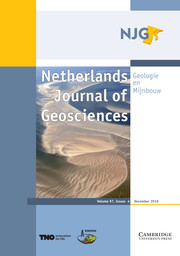
de Wolf, I.K., McMichael, C.N.H., Philip, A.L. & Gosling, W.D. (2022) Characterising Dutch forests, wetlands and cultivated lands on the basis of phytolith assemblages. Netherlands Journal of Geosciences 101, e17. DOI: 10.1017/njg.2022.14
This paper started off as a research thesis undertaken by Iris de Wolf at the University of Amsterdam as part of her BSc Biology degree in 2018. The project was supervised by Crystal McMichael and William Gosling and has subsequently been further developed. If you are student or researcher interested in undertaking a similar type of projects please get in touch.
Listen to Iris’s journal podcast speaking about the subject here.
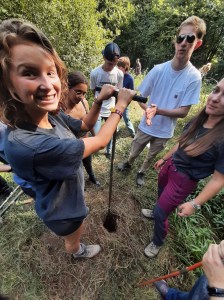
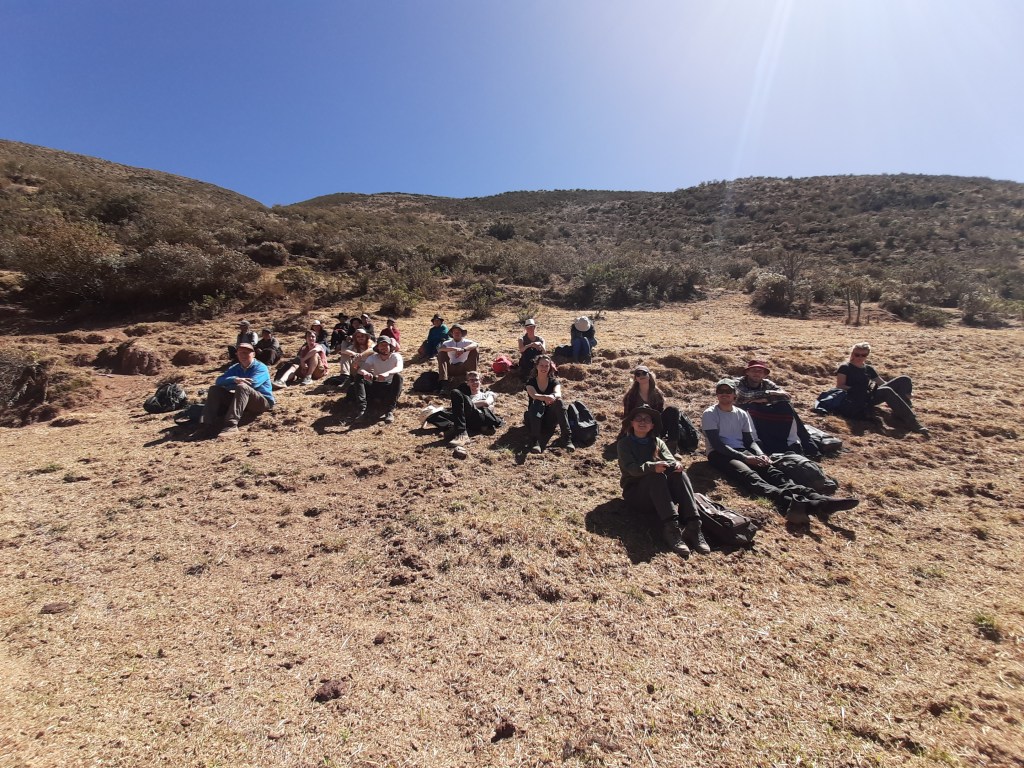
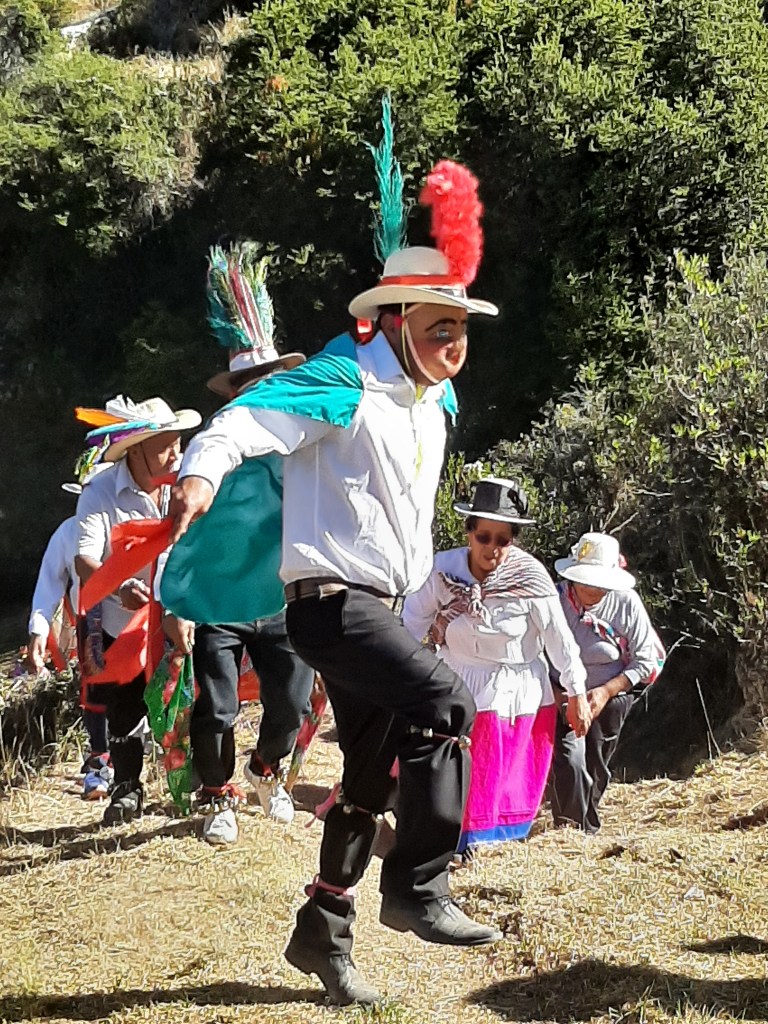
The University of Amsterdam MSc Earth Sciences “Geoecological Systems” field course to Peru took place this year during June and July (2022). A team of 18 students and 4 staff spent four weeks in Miraflores Town (c. 3700 m above sea level) working with, and for, local communities to study geomorphology, geology, land-use, water quality and carbon storage. The students were organized into teams of 3 or 4 each of which tackled a research question in the nearby landscapes that had been developed in conjunction with the local community. Access to the area and embedding within the community was enabled by The Mountain Institute Peru. The student reports will be translated into Spanish who will communicate findings to the community in Miraflores Town.
Want to join us on a future expedition? Check out our degree program here to enroll.
University of Amsterdam MSc Earth Sciences field course to Peru 2022Continue Reading
We are seeking to recruit an experienced educator and researcher in the field of climate dynamics, linked to Earth system functioning and/or land-surface processes. The position will be tenured, subject to a positive evaluation of your performance during the initial 12-month temporary appointment.
The Science in Archaeology 2 course, run as part of the minor in “Archaeology Today” by the Amsterdam Centre for Ancient Studies and Archaeology (ACASA), is currently underway. This year I have again contributed to this course with a weeks worth of activity related to detecting past human impacts. During this week we have focused on what sorts of evidence contained within the sedimentary record can be used to track human actions. We focused in particular on the manipulation of fire regimes and the the abundance of animals in landscapes (i.e. extinctions vs. introductions of domestic species). To illustrate how past human activities can be detected in landscapes I tapped into some recent publications I have been involved with (eastern Andean flank, Samoa and Mauritius) and the students selected papers in line with their own focus to discuss. Here is what they came up with…
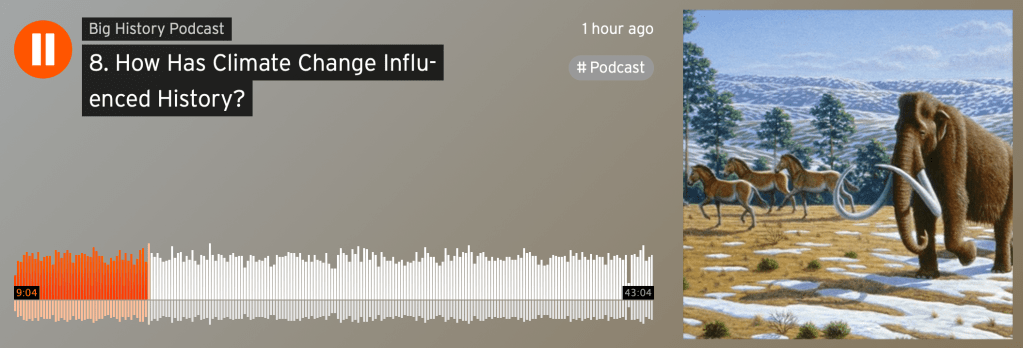
As part of the (on-line) bachelor level “Big History” course from the Institute for Interdisciplinary Studies at the University of Amsterdam I recently recorded a podcast with Henry Hooghiemstra. Under the banner of “How Has Climate Change Influenced History?” among other things we discussed: (i) the principles of how we can obtain information on past climatic and environmental change, (ii) how global climate changed between cold (glacial states) and warm (interglacial states) during the last 2.6 million years (Quaternary), and (iii) past human impacts and influences on environmental and climatic change.
Palaeoecology and past environmental research central to the work at the Institute for Biodiversity & Ecosystem Dynamics (University of Amsterdam); check out the new institute video, spot the palaeoecology researchers, and see what else is going on at IBED:
Prof. dr. Willem Renema Special Chair in Marine Palaeobiodiversity
Willem Renema, head of the Marine Biodiversity research group at Naturalis, has been appointed as a Special Chair in Marine Palaeobiodiversity within the Department of Ecosystem & Landscape Dynamics at the University of Amsterdam. I am delighted that Willem has joined the team coupling his expertise in marine tropical systems with our existing focus on terrestrial tropical settings will, I am sure, provide many new avenues of scientific endeavour. Catalysing collaboration between Naturalis and UvA will be five PhD researchers, employed on the Marie Skłodowska-Curie Innovative Training Network, who will be jointly supervised by Naturalis and UvA staff.
To find out more about Willem and his appointment click here.
Do you have a PhD in Physical Geography, Environmental Sciences, Landscape Ecology or Soil Ecology? Have you got educational and research experience working with digital data to contribute to climate, geographic or biodiversity science? If so please consider applying for the 4-year post-doctoral position “Digital Environmental Sustainability” currently available within the Department of Ecosystem & Landscape Dynamics (Institute for Biodiversity & Ecosystem Dynamics, University of Amsterdam).
Luckily, in spite of these trying times, we are allowed to continue our research in Amsterdam and on the Veluwe to determine the effects of air pollution on airborne pollen grains. Unfortunately for us (but generally perhaps one of the few silver linings of this situation), the COVID-19 lockdown has largely eliminated our main variable of interest; air pollution.
With traffic in the city at a minimum, any chemical differences might not be as pronounced between the city and rural areas. However, this may actually provide us with a unique opportunity to get a baseline of the pollen chemistry in Amsterdam with relatively little pollution. This baseline may also be of interest to projects working on urban air quality and greenifying urban spaces, such as the projects in the Amsterdam Knowledge Mile Park, which is included amongst our sampling locations.
This slideshow requires JavaScript.
For more about our project on pollen and pollution in the Netherlands see other posts:
Figure 1: (a) Illustrative images of sample locations in Amsterdam and the Hoge Veluwe. (b) The newly developed ‘pollen sniffer’ collects airborne pollen from the environment. (c) The FTIR can chemically characterise individual pollen grains.
Does environmental pollution enhance the allergenic nature of pollen? This is the question that drives my NWO Idea Generator grant that has just started. This project links up the pollen chemistry expertise in my group within the Department of Ecosystem & Landscape Dynamics (University of Amsterdam) and the work of Letty de Weger into human health and pollen (Leiden University Medical Centrum). Over the 2020 flowering season we will be monitoring pollen in Amsterdam (urban) and in the Hoge Veluwe (rural) in the space in which people have allergic reactions to see if there is any chemical difference between the pollen in urban and rural settings.
We are delighted that Cas Verbeek has joined the team as a Research Assistant; taking time out from his MSc Biological Sciences degree (University of Amsterdam). Cas is already busy in the field and lab fine tuning our collection and analysis protocols.