Ecological legacies of past fire and human activity in a Panamanian forest

February 23, 2023
WDG

Open access:

McMichael, C.N.H., Vink, V., Heijink, B.M., Witteveen, N.H., Piperno, D.R., Gosling, W.D. & Bush, M.B. (2023) Ecological legacies of past fire and human activity in a Panamanian forest. Plants, People, Planet 5, 281-291. DOI: 10.1002/ppp3.10344

MSc track Earth System Science

February 17, 2023
WDG

At the University of Amsterdam the MSc Earth Science is split into two tracks, one of these is entitled: “Earth System Science”. Earth System Science is a research intensive track focused on understanding the fundamentals of abiotic and biotic interactions across the globe and through time. During this degree you will spend around 6 months studying to pick up specialist knowledge and skills, and around 18 months actively developing yourself – in your key areas of interest – through project work.

The taught part of the Earth System Science track includes courses such as:

  • The Earth System: Learn how to analyse Earth system function across space and through time.
  • Analysis & Modelling Lab: Develop skills in data handeling, analysis and modeling relevant to Earth science.
  • Biogeochemical Cycles in the Earth System: Study how the dynamics of carbon and nitrogen link to societal challenges.
  • Climate Change: Explore the scientific basis for climate change an its implications for the environment and society.
  • Environments Through Time: Consider and analyse environmental change on timescale relevant to landscapes, societies and climates.
  • GIS and Remote Sensing in Ecosystem Dynamics: Learn how to use large remotely sensed datasets to gain insights into geological, geomorphological and soil systems.
  • Click here for further details and a full list of courses.
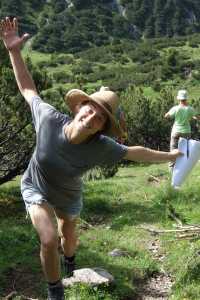
Clare Lee (on one leg, left) during field course in Peru successfully published her literature review which she conducted as part of her MSc in Earth Sciences at the University of Amsterdam.

In addition, free elective courses are possible from across the University of Amsterdam, or at other approved organizations or universities, i.e. it is possible to pick up skills in other specialisms (for example in languages, AI, or programming), or study a course at a university abroad, and have this included within your University of Amsterdam MSc Earth Science degree.

The project part of the Earth System Science track includes two research projects, or one research project and one internship with an external organization (such as a company or NGO). MSc research projects are often closely linked to active research within the Institute for Biodiversity & Ecosystem Dynamics. Some projects and literature reviews conducted by our MSc researchers reach a high enough level to be published in international scientific journals, either on there own or as part of a wider collaboration. Examples of recent papers including MSc researchers (highlighted in bold) are:

  • Lee, C.M., van Geel, B. & Gosling, W.D. (2022) On the use of spores of coprophilous fungi preserved in sediments to indicate past herbivore presence. Quaternary 5, 30. DOI: 10.3390/quat5030030
  • de Nijs, E.A. & Cammeraat, E.L. (2020) The stability and fate of Soil Organic Carbon during the transport phase of soil erosion. Earth-Science Reviews 201, 103067. DOI: 10.1016/j.earscirev.2019.103067

New Look MSc Earth Sciences (University of Amsterdam)

February 8, 2023
WDG

The MSc Earth Sciences at the University of Amsterdam has a new look for the start of the next academic year (starting September 2023). Drawing on the international research expertise of our staff it is now possible to tailor your studies within two complementary tracks:

  • Earth System Science: Focused on fundamental aspects of Earth science, such as biogeochemical cycles, climate dynamics, and past environmental change. Our education follows our research in exploring how abiotic and biotic elements of the Earths system interact through time and across the globe.
  • Environmental Management: Focused on the interface between Earth science and society, key topics include: management of coastal systems, ecosystem dynamics in urban environments, and the relationship between science policy and ethics. During your internship you will have the opportunity to engage with societal partners to develop skills and projects.
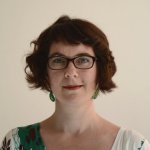
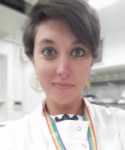
Judith Kirschner completed a MSc Earth Science project on past fire activity, and now is a PhD researcher in fire dynamics at the European University of Cyprus.
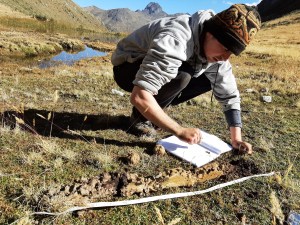
Mo Adam examining sediments in the high Andes during the MSc Earth Science Geo-ecosystem Dynamics field course in Peru (2022).

For both tracks education is delivered through lectures, field courses, laboratory practical’s, and data analysis. Furthermore, you will get the chance to develop your own research agenda by conducting a project with one of our scientists, or at an external partner or university. In addition to expert knowledge our graduates have transferable skills in data handeling, numerical analysis, and science communication.

To find out more about our program visit click here to visit the MSc Earth Sciences pages on the University of Amsterdam web site.

Mapping Ancient Africa in Rome

February 3, 2023
WDG

I am pleased to announce that we will be holding a two day Mapping Ancient Africa (MAA) workshop at the “Royal Netherlands Institute in Rome” on the 12 and 13 July (just before the INQUA 2023 Rome congress). We invite all MAA members to participate. Workshops will be lead on the two days by myself, Stefanie, Rahab and Lynne. We will cover the development of manuscripts for the proposed Quaternary International special issue, and planning for the future of the MAA network (future meetings and potential grant applications). If there are particular items that you would like to cover during the workshops then please let us know and we will do our best to include them. This event will be designed primarily for “in person” activities, however, we hope to have opportunities for people to also link in online at some plenary moments.

IMPORTANT: If you plan to attend the MAA Rome meeting in person please email me to register with the words “MAA Rome event registration” in the subject line. I can then organize appropriate levels of catering.

If you are not already involved with MAA and would like to know more visit our web pages and get in contact.

This event, and the Mapping Ancient Africa multi-year project, is supported financially by the Palaeoclimates Commission (PALCOM) of INQUA.

INQUAlogo

Mapping Ancient Africa: Seminar 10

February 1, 2023
WDG

Mapping Ancient Africa (MAA) online seminars are 10! On the 7 February 2023 (17:00-18:00 CET) the following exciting seminar will be given:

The seminar will be delivered via Zoom. The link for the seminar can be obtained from the MAA Slack channel or by contacting the chair of this seminar Stefanie Kaboth-Bahr. If you want to know more about the Mapping Ancient Africa project visit our web pages and please do not hesitate to get in contact if you want to get involved.

INQUAlogo

Mapping Ancient Africa: Video of Seminar 9

January 23, 2023
WDG

The 9th Mapping Ancient Africa seminar, and first of 2023, took place on Thursday 19 January. The seminar was delivered by Celine Vidal (University of Cambridge) and showcased recent work on the dating of volcanic deposits to constrain the age of hominin fossils in eastern Africa.

Details of this seminar can be found here. You can find more Mapping Ancient Africa seminar videos on the “Ecology of the Past” YouTube channel.

References

  • Vidal, C.M., Lane, C.S., Asrat, A., Barfod, D.N., Mark, D.F., Tomlinson, E.L., Tadesse, A.Z., Yirgu, G., Deino, A., Hutchison, W., Mounier, A. & Oppenheimer, C. (2022) Age of the oldest known Homo sapiens from eastern Africa. Nature 601, 579-583. https://doi.org/10.1038/s41586-021-04275-8
  • Vidal, C.M., Fontijn, K., Lane, C.S., Asrat, A., Barfod, D., Tomlinson, E.L., Piermattei, A., Hutchison, W., Tadesse, A.Z., Yirgu, G., Deino, A., Moussallam, Y., Mohr, P., Williams, F., Mather, T.A., Pyle, D.M. & Oppenheimer, C. (2022) Geochronology and glass geochemistry of major Pleistocene eruptions in the Main Ethiopian Rift: Towards a regional tephrostratigraphy. Quaternary Science Reviews 290, 107601. https://dx.doi.org/10.1016/j.quascirev.2022.107601
INQUAlogo

Mapping Ancient Africa: Seminar 9

January 12, 2023
WDG

I am delighted to announce the first online Mapping Ancient Africa (MAA) seminar of the New Year will take place on 19 January 2023 (17:00-18:00 CET), this will be the ninth in our series.

  • Speaker: Céline Vidal (University of Cambridge)
  • Title: Age of the oldest known Homo sapiens from eastern Africa
  • Related publication: Vidal, C.M., Lane, C.S., Asrat, A., Barfod, D.N., Mark, D.F., Tomlinson, E.L., Tadesse, A.Z., Yirgu, G., Deino, A., Hutchison, W., Mounier, A. & Oppenheimer, C. (2022) Age of the oldest known Homo sapiens from eastern Africa. Nature 601, 579-583. DOI: 10.1038/s41586-021-04275-8

The seminar will be delivered via Zoom. The link for the seminar can be obtained from the MAA Slack channel or by contacting the chair of this seminar William Gosling. If you want to know more about the Mapping Ancient Africa project visit our web pages and please do not hesitate to get in contact if you want to get involved.

INQUAlogo

The Ecology of the Past: Inagueral lecture

January 12, 2023
WDG

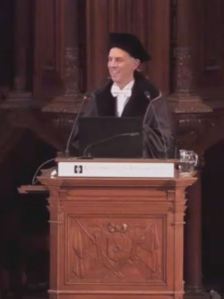
William Gosling giving his oratie “The Ecology of the Past” at the Aula (University of Amsterdam), 22 December 2022.

On the 22 December I gave my oratie (inaugural lecture), entitled “The Ecology of the Past”, related to my appointment as Professor of Palaeoecology & Biogeography at the University of Amsterdam. I really enjoyed the opportunity to mark this personal milestone with some many colleagues, friends and family. In case you missed the event you can watch it online via the universities portal by clicking here (or on the photo).

Note: (1) to flip between seeing the slides and the video feed just click on the screen, (2) running time of lecture until 50 minutes.

Reference

Gosling, W.D. (2022) The Ecology of the Past
Inaugural speech, University of Amsterdam.

Mapping Ancient Africa: Video of seminar 8

December 19, 2022
WDG

The seventh Mapping Ancient Africa online seminar took place on Thursday 15 December 2022. The seminar was delivered by Chantal Kabonyi (University of Bukavu) and chaired by Manu Chevalier (University of Bonn). The presentation was delivered in French with English slides.

  • Les trois derniers millénaires d’histoire environnementale autour du lac Kivu: De la dorsale congolaise à la dorsale congo-Nil 
  • [The last three millennia of environmental history around Lake Kivu: From the Congolese ridge to the Congo-Nile ridge]

Details of this seminar can be found here. You can find more Mapping Ancient Africa seminar videos on the “Ecology of the Past” YouTube channel.

INQUAlogo

Six research vacancies within the Institute for Biodiversity & Ecosystem Dynamics

December 13, 2022
WDG

Assistant and / or Associate Professor positions in:

  • Carbon cycle dynamics in terrestrial ecosystems
  • Biological feedbacks in the marine carbon cycle
  • Impacts of climate-related environmental change on ecological systems
  • Land cover and land use dynamics
  • Geomorphology and tropical landscape evolution
  • Aquatic ecotoxicology and water quality

Closing date for all positions 8 January 2023

Blog at WordPress.com.