Castilla-Beltrán, A., Hooghiemstra, H., Hoogland, M.L.P., Pagán-Jiménez, J., van Geel, B., Field, M.H., Prins, M., Donders, T., Malatesta, E.H., Hung, J.U., McMichael, C.H., Gosling, W.D. & Hofman, C.L. Columbus’ footprint in Hispaniola: a paleoenvironmental record of Indigenous and Colonial impacts on the landscape of the central Cibao Valley, northern Dominican Republic. Anthropocene. DOI: 10.1016/j.ancene.2018.05.003
Valencia, B.G., Bush, M.B., Coe, A.L., Elizabeth, O. & Gosling, W.D. (2018) Polylepis woodland dynamics during the last 20,000 years. Journal of Biogeography online. DOI: 10.1111/jbi.13209
Montoya, E., Keen, H.F., Luzuriaga, C.X. & Gosling, W.D. (2018) Long-term vegetation dynamics in a megadiverse hotspot: The Ice-Age record of a pre-montane forest of central Ecuador. Frontiers in Plant Science 9, 196. doi: 10.3389/fpls.2018.00196
Yesterday was the second, and final, day of the Netherlands Annunal Ecology Meeting (NAEM) for 2018. Having stayed up rather later than I would normally for a Tuesday night, due to the the gezellig atmosphere, the scrambled eggs and coffee were very welcome for breakfast. We were then on with the conference with parallel sessions starting at 08:30.
First up I opted for the session on “Monitoring biodiversity change: Essential biodiversity variables and beyond” organised by Daniel Kissiling (University of Amsterdam) and Rob Jongman (Wageningen University & Research). In the session new IBED PhD research Zsofia Koma presented a nice talk on the potential of LiDAR for evaluating ecosystem change, and Franziska Schrodt (University of Nottingham) looked at how we can link biodiversity and geodiversity. I found the talk by Franziska highlighting the importance of linking the abiotic and biotic components of the landscape particulalry stimulating as it links very well with much ongoing work within both the Department of Theoretical & Computational Ecology (Biogeography & Macroecology) and Ecosystem & Landscape Dynamics (Biodiversity & Geodiversity in the tropics) here at IBED.
Having fun online at #NAEM2018
To take us to lunch were two plenary lectures on the theme of these were given by Katja Poveda (Cornell University) and Erik Polman (replacing Marchel Dicke; Wageningen University). Both talks illustrated the complexity of natural systems and landscapes.
After lunch I chose the “Animal Ecology” session charied by Chris Smit (University of Groningen) and Patrick Jansen (Wageningen Research & University). I really enjoyed the first two talks in this session which highlighted the complexity that animals add to ecosystems. First up Esther Rodriguez (PWN) showed the differential impact of European bison and wild horses on vegetation (Cromsigt et al., 2017). Then Annelies van Grinkel (University of Groningen) presented her work trying to discover if deer in the Netherlands are still scared of wolves after the absence of wolves from the Netherlands for the last 150 years; this included some nice camera trap footage of deer running away from hand soap!
Overall a fun meeting, I met lots of new people, and saw lots of great talks so will definatly be back next year. Thanks to all the organisers for putting on such as show.
“Global distribution patterns of mycheterotrophic plants”. The research of Sofia Gomes (Naturalis Biodiversity Centre) is captured by Milan Teunissen van Manen (@MilanaTvM).
Ancient human disturbances may be skewing our understanding of Amazonian ecology. The research of Crystal McMIchael (University of Amsterdam) is captured by Judith Westveer (@water_science).
Today the Dutch ecological community has convened at the Netherlands Annual Ecology Meeting (NEAM) in the forest near Lunteren. The meeting was kicked off by plenary lectures by Trisha Atwood and Han Olff who talked to the theme of “Ecosystem functioning in a changing world”. Trisha highlighted the importance of animals in modifying plant communities and their consequent importance for understanding changes in carbon storage. Han illustrated the complexity of ecological networks and posed the significant challenge of understanding changes in competing networks. Following the plenaries I chose two sessions to follow. The first on “Plant Ecology” and the second on “Ecosystem Resilience”. There were many exciting talks in both sessions, two of which grabbed my attention. Mara Baudena (Utrecht University) highlighted the complexity of modelling forest-grassland interactions in Africa, while Sofia Gomes (Naturalis Biodiversity Centre) showed surprising (to me) variation in mychorizal fungi across the globe.Furthermore four talks were presented by researchs at my home, the Institute for Biodiversity & Ecosystem Dynamics (University of Amsterdam):
Crystal McMichael“Ancient human disturbances may be skewing our understanding of Amazonian ecology”
Milan Teunissen van Manan“Species specific responses in leaf wax n-alkane composition from six tropical tree species”
Kenneth Rijsdijk“Assessing the resiliance of insular species to past climate change”
Seringe Huisman“Characterization of phytoliths in premontance western Amazonian forests”
So an exciting day, now for food and beer, and back on it tomorrow! Follow live on Twitter #NAEM2018
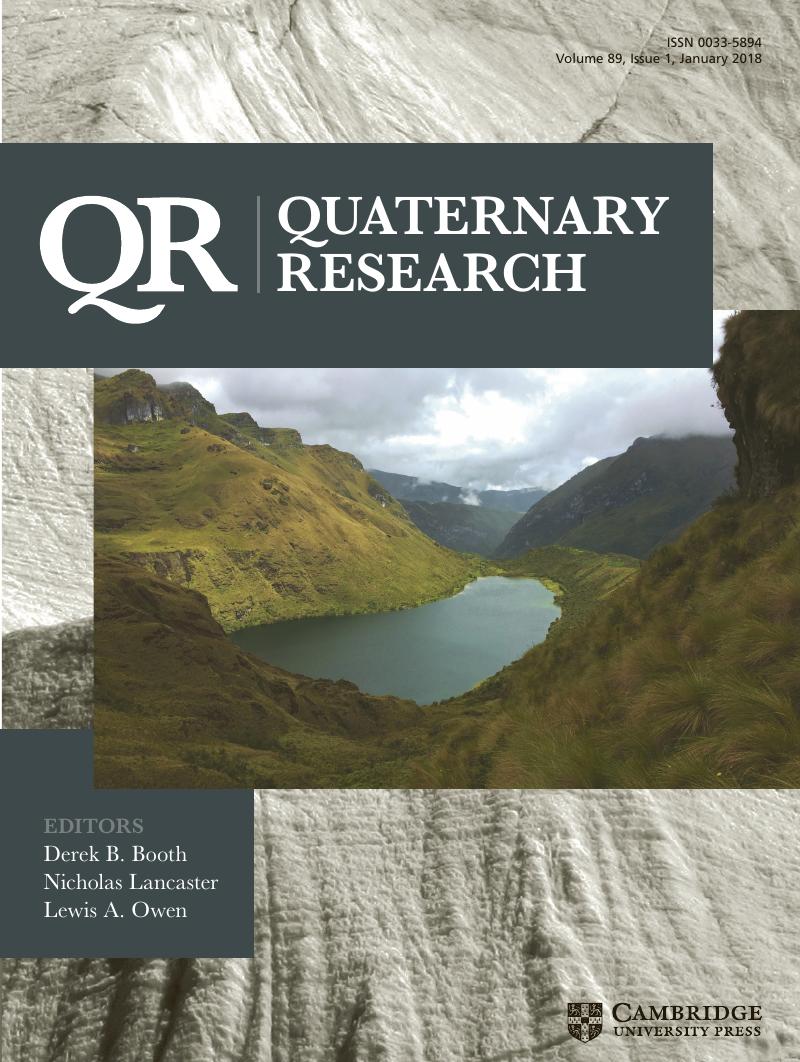
Mark Bush and I are proud to announce that a tribute to Prof. Daniel Livingston and Prof. Paul Colinvaux has recently been published in Quaternary Research. Dan and Paul were both pioneers of tropical pal(a)eoecology and both died in the spring of 2016 . To mark their passing Mark and I have guest edited ten new papers on palaeoecology drawn from researchers, and regions, of the tropics in which Dan and Paul worked (Bush & Gosling, 2018). We would like to thank Quaternary Research Senior Editor Derek Booth for giving us this opportunity and assisting greatly in the process of compiling the manuscripts. We would also like to thank all to contributing authors for their hard work and dedication to the project. We hope that you will enjoy reading the manuscripts and find them a fitting tribute to the life and work of these two great researchers.
Since being appointed as an Associate Editor of Vegetation History & Archaeobotany last year I have the pleasure of working on a number of exciting and interesting manuscripts from the tropics. I am particularly delighted that the first of these (Astudillo, 2018) has now been published. I particularly liked this manuscript because of: (i) the close relationship that was shown between the historical and fossil records, and (ii) the clear signal shown from working on a island system. This linkage is something I have been thinking about in my own research on Mauritius recently (Gosling et al., 2017) and is, I believe, particularly valuable to do because it demonstrates the validity of techniques to track human activity when applied in contexts without historical documentation. The impact of people on the Galapagos is shown by Astudillo (2018) from investigation of multiple proxies (charcoal, phytoliths and macrofossils) to build up a comprehensive picture of human impacts on one of the most famous places for biodiversity on Earth. Hopefully this study is just the start of investigations into past human impacts on the Galapagos islands, and I hope that you enjoy reading the manuscript!
We are seeking to recruit a Neotropical palaeoecologist to join the recently funded “The past peoples of Amazonia: Assessing ecological legacies” project(PIDr. Crystal McMichael, funding NWO, based within the Department of Ecosystem & Landscape Dynamics). The project aims to reconstruct cultural histories from lake sediments in northwestern Amazonia, and link past human activities with modern ecological observations. The project involves analyzing microfossils (including pollen, phytoliths, and charcoal), and the development of a transfer function that estimates past human impacts in tropical forest systems.
We are particularly looking for a candidate with expertise and experience, in:
Fieldwork in remote areas.
Neotropical pollen.
Quantitative analysis, including familiarity with R and Geographical Information Systems.

 Open access for 50 days with this link: https://authors.elsevier.com/c/1X6ja7tFrJFBkG





 Ecology of the past