Main purpose: Based at St Andrews, the PDRA will play an important role in a NERC-funded project working on the distribution and dynamics of peat-forming ecosystems in Amazonia. The post-holder will be required to undertake palaeoenvironmental research (including fieldwork, lab analyses, data analysis and write-up) in order to reconstruct the developmental history of the palm swamps, pole forests, and ‘open peatlands’ over the course of the Holocene. Some technical support for routine laboratory tasks will be available.
Deadline: 31 October 2018
For further information click here.
The montane cloud forests of South America are some of the most biodiverse habitats in the world, whilst also being especially vulnerable to climate change and human disturbance.
Today much of this landscape has been transformed into a mosaic of secondary forest and agricultural fields. This thesis uses palaeoecological proxies (pollen, non-pollen palynomorphs, charcoal, organic content) to interpret ecosystem dynamics during the late Quaternary, unravelling the vegetation history of the landscape and the relationship between people and the montane cloud forest of the eastern Andean flank of Ecuador. Two new sedimentary records are examined from the montane forest adjacent to the Río Cosanga (Vinillos) and in the Quijos Valley (Huila). These sites characterise the natural dynamics of a pre-human arrival montane forest and reveal how vegetation responded during historical changes in local human populations.
Non-pollen palynomorphs (NPPs) are employed in a novel approach to analyse a forest cover gradient across these sites. The analysis identifies a distinctive NPP assemblage connected to low forest cover and increased regional burning. Investigation into the late Pleistocene Vinillos sediments show volcanic activity to be the primary landscape-scale driver of ecosystem dynamics prior to human arrival, influencing montane forest populations but having little effect on vegetation composition.
Lake sediments at Huila from the last 700 years indicate the presence of pre-Hispanic peoples, managing and cultivating an open landscape. The subsequent colonization of the region by Europeans in the late 1500’s decimated the indigenous population, leading to the abandonment of the region in conjunction with an expansion in forest cover ca. 1588 CE. After approximately 130 years of vegetation recovery, montane cloud forest reached a stage of structural maturity comparable to that seen in the pre-human arrival forest. The following 100 years (1718-1822 CE) of low human population and minimal human impact in the region is proposed as a shifted ecological baseline for future restoration and conservation goals. This ‘cultural ecological baseline’ features a landscape that retains many of the ecosystem service provided by a pristine montane forest, while retaining the cultural history of its indigenous people within the vegetation. Continue Reading
My name is Nina Witteveen and I’m doing a research project for my master (Biological Science) with Crystal McMichael and William Gosling. I’m analyzing phytoliths to reconstruct the vegetation changes of Campo Libre (Napo, Ecuador) of the past 30,000 years. It is so exciting to count phytoliths of such an old age!
Simon Scholz is currently doing a charcoal analysis and two years ago, Maaike Zwier performed a physical analysis in the sediment. With all these results combined, I will investigate how climate changes and human influence have changed the vegetation of Campo Libre. Hopefully this research will give more insight into the effect of a changing climate on this biodiversity hotspot!
I’ve completed my thesis for the Biology bachelor at the UvA under the supervision of Crystal and Will. Together with other students we performed phytoliths, pollen and charcoal analysis from sediment of Well-Aaijen (Limburg, the Netherlands). More specifically, I’ve looked at the vegetational changes during the transition from hunter-gatherers to farmers through pollen and phytolith analysis. I’m very happy to be working with Crystal and Will again, this time in a more tropical setting!
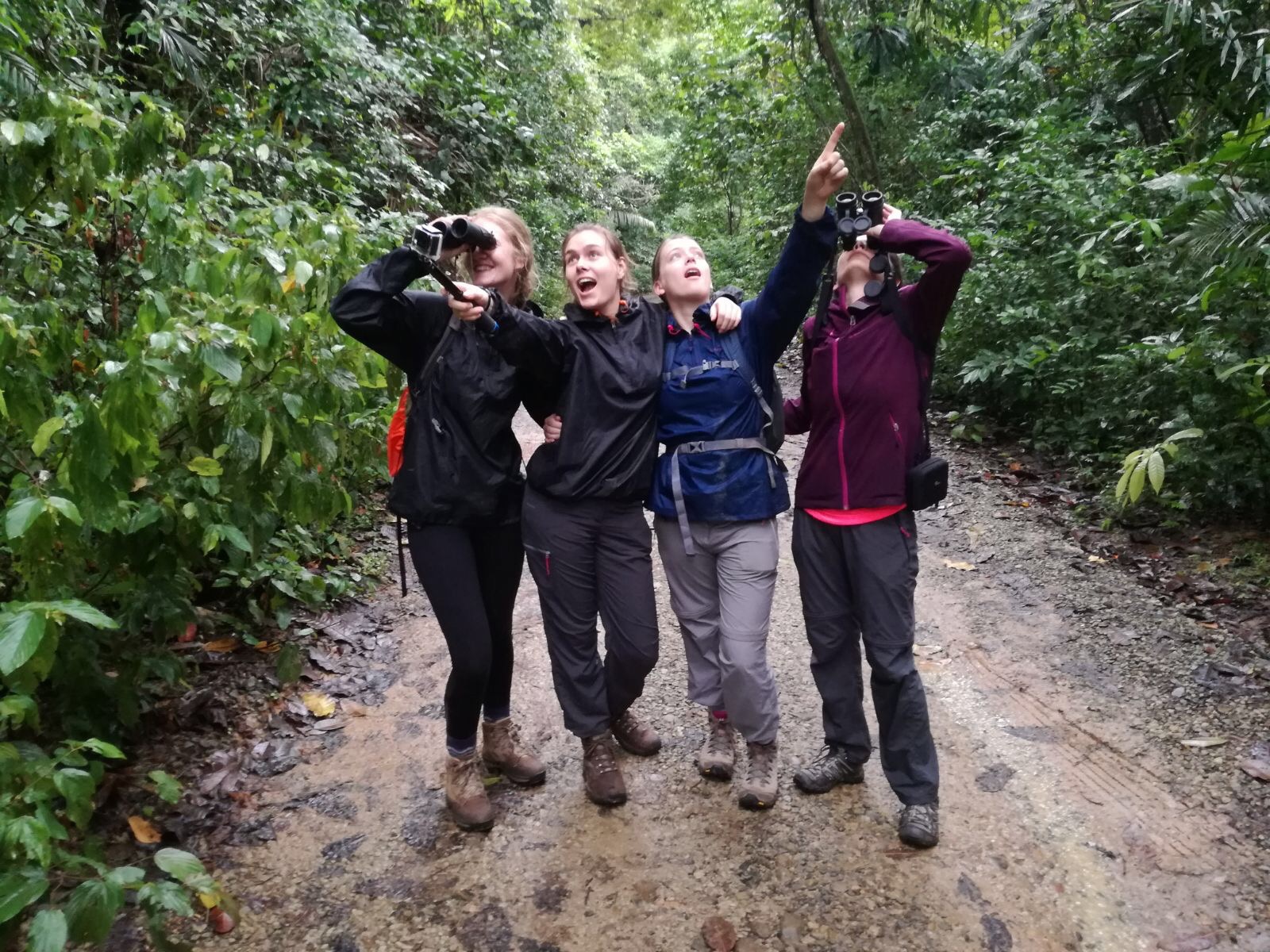
In January of this year, I travelled to Panama with Veerle Vink, Britte Heijink and Crystal McMichael. It was a great experience! Surrounded by Howler Monkeys, we made our way through streams and Geonoma palms to collect soil surface samples for future phytolith analysis. Definitely a highlight of my fieldwork so far! I am now back in the microscope lab, and always up for a (paleo)chat 🙂
Montoya, E., Keen, H.F., Luzuriaga, C.X. & Gosling, W.D. (2018) Long-term vegetation dynamics in a megadiverse hotspot: The Ice-Age record of a pre-montane forest of central Ecuador. Frontiers in Plant Science 9, 196. doi: 10.3389/fpls.2018.00196
Hello all! You might have been wondering if I died in the middle of Amazonian nowhere, since I haven’t come back to writing a blog after we left for fieldwork in July. Given we were in an Amazonian region full of venomous snakes that could have been the case, but the good news is I just didn’t get around writing it because I got carried away by the findings of my project! We actually had a very successful field trip – apart from some minor issues like the lake swallowing equipment, sinking waist-high into the mud each step of our 7 hour long ‘trail’ to the lakes, and almost not getting my precious samples through airport security.
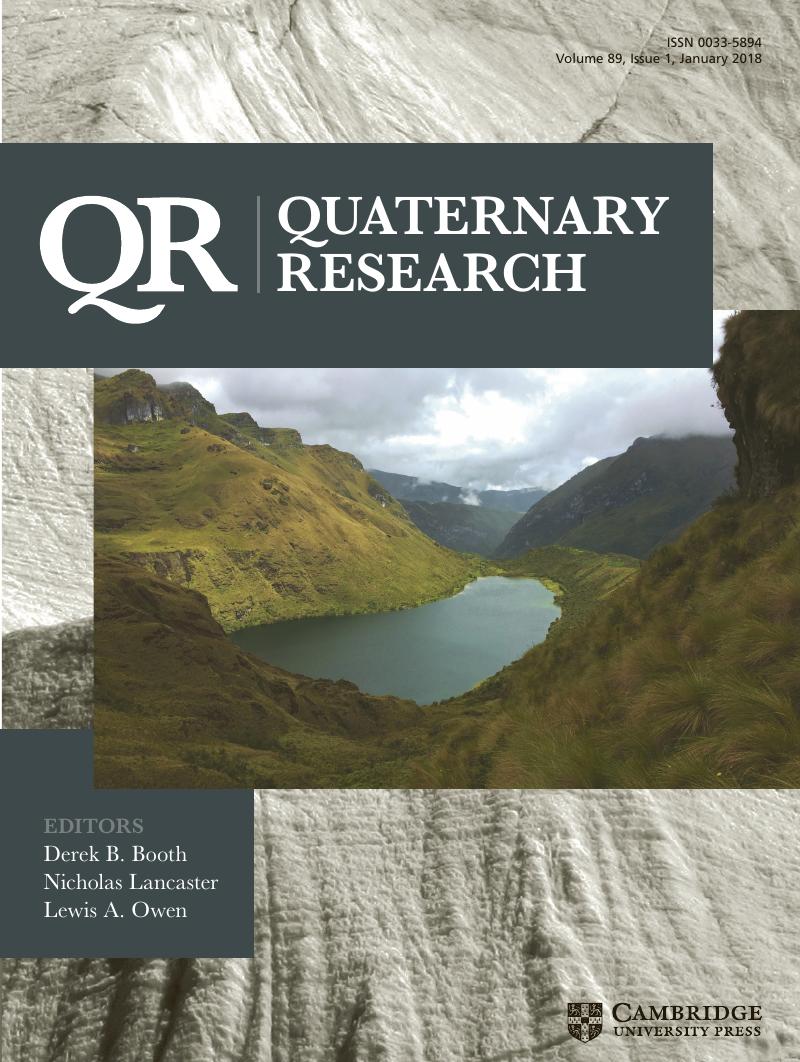
Mark Bush and I are proud to announce that a tribute to Prof. Daniel Livingston and Prof. Paul Colinvaux has recently been published in Quaternary Research. Dan and Paul were both pioneers of tropical pal(a)eoecology and both died in the spring of 2016 . To mark their passing Mark and I have guest edited ten new papers on palaeoecology drawn from researchers, and regions, of the tropics in which Dan and Paul worked (Bush & Gosling, 2018). We would like to thank Quaternary Research Senior Editor Derek Booth for giving us this opportunity and assisting greatly in the process of compiling the manuscripts. We would also like to thank all to contributing authors for their hard work and dedication to the project. We hope that you will enjoy reading the manuscripts and find them a fitting tribute to the life and work of these two great researchers.
We are seeking to recruit a Neotropical palaeoecologist to join the recently funded “The past peoples of Amazonia: Assessing ecological legacies” project(PIDr. Crystal McMichael, funding NWO, based within the Department of Ecosystem & Landscape Dynamics). The project aims to reconstruct cultural histories from lake sediments in northwestern Amazonia, and link past human activities with modern ecological observations. The project involves analyzing microfossils (including pollen, phytoliths, and charcoal), and the development of a transfer function that estimates past human impacts in tropical forest systems.
We are particularly looking for a candidate with expertise and experience, in:
Fieldwork in remote areas.
Neotropical pollen.
Quantitative analysis, including familiarity with R and Geographical Information Systems.
Loughlin, N.J.D., Gosling, W.D., Coe, A.L., Gulliver, P., Mothes, P. & Montoya, E. (2017) Landscape-scale drivers of glacial ecosystem change in the montane forests of the eastern Andean flank, Ecuador. Palaeogeography, Palaeoclimatology, Palaeoecology. DOI: 10.1016/j.palaeo.2017.10.011
McMichael, C.H., Feeley, K.J., Dick, C.W., Piperno, D.R. & Bush, M.B. (2017) Comment on “Persistent effects of pre-Columbian plant domestication on Amazonian forest composition”. Science 358. DOI: 10.1126/science.aan8347
Junqueira, A.B., Levis, C., Bongers, F., Peña-Claros, M., Clement, C.R., Costa, F. & ter Steege, H. (2017) Response to Comment on “Persistent effects of pre-Columbian plant domestication on Amazonian forest composition”. Science 358. DOI: 10.1126/science.aan8837

 University of St Andrews







 Ecology of the past