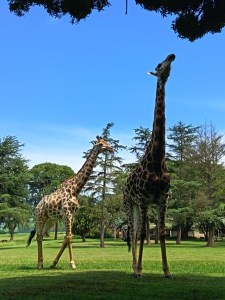
Herbivory and vegetation openness in a pre-farming European landscape

November 19, 2025
WDG

Plant Ecology & Diversity

Gosling, W. D., de Wolf, I. K., Witteveen, N. H., de Zwaan, S. B., Van Teulingen, C., Föllmi, D., Thissen, W., Vink, V. B., Woutersen, A., Philip, A. L., van Herk, M. J., Nascimento, M. N., Prins, M. A., & McMichael, C. N. H. (2025). Herbivory and vegetation openness in a pre-farming European landscape. Plant Ecology & Diversity, 1–22. https://doi.org/10.1080/17550874.2025.2576566

This manuscript has been developed over many years through the contributions of many MSc and BSc students based at the University of Amsterdam.

Hugo de Vries Prijs winner!

June 18, 2025
WDG

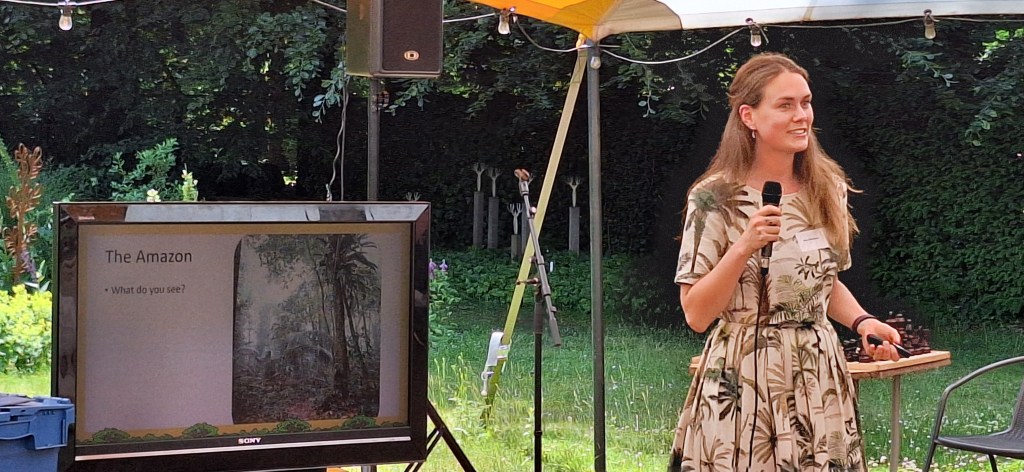
Ecology of the Past blog contributor Nina Witteveen was awarded the Hugo de Vries prize on 13 June 2025 at the Botanic Gardens in Nijmegen. The Hugo de Vries prize is awarded by the KNbv (Royal Dutch Botanical Society) and the Stichting Hugo de Vries fonds (Hugo de Vries foundation) for the best PhD thesis in Botany defended at a Dutch University. This years prize was awarded to Nina for her thesis “Long-term Forest Recovery in Amazonia: Insights from Phytolith Analysis” (University of Amsterdam) which was completed under the supervision of Crystal McMichael.

After much debate the jury decided to award two first prizes this year, with the other prize also going to a tropical PhD thesis. That of Tomonari Matsuo for his thesis “Drivers and mechanisms of tropical secondary forest succession” (Wageningen University & Research).

To find out more about the prize and how to submit a thesis for the award visit: https://www.knbv.eu/hugo-de-vries-prijs/

Follow Nina’s journey into tropical palaeoecology through her blog posts here: https://ecologyofthepast.info/?s=nina+witteveen

Nina presenting here PhD thesis at the prize giving of the Hugo de Vries award 2025!

Past fire dynamics in sub-Saharan Africa during the last 25,000 years: Climate change and increasing human impacts

July 31, 2024
WDG

Mapping Ancient Africa Quaternary International Special Issue article

Open access link (50 days limit) here

Bremond, L., Aleman, J.C., Favier, C., Blarquez, O., Colombaroli, D., Connor, S.E., Cordova, C.E., Courtney-Mustaphi, C., Dabengwa, A.N., Gil-Romera, G., Gosling, W.D., Hamilton, T., Montade, V., Razafimanantsoa, A.H.I., Power, M.J., Razanatsoa, E., Yabi, I. & Vannière, B. (2024) Past fire dynamics in sub-Saharan Africa during the last 25,000 years: Climate change and increasing human impacts. Quaternary International. DOI: 10.1016/j.quaint.2024.07.012

Floristic homogenization of South Pacific islands commenced with human arrival

January 17, 2024
WDG

Strandberg, N.A., Steinbauer, M.J., Walentowitz, A., Gosling, W.D., Fall, P.L., Prebble, M., Stevenson, J., Wilmshurst, J.M., Sear, D.A., Langdon, P.G., Edwards, M.E. & Nogué, S. (2024) Floristic homogenization of South Pacific islands commenced with human arrival. Nature Ecology & Evolution. DOI: 10.1038/s41559-023-02306-3

Mapping Ancient Africa: Video of seminar 11

March 28, 2023
WDG

The 11th Mapping Ancient Africa seminar took place on Thursday 16 March (2023). The seminar was delivered by Hannah Keller (Yale University) and highlighted her ongoing research into ostrich egg shells and environmental change she is undertaking as part of the “Malawi Ancient Lifeways and Peoples” project.

Details of this seminar can be found here. You can find more Mapping Ancient Africa seminar videos on the “Ecology of the Past” YouTube channel.

To find out more and keep up to date with new insights from this research visit the project web sit here.

INQUAlogo

The Holocene

March 24, 2023
WDG

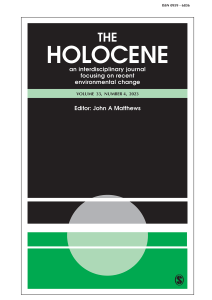
I am excited to announce that I have recently joined the “Advisory Editorial Board” of The Holocene journal. Many thanks to editor-in-chief John Matthews for the invitation. Interesting to join a very experienced team, which includes both my PhD and post-doc supervisors; the esteemed Frank Mayle and Mark Bush! I look forward to receiving interesting new papers to examine.

The Holocene journal publishes research, review and forum papers focused on environmental change during the Holocene (last 11,700 years). It encourages the submission of manuscripts with an interdisciplinary approach covering palaeoenvironments, palaeoclimate, palaeoecology, palaeohydrology, palaeopedology, palaeoceanography and geo-archaeology. So if you have a some research in this area that you are looking for a home for please check out the details aims and scope, and criteria on the journal web page, click here.

Palaeoecology course 2022 goes archaeology…

September 16, 2022
WDG

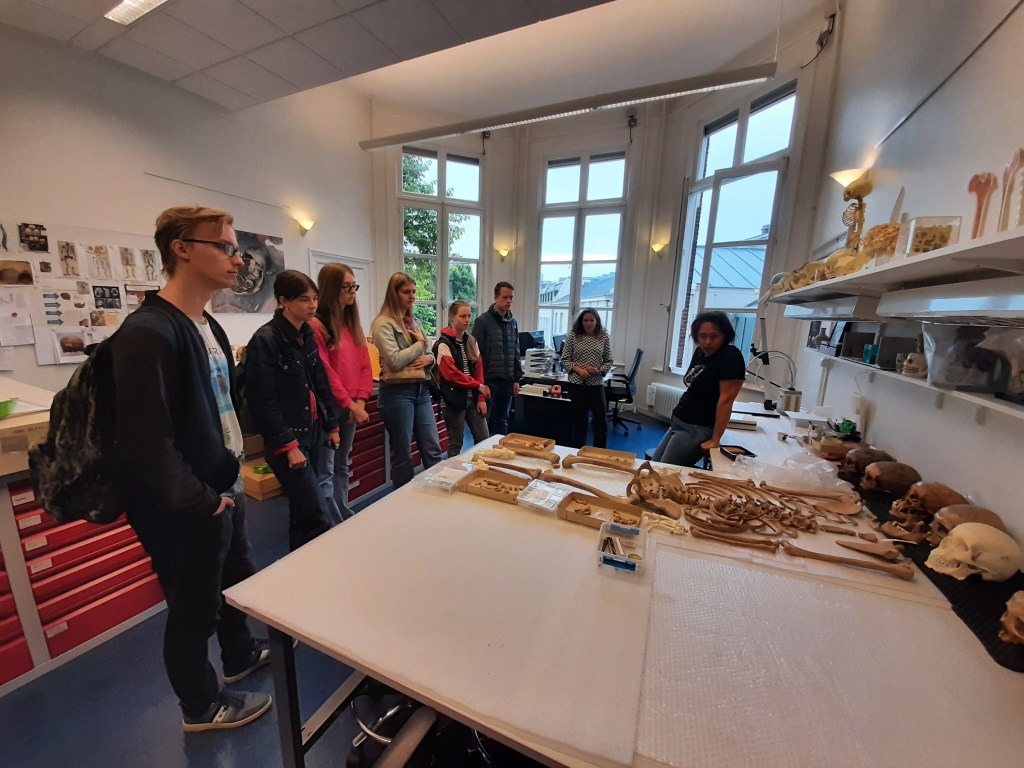
As part of this years BSc Palaeoecology course at the University of Amsterdam we visited the Department of Archaeology. Organised by Anja Fischer we visited the human bone collection, the animal bone collection and the archaeobotany section. Amazing collections and lots of opportunities for cross faculty projects and teaching.

In addition to explaining the physical reference collections Anja also explained how she has been developing data mining techniques to allow information to be synthesised from the thousands of archaeological reports across the Netherlands.

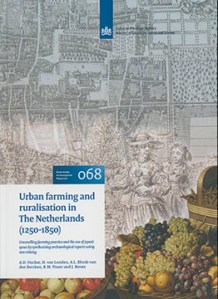
She used this approach to make new discoveries about the role of urban farming and ruralisation in Dutch history. Her findings formed a report for the Dutch national heritage organisation (Rijksdienst voor het Cultureel Erfgoed) which can be downloaded for free (in English).

Fischer, A., van Londen, H., Blonk, A., Visser, R.M. & Renes, J. (2021) Urban Farming and Ruralisation in The Netherlands (1250-1850): Unravelling farming practice and the use of (open) space by synthesising archaeological reports using text mining. Nederlandse Archeologische Rapporten 68. Download free here.

Job: PhD Caribbean Palaeoecology

September 9, 2022
WDG

The Palaeoecology Research Group within the Department of Archaeology at the Max Planck Institute for Geoanthropology, Jena, Germany is pleased to announce a new vacancy for a doctoral student exploring human-environment interactions in the Caribbean. The position will be based in Jena, Germany for a period of 3 years with the option for extensions and supervised by Dr. Yoshi Maezumi.

The Palaeoecology Research Group analyses palaeoecological and archaeobotanical proxies from sedimentary archives, including pollen, phytoliths, charcoal and stable isotopes to examine topics including the legacy of human land-use on ecosystems, spatio-temporal patterns of natural and human-driven fire activity, and the influence of natural and human disturbance regimes on the biogeographic distribution of plants and animals in past ecosystems.

Closing date: 30 September 2022

For full details and how to apply click here.

For further information contact Dr. Yoshi Maezumi.

Early to mid-Holocene human activity exerted gradual influences on Amazonian forest vegetation

March 9, 2022
WDG

Nascimento, M.N., Heijink, B.M., Bush, M.B., Gosling, W.D. & McMichael, C.N.H. (2022) Early to mid-Holocene human activity exerted gradual influences on Amazonian forest vegetation. Philosophical Transactions of the Royal Society B: Biological Sciences 377, 20200498. https://doi.org/10.1098/rstb.2020.0498

Blog at WordPress.com.