600 people reached the top of Mt. Everest in 2012. This blog got about 3,300 views in 2012. If every person who reached the top of Mt. Everest viewed this blog, it would have taken 6 years to get that many views.
All applications must be pre-approved by the host institution so if you are interested in applying for a project through The Open University expressions of interest are required by 25th January 2013.
The last two months of 2012 were exceptionally busy!
On the research front
Grants took centre stage for much of my time. First writing for the NERC December 1st deadline was pressured as usual, and second response to reviewers comments on the July submission was interesting.
Paper writing proceeded with reviewer and co-author comments on three manuscripts hopefully desitined for Review of Palaeobotany and Palynology (lead by Hayley), Palaeo3 (lead by Macrarena) and The Holocene (with Joe Williams) respectively.
Two tasks dominated the non-research activity: 1) teaching the Geological Record of Environmental Change (S369) exams assessment and assigment, and 2) as Post Graduate Tutor keeping up with NERC developments for the new Doctoral Training Partnerships.
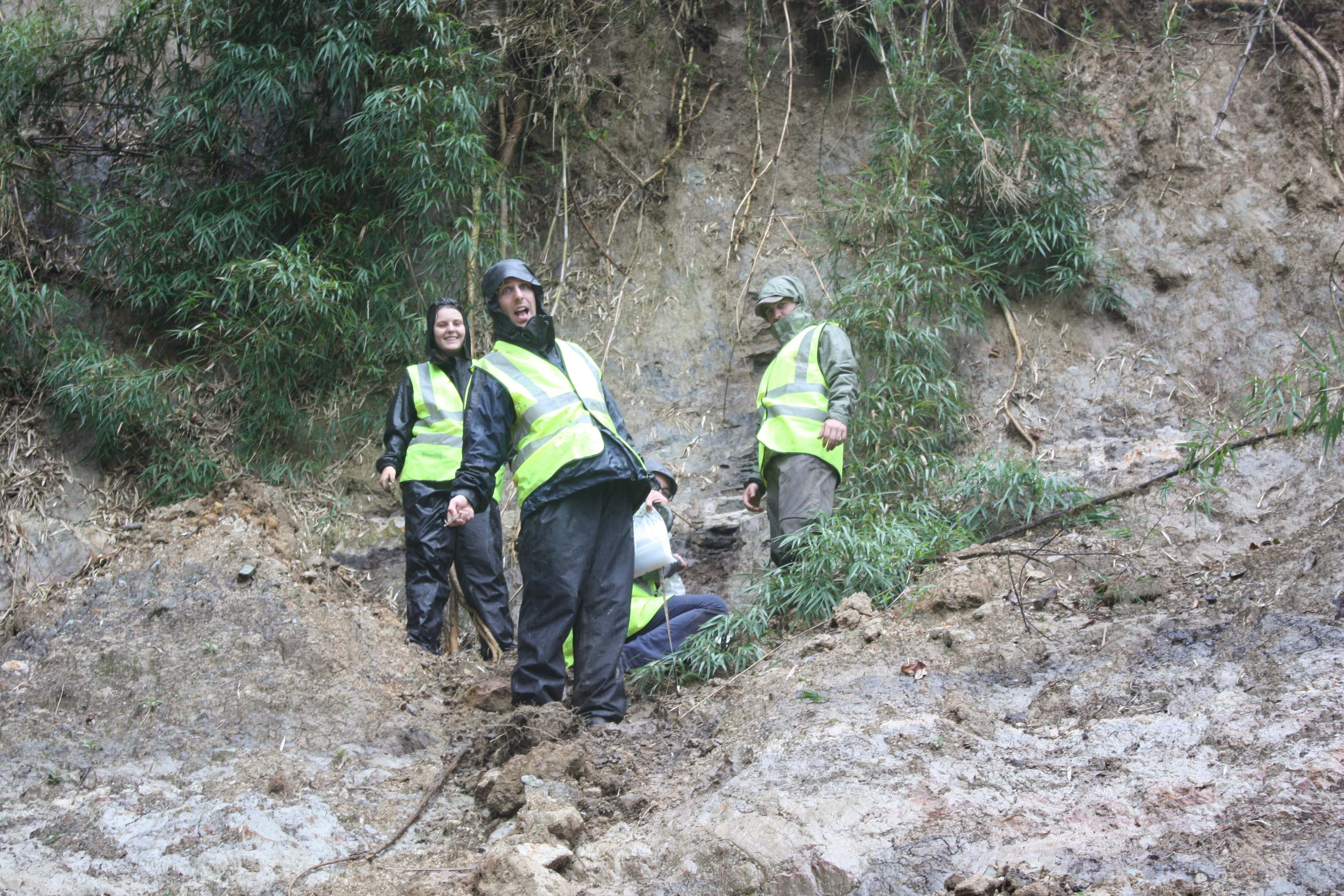
PCRG members on field work in Cayabe-Coca National Park (2012). Left to right: Hayley, Encarni, William and Frazer. Encarni and Frazer have returned to Ecuador Jan-Feb 2013 to collect further sedimentary cores. More on the blog soon…
Finally all that remains is to say “Happy New Year”from the PCRG and on with 2013… 🙂
Two NERC algorithm funded PhD studentships are currently available with the PCRG. The projects are focused on understanding past environmental change in west tropical Africa and Amazonian-Andean Ecuador. Both projects will involve field work and build on on-going research within the lab.
Closing date 31/01/2013
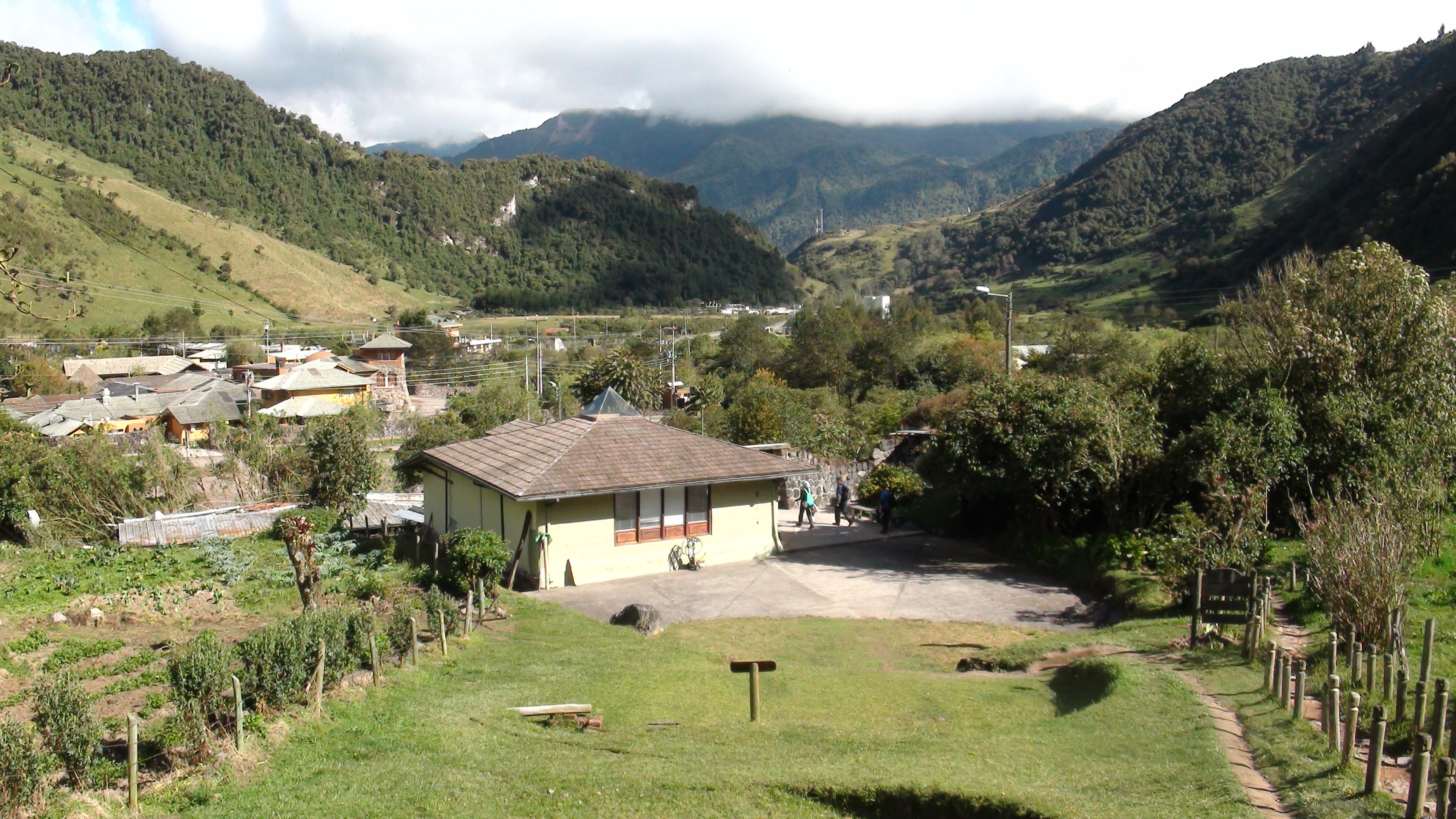
One project will work on samples collected during fieldwork in 2012 near Papallacta (Ecuador).
Further project details and how to apply below… Continue Reading
I am a NERC Research Fellow with a project entitled “Evaluation of forests sensitivity to past climatic changes” (FORSENS), which will be running until September 2015. The project is based on a multi-site, multi-proxy and multi-disciplinary approach to aid the understanding of Neotropical forests’ dynamics since the Last Glacial Maximum (LGM; c. 21,500 years ago).
I presented details in a poster at the recent INTIMATE/CELL-50k Join Workshop this 12-15th November at Budapest, Hungary. Click here to view my poster and find out more details about the project.
Prior my arrival to PCRG, I was working at The Botanical Institute of Barcelona (CSIC-ICUB, Palynology and Paleoecology Lab) and the Autonomous University of Barcelona (Tropical and High Mountain Paleoecology). I am a palaeoecologist mainly focused on Late Glacial environmental change in Neotropics, being interested in the climate-vegetation-human relationships. For this purpose, I mainly use pollen, microscopic charcoal and non-pollen palynomorphs. I am also involved in several editor tasks, as regular referee os several Q1 journals, and the editor of the “Humans and Biosphere Commission” Newsletter.
If you are interested in my project please do not hesitate to get in contact.
The back end of September and October has been very busy as I have tried to catch up with the teaching, administration and research activity which somewhat accumulated whilst on field work!
Major tasks have been:
1) the marking and coordination for level 3 Geological Record of Environmental Change (S369) module examination,
2) getting used to my new role as Post Graduate Tutor looking after all things related to a doctoral students in the Department of Environment, Earth & Ecosystems, and
3) trying to find time to finish off three manuscripts for submission!
Other members of the lab have also been busy: * Encarni has arrived from Valenti Rull‘s lab at the Botanical Institute in Barcelona as a NERC Fellow and is settling in to life in Milton Keynes, more details soon…
* Lottie is getting into data analysis and writing up of the Lake Bosumtwi pollen an N isotope data,
* Natalie is writing, crunching numbers and waiting for a machine to be fixed…
* Bryan is working on gelling biogeographic data together in GIS
Imagae of a Toarcian foraminifera taken by Alice Kennedy facilitated by the new cable which allows our microscope camera to talk to a computer – hooray!
* Hayley has been preparing for talking at the Linnean Society palynology meeting on 1st November “Understanding pollen and spore diversity”, and helping “steal” a microtome for sectoning her wood macrofossils,
* Frazer has started to plot Andean and Amazonian midge distributions against temperature, and
* Alice has been taking photos…
In the midst of all this fun I was sent this great video which brightened my day. I hope you enjoy it as well…
The four fellowships are advertised in four areas of Earth & Environmental Science; however, applications from exceptional scientists in related fields are also welcome.
I am writing this August post from the Hotel Rincon Escandinavo (Quito, Ecuador) most of this month has been pretty hectic as we have been preparing for this field work trip and trying to get as many things out the way before hand.
We seem to have been quite involved in conference activity: Lottie presented “500,000 years of vegetation change from West tropical Africa” at the International Paleolimnology Association Symposium in Glasgow, Hayley had an abstract on “Pollen counting for diverse tropical ecosystems” accepted for the Linnean Society Palynology Group meeting (1 November) and group members also submitted abstracts for consideration to be presented at the American Geophysical Union Congress and British Ecological Society meeting (both in December); fingers crossed these will be accepted as well.
Regarding the field work. Preparation seems to have gone well and we have arrived in Quito with all out bags, despite a short (1 hour) connection in Madrid. Tomorrow we will meet up with Dr Patricia Mothes (Instituto Geofisico) and set out our detailed plans. As I have now been up for more than 24 hours I should probably get some sleep… Plan is to blog more about the trip as it happens.






 Ecology of the past