Tribute to Daniel Livingstone and Paul Colinvaux

January 26, 2018
WDG

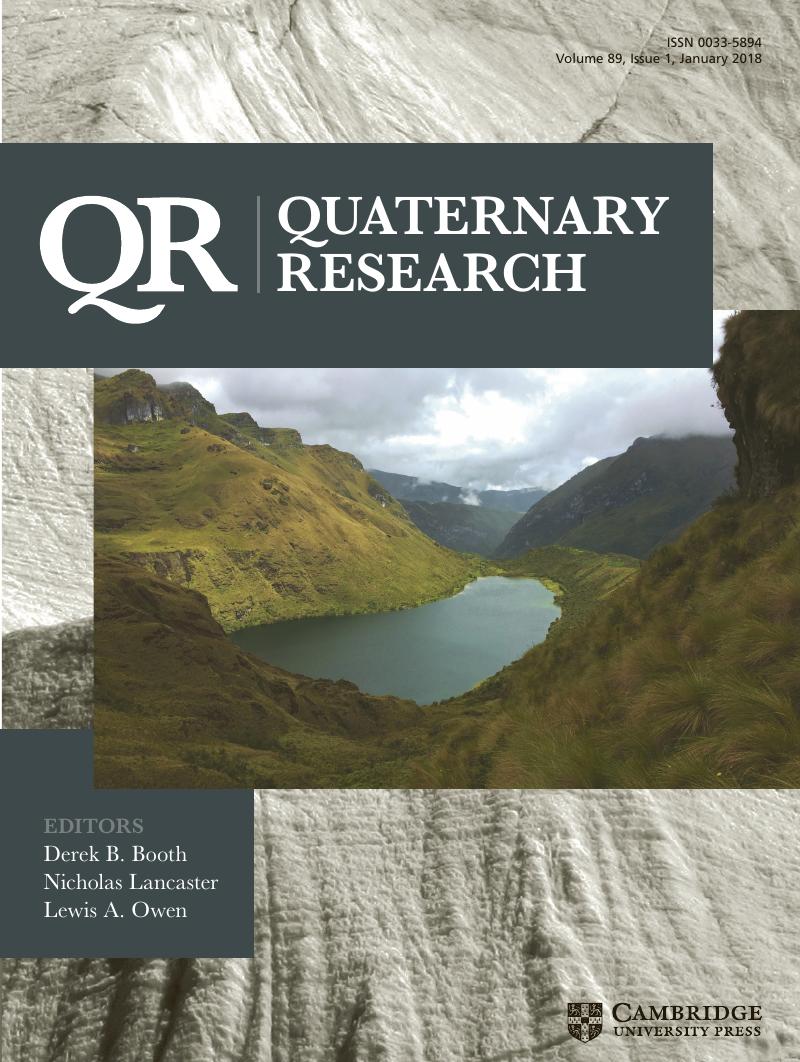
Mark Bush and I are proud to announce that a tribute to Prof. Daniel Livingston and Prof. Paul Colinvaux has recently been published in Quaternary Research. Dan and Paul were both pioneers of tropical pal(a)eoecology and both died in the spring of 2016 . To mark their passing Mark and I have guest edited ten new papers on palaeoecology drawn from researchers, and regions, of the tropics in which Dan and Paul worked (Bush & Gosling, 2018). We would like to thank Quaternary Research Senior Editor Derek Booth for giving us this opportunity and assisting greatly in the process of compiling the manuscripts. We would also like to thank all to contributing authors for their hard work and dedication to the project. We hope that you will enjoy reading the manuscripts and find them a fitting tribute to the life and work of these two great researchers.

Quaternary Research
Special Issue: Tribute to Daniel Livingstone and Paul Colinvaux
Volume 89 – Special Issue 1 – January 2018 Continue Reading

Off to the tropics!!

December 26, 2017
cmcmicha

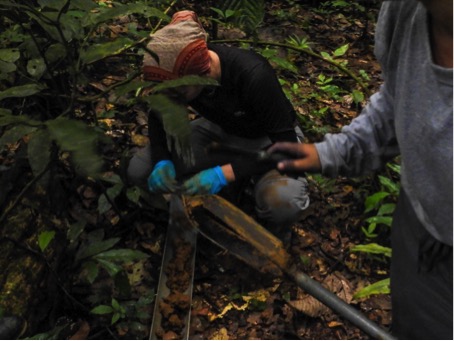
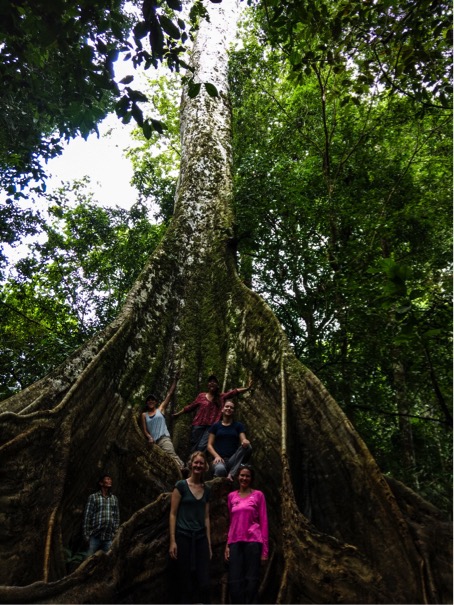
On Jan 1, 2018 I (Crystal McMichael) get to ring in the New Year in the best way possible by heading off to the tropics to do fieldwork! And this time I get to take two students with me. Britte Heijink and Veerle Vink are both in the Biological Sciences MSc program (Ecology and Evolution track), and they are going to work on research projects that are associated with a recent grant that I was awarded through the Smithsonian Tropical Research Institute CTFS-ForestGEO Research Grants Program.

Continue Reading

Job: Post-doctoral researcher in Palaeoecology

November 30, 2017
cmcmicha

Job: Post-doctoral researcher in Neotropical Palaeoecology
Location: Institute for Biodiversity & Ecosystem Dynamics, University of Amsterdam
Duration: 3 years
Deadline for applications: 15 January 2018

We are seeking to recruit a Neotropical palaeoecologist to join the recently funded “The past peoples of Amazonia: Assessing ecological legacies” project (PI Dr. Crystal McMichael, funding NWO, based within the Department of Ecosystem & Landscape Dynamics). The project aims to reconstruct cultural histories from lake sediments in northwestern Amazonia, and link past human activities with modern ecological observations. The project involves analyzing microfossils (including pollen, phytoliths, and charcoal), and the development of a transfer function that estimates past human impacts in tropical forest systems.

We are particularly looking for a candidate with  expertise and experience, in:

  • Fieldwork in remote areas.
  • Neotropical pollen.
  • Quantitative analysis, including familiarity with R and Geographical Information Systems.
  • Academic publication.

For more details and how to apply click here.

Environments Through Time – weeks 2 & 3

November 19, 2017
WDG

Britte reconfiguring the chronology for Lake Pata

Britte reconfiguring the chronology for Lake Pata

The second and third weeks of the Environments Through Time course at the University of Amsterdam has focused on obtaining practical experience of developing chronologies, analyzing multi-variate data-sets, and conducting time series analysis. The focus of the course has been on Quaternary environmental change, however, the skills learnt can be applied to almost any time-scale so long as you have time control points you want to tie together, and multiple things you can track changing through that time.

Over the two week period the students worked on a previously published paper that they had selected that contains: (i) chronological information (at least 3 control points), and (ii) multiple variables that change through the time series (at least 9 variables). In week two they deconstructed the chronologies and generated their own revised versions. For example students have (re-)calibrated radiocarbon dates, made different decisions on dates to include/exclude, and used different approaches to constructing the age vs. depth model, e.g. contrasting linear point-to-point vs. Bayesian methodologies. In week three they have taken the data-set(s) associated with their paper and re-evaluated it in light of the revised chronologies using cluster analysis, ordination techniques, and wavelets.

The joy of wavletes

The joy of wavletes

Through this exercise students have gained experience of how to critically assess scientific literature and gained an appreciation of where re-analysis of data-sets can (and cannot) make a difference. Personally I have be delighted with the high level of engagement and enthusiasm for the material and have been excited to have a chance to delve into literature that I would not otherwise be aware of.

For more information on this course see: Environments Through Time – week 1


Identifying environmental drivers of fungal non-pollen palynomorphs in the montane forest of the eastern Andean flank, Ecuador.

October 23, 2017
WDG

Open acess, online:

Loughlin, N.J.D., Gosling, W.D. & Montoya, E. (2017) Identifying environmental drivers of fungal non-pollen palynomorphs in the montane forest of the eastern Andean flank, Ecuador. Quaternary Research. DOI: 10.1017/qua.2017.73

More on “Persistent effects of pre-Columbian plant domestication on Amazonian forest composition”

October 20, 2017
WDG

Crytsal McMichael (University of Amsterdam)

Discussion on human impacts on Amazonian forest…

McMichael, C.H., Feeley, K.J., Dick, C.W., Piperno, D.R. & Bush, M.B. (2017) Comment on “Persistent effects of pre-Columbian plant domestication on Amazonian forest composition”. Science 358. DOI: 10.1126/science.aan8347

Junqueira, A.B., Levis, C., Bongers, F., Peña-Claros, M., Clement, C.R., Costa, F. & ter Steege, H. (2017) Response to Comment on “Persistent effects of pre-Columbian plant domestication on Amazonian forest composition”. Science 358. DOI: 10.1126/science.aan8837

Sustaining Earth’s Biodiversity

August 31, 2017
WDG

Exciting new edition of the Past Global Changes (PAGES) magazine focused on the sustainability of Earth’s biodiversity. Includes articles by Ecology of the Past blog contributors Dr. Encarni Montoya and Dr. Macarena Cardenas.

To find out more check out the full issue (free):

  • Gillson, L., Gell, P. & von Gunten, L. (2017) Past Global Changes Magazine: Sustaining the Earth’s Biodiversity 25(2): 76-130. DOI: 10.22498/pages.25.2

The modern pollen-vegetation relationships of a tropical forest-savannah mosaic landscape, Ghana, West Africa

August 22, 2017
WDG

Julier, A.C.M., Jardine, P.E., Adu-Bredu, S., Coe, A.L., Duah-Gyamfi, A., Fraser, W.T., Lomax, B.H., Malhi, Y., Moore, S., Owusu-Afriyie, K. & Gosling, W.D. (2017) The modern pollen-vegetation relationships of a tropical forest-savannah mosaic landscape, Ghana, West Africa. Palynology online. DOI: 10.1080/01916122.2017.1356392

Field work in Ecuador

July 27, 2017
WDG

IBEDs Crystal McMichael hard at work sampling sediments in the Andes

IBEDs Crystal McMichael hard at work sampling sediments in the Andes

Insights into recent field work in Ecuador by a team lead by Crystal McMichael can be found in a recent blog from our collaborators at the Instituto Geofisico, Escuela Politecnica Nacional, Quito (Ecuador).

Trabajo colaborativo entre Volcanólogos y Palenólogos potenciará el conocimiento sobre el Paleoclima en el Valle de Latacunga en los últimos 20 mil años by Patricia Mothes

Rubicon project to link fossil pollen with plant traits

July 20, 2017
WDG

Dear Ecology of the past blog readers,

This time you are reading a message from a non-expert in paleoecology. My name is Masha and I will spend the next two years on a very exciting postdoctoral fellowship funded by NWO (Dutch National Science Foundation) under their Rubicon scheme in close collaboration with William Gosling (University of Amsterdam).

Continue Reading

Blog at WordPress.com.