On the 20 June 2024 the 18th Mapping Ancient Africa (MAA) seminar was delivered by Kumar Akhilesh (Sharma Centre for Heritage Education). This seminar was a little different to most MAA seminars in that it focused on another INQUA project, rather than a specific research line. In the talk Kumar outlined the INQUA funded “PalaeoHome” project and highlighted work on hominin evolution in the Indian sub-continent.
As part of my MSc Biological Sciences (University of Amsterdam) research project entitled “Assessing the effect of human induced fire regime changes on vegetation in the Drakensberg mountains” (for further details click to see previous post). I’ve travelled to Africa, where I’ll be staying a month. During this mini blogpost series I’ll take you with me on my travels!
During the first poster session, I presented my poster which went into detail on how we are developing a proxy to reconstruct past fire using micro-Fourier Transformed Infrared Spectroscopy (µFTIR). These reconstructed fire temperatures can then be compared with phytolith or pollen data to assess the effects of different fire temperatures on local vegetation over time. The presentation and poster were well received!
After my poster presentation there were two more congress days which were filled with interesting talks and beautiful posters.
At the University of Amsterdam the MSc Earth Science is split into two tracks, one of these is entitled: “Earth System Science”. Earth System Science is a research intensive track focused on understanding the fundamentals of abiotic and biotic interactions across the globe and through time. During this degree you will spend around 6 months studying to pick up specialist knowledge and skills, and around 18 months actively developing yourself – in your key areas of interest – through project work.
The taught part of the Earth System Science track includes courses such as:
The Earth System: Learn how to analyse Earth system function across space and through time.
Analysis & Modelling Lab: Develop skills in data handeling, analysis and modeling relevant to Earth science.
Biogeochemical Cycles in the Earth System: Study how the dynamics of carbon and nitrogen link to societal challenges.
Climate Change: Explore the scientific basis for climate change an its implications for the environment and society.
Environments Through Time: Consider and analyse environmental change on timescale relevant to landscapes, societies and climates.
GIS and Remote Sensing in Ecosystem Dynamics: Learn how to use large remotely sensed datasets to gain insights into geological, geomorphological and soil systems.
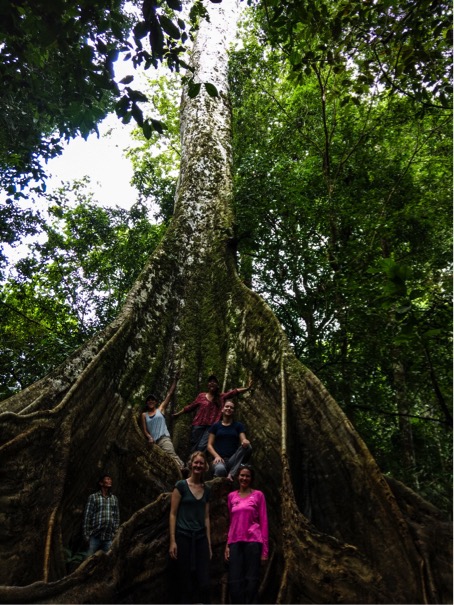
Clare Lee (on one leg, left) during field course in Peru successfully published her literature review which she conducted as part of her MSc in Earth Sciences at the University of Amsterdam.
In addition, free elective courses are possible from across the University of Amsterdam, or at other approved organizations or universities, i.e. it is possible to pick up skills in other specialisms (for example in languages, AI, or programming), or study a course at a university abroad, and have this included within your University of Amsterdam MSc Earth Science degree.
The project part of the Earth System Science track includes two research projects, or one research project and one internship with an external organization (such as a company or NGO). MSc research projects are often closely linked to active research within the Institute for Biodiversity & Ecosystem Dynamics. Some projects and literature reviews conducted by our MSc researchers reach a high enough level to be published in international scientific journals, either on there own or as part of a wider collaboration. Examples of recent papers including MSc researchers (highlighted in bold) are:
Lee, C.M., van Geel, B. & Gosling, W.D. (2022) On the use of spores of coprophilous fungi preserved in sediments to indicate past herbivore presence. Quaternary5, 30. DOI: 10.3390/quat5030030
de Nijs, E.A. & Cammeraat, E.L. (2020) The stability and fate of Soil Organic Carbon during the transport phase of soil erosion. Earth-Science Reviews 201, 103067. DOI: 10.1016/j.earscirev.2019.103067
Week 1 (last week) we got everyone up to speed with the fundamentals of palaeoecology (including: key principles, depositional environments, dating methods) and laboratory skills (pollen, phytolith and macrofossil identification). This week (week 2) we are out and about (coring sediments, surveying vegetation and visiting the archaeology department). By the end of the week the students will (should!?) have generated sufficient data in the laboratory and field to be able to identify the location from which their mini-project “mystery slides” were taken. Next week (week 3) will be number crunching to generate the statistical support for their ideas and inferences.
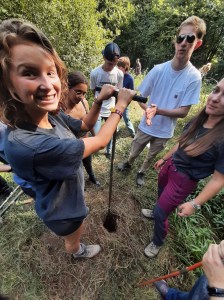
Students collecting sediments using a Russian corer at Langenboom (September, 2022). These samples were recovered in collaboration with the BosGroep Zuid Nederland as part of an ongoing project to gain new insights into the nature of the past landscape in the Netherlands and aid conservation efforts.
To start discussion during the Mapping Ancient Africa kick off meeting (October 2021) lead author Stefanie Kaboth-Bahr has recorded an introduction to her recent paper proposing a novel tropical based climate mechanism for driving climatic change across Africa.
Kaboth-Bahr S, Gosling WD, Vogelsang R, Bahr A, Scerri EML, Asrat A, Cohen AS, Düsing W, Foerster V, Lamb HF, et al. 2021. Paleo-ENSO influence on African environments and early modern humans. Proceedings of the National Academy of Sciences 118(23):e2018277118. https://doi.org/10.1073/pnas.2018277118
Veerle and I trying to protect ourselves from the mosquitos.
Hi all!
My name is Britte Heijink and I’m doing my MSc Biological Science thesis research project with Crystal McMichael and William Gosling. I travelled with Veerle Vink and Crystal to the Colombian part of Amazonia to collect samples for my project. At Amacayacu National Park, we collected soil cores from different locations in the plot. Now that we’re back in Amsterdam, I’m analysing the soils to reconstruct the fire and vegetation history from the plot using charcoal and phytoliths. I am specifically looking to see if humans have been present in the system and how they potentially affected the vegetation at Amacayacu.
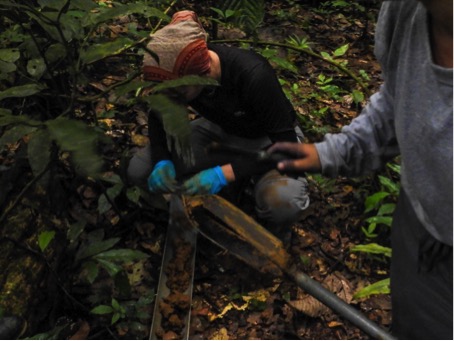
Here I’m Sampling pieces of soil cored by Louisa and checking for large pieces of charcoal
I’ve completed my bachelor thesis for Bèta-Gamma (Liberal Arts and Sciences) under the supervision of Crystal and Will here at the UvA. I’m really excited to work with them again, and already looking forward to our meetings at the Oerknal 😉 I will be finished by the end of September, and then possibly return for a literature study.
One of the most wonderful experiences in my academic career so far has been the fieldwork to Panama and Colombia with Crystal, Veerle, and Nina. It was a lot of hard work, and 90% of our time was spent covered in mud, sweat, and insect repellant, but the experience of working in a tropical rainforest was completely worth it! Veerle and I will write another blog about our fieldwork soon. Come see us in the microscope lab if you want to hear our dangerous and amazing stories before that!
Cheers,
Britte
Our last day in the Amazon was spend with some of the local students, Louisa Fernando Gomez Correa and Mariana Gutierrez Munera.
Each project was set up to test a particular ecological or biogeographic hypothesis. Investigations included the exploration of the role of humans in modifying ecosystems in Amazon, the nature of the pre-farming landscape in the the Netherlands, and how to chemically identify fossil charcoal. In undertaking their projects individual students had the opportunity to variously develop skills in microscopy, spatial modelling, or analytical chemistry. The high quality of the data produced means that hopefully many of these data sets can be used in future scientific publications. Well done to all!
If you are interested in conducting a similar project (at any academic level) with us please do not hesitate to get in contact. For further details of ongoing research within the Department of Ecosystems & Landscape Dynamics visit our web pages by clicking here.
Zoe and William just after the graduation ceremony (UvA)
Two students (Zoe van Kemenade and Tessa Driessen) have recently completed projects looking at past environmental change on Samoa working in the Research Group of Palaeoecology & Landscape Ecology at the University of Amsterdam (UvA). Zoe’s project, part of her BSc Future Planet Studies (major Earth Sciences) at UvA, was entitled “A multi‐proxy analysis on the effect of climate and human activity on the environment of Samoa during the Holocene” and investigated charcoal, macro-fossils, and algae. Tessa’s project, “Biodiversity, fire and human dynamics on Samoa over the last 9200 years”, was completed as an internship during her MSc in Environmental Biology at Utrecht University (UU) that was co-supervised by Rike Wagner-Cremer. Tessa focused on the fossil pollen record to reconstruct past vegetation change. Both projects were conducted in cooperation with Jon Hassel and David Sear (both University of Southampton) who provided access to the Samoan sediments; for more on the Southampton Pacific Islands projects check out their blog Palaeoenvironmental Laboratory at the University of Southampton.
The results from both projects, and work by the University of Southampton team, will be presented at this years GTO conference (European conference of tropical ecology) in Gottingen next week.
William giving his personal view on the work of Tessa at her gradation ceremony (UU)
Past environmental change on Mauritius has been the focus of research with the Palaeoecology & Landscape Ecology group at the University of Amsterdam (UvA) for a number of years. This research has been lead by Erik de Boer and Henry Hooghiemstra and has already resulted in a number of key publications on the environmental history of the island (de Boer et al., 2013, 2014, 2015). One current past environmental change research project working on Mauritius is being undertaken by Jona de Krui; a student within the UvA BSc Biology program supervised by myself and Erik. Jona’s is working on a study site (modern day swamp) on the north-east of the island and is focused on improving our understanding changes in the:
vegetation (macro-fossils) over the last c. 1000 years.
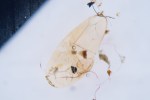
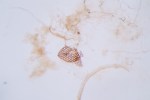
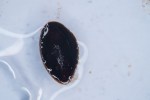
Jona has now completed the analysis of all his samples and we are currently collating the data sets; however, a number of the macro-fossils which he has discovered remain unidentified. Below are images of the unknown macro-fossils if you have any suggestions on identifications please comment, or get in touch directly.
Hi I’m Tessa and really excited to introduce myself here!
I’m an Environmental Biology Master student from Utrecht University (UU) doing a research internship in Amsterdam with William Gosling and Rike Wagner of the UU. Most people would describe me as a typical biologist because I like identifying plants and know some birds by their name. Personally I disagree because I lack the beard and hardly wear woollen socks. Besides looking at birds and plants I’m also interested in biodiversity and palaeoecology, and I will try to combine these interests in my research project on a sediment core from Samoa. I will be working on lake sediment cores from Samoa and hope fossil record can give me an overview of the natural history of the island (past c. 10,000 years); and an insight into what impact human colonisation had on the biodiversity. To explore the islands natural history I will be looking at pollen, charcoal and non pollen palynomorphs.
The sediment core on which I will be working has already been recovered and currently resides in beautiful Southampton (UK). So I’m spared of a 30 hour trip to tropical Samoa and the opportunity to return with some Samoan tattoo’s and a tan… So thanks to David Sear and his team at the University of Southampton with whom I will be collaborating for this project.
I have a long standing interest in tropical islands. Before commencing this research internship I did my first masters internship at WWF Indonesia. For my WWF internship I spent three months in the tropics collecting baseline ecological data on timber companies located in a new reserve in Sumatra. Furthermore, during my bachelor degree, I did a research internship at Naturalis Biodiversity Center investigating the “Correlation between higher altitudes and endemic plant species” in the Malayan archipelago. Our results turned out much better then we hoped for and fingers crossed our article will be accepted soon!
In three weeks I will be starting in the lab in Amsterdam and hopefully in a few months will be able to post an update about my results here.










 Ecology of the past