Past environmental change on Mauritius: Unknown macro-fossils

December 18, 2015
WDG

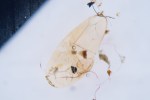
Unknown macro-fossil JdK-type2

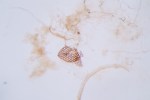
Unknown macro-fossil JdK-type2

Past environmental change on Mauritius has been the focus of research with the Palaeoecology & Landscape Ecology group at the University of Amsterdam (UvA) for a number of years. This research has been lead by Erik de Boer and Henry Hooghiemstra and has already resulted in a number of key publications on the environmental history of the island (de Boer et al., 2013, 2014, 2015). One current past environmental change research project working on Mauritius is being undertaken by Jona de Krui; a student within the UvA BSc Biology program supervised by myself and Erik. Jona’s is working on a study site (modern day swamp) on the north-east of the island and is focused on improving our understanding changes in the:

  • depositional environment (loss-on-ignition analysis),
  • fire activity (macro-charcoal analysis), and
  • vegetation (macro-fossils) over the last c. 1000 years.

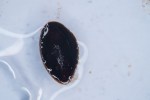
Jona has now completed the analysis of all his samples and we are currently collating the data sets; however, a number of the macro-fossils which he has discovered remain unidentified. Below are images of the unknown macro-fossils if you have any suggestions on identifications please comment, or get in touch directly.

Continue Reading

Sediment coring in Lake Erazo

April 14, 2015
WDG

XPERT field school is underway…

stxal8's avatarPalaeoenvironment

Lake Erazo Sediment coring on Lake Erazo. Photo by Valerie van den Bos (who spent the flight over reading a book on how to take the perfect photo)

By Alexandra Lee and Nick Primmer

To study the palaeo-environmental record of the Andean cloud forest, sediment cores were taken from the recently discovered Erazo lake. In mixed conditions of blazing sun and pouring rain, 14 researchers, one bus driver and several Ecuadorian guides hauled what felt like a ton of equipment up to the lake 2,300 m asl. In the centre of the lake, a wooden coring platform was mounted between two boats securely anchored at three positions. Using a modified Livingston corer with a drop hammer, five cores were successfully recovered from the lake up to a maximum depth of two metres. The main challenge encountered was the stability of the platform which resulted in several complications limiting the number of cores…

View original post 29 more words

Teaching in the field: Foundations, feedback and fun

September 16, 2014
WDG

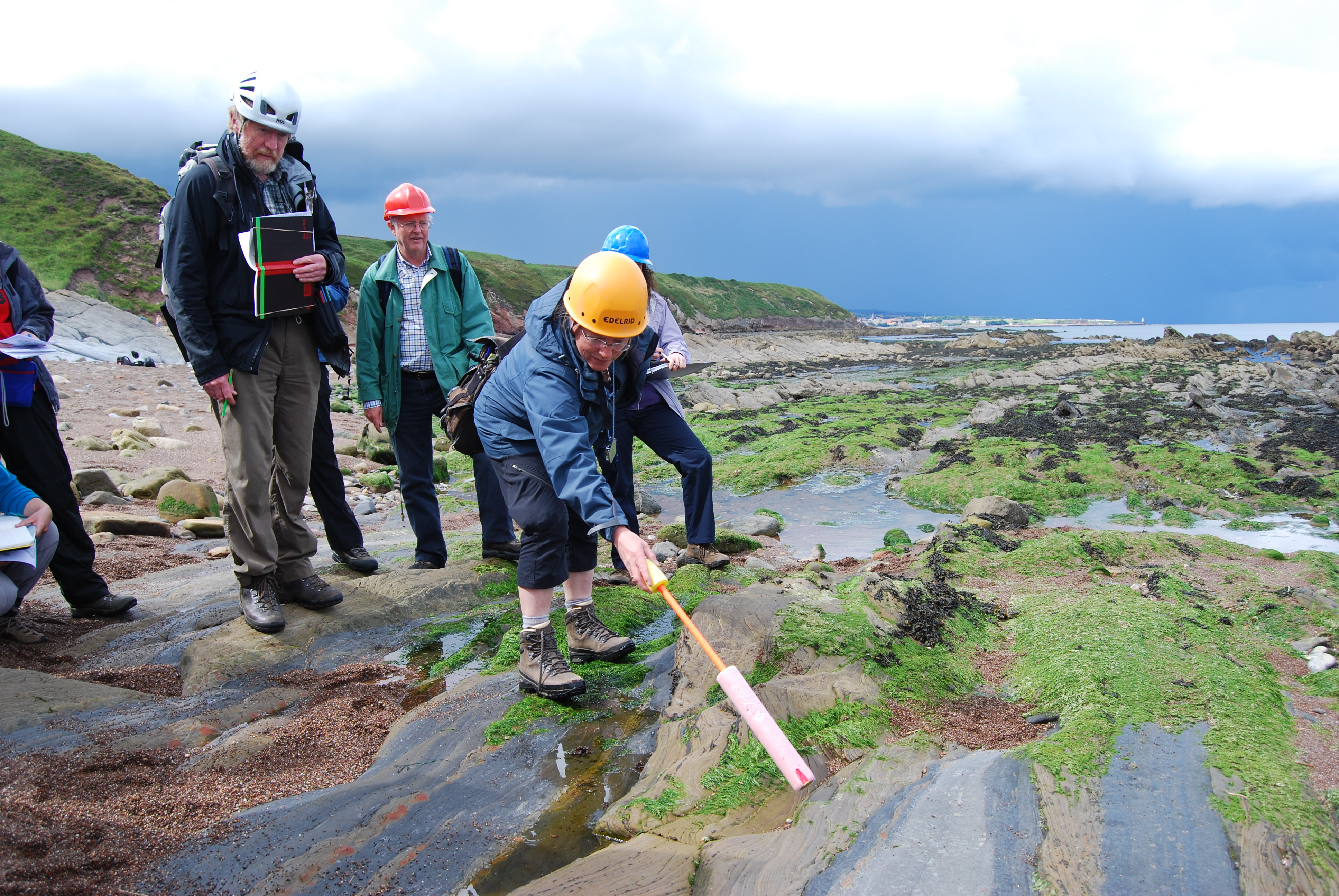
My final teaching job for The Open University was to help deliver the “Sedimentary Rocks & Fossils in the Field” section of the Level 2 Practical Science module (SXG288) offered by the Science Faculty. I have been involved in all three presentations of this section of the SXG288 module, which will now cease to be offered, and a number of other Earth and environmental science residential schools over the last 9 years.

Showing students the rocksHaving the opportunity to engage directly with students and enthuse them face-to-face about the subject I specialise in is a privilege I have gained a lot from. Furthermore, my over-riding impression from the students I have taught is that they feel they benefit greatly from the opportunity to explore first hand the concepts and subjects which they have previously studied in books and online. Based on my experiences on “Sedimentary Rocks and Fossils”, and other modules as both a tutor and a student, I am convinced that to effectively teach geological, geographical, environmental and ecological subjects effectively an element of field-based teaching is required.

Continue Reading

In the news:

First Farmers Were Also Sailors, by Michael Balter in Science.

John Bostock: The man who ‘discovered’ hay fever, by Justin Parkinson in BBC News Magazine.

DNA study shows yeti is real (sort of) – and Oxford scientist prepares expedition to find it, by Adam Withnall in The Independent.

Tibetan altitude gene inherited ‘from extinct species’, by Paul Rincon BBC News Website

Scientific articles:

Bonatelli, I.A.S., Perez, M.F., Peterson, A.T., Taylor, N.P., Zappi, D.C., Machado, M.C., Koch, I., Pires, A.H.C. & Moraes, E.M. (2014) Interglacial microrefugia and diversification of a cactus species complex: phylogeography and palaeodistributional reconstructions for Pilosocereus aurisetus and allies. Molecular Ecology, 23, 3044-3063.

Bush, M.B., Restrepo, A. and Collins, A.F. (2014) Galápagos history, restoration, and a shifted baseline. Restoration Ecology, 22, 3, 296-298.
Summary (Nick): A concise and pithy look at how a robust long-term ecological system can be transformed rapidly by human impact. The paper demonstrates how the fossil pollen record is fundamental if a near-natural vegetation state is to be restored to the Galápagos islands, to avoid restoration to a shifted baseline.

Froyd, C.A., Coffey, E.E.D., van der Knaap, W.O., van Leeuwen, J.F.N., Tye, A. & Willis, K.J. (2014) The ecological consequences of megafaunal loss: giant tortoises and wetland biodiversity. Ecology Letters, 17, 144-154.

Giguet-Covex, C., Pansu, J., Arnaud, F., Rey, P.-J., Griggo, C., Gielly, L., Domaizon, I., Coissac, E., David, F., Choler, P., Poulenard, J. & Taberlet, P. (2014) Long livestock farming history and human landscape shaping revealed by lake sediment DNA. Nat Commun, 5

Gillson, L. & Marchant, R. (2014) From myopia to clarity: sharpening the focus of ecosystem management through the lens of palaeoecology. Trends in Ecology & Evolution, 29, 317-325.
Comment (Will): For a good example of feeding palaeoecology into management see Bush et al. above.

NERC-PlanetEarth

Insects, sediment and climate change

Frazer Bird and William Gosling talk about how to conduct palaeoecological research in the tropics for NERC’s Planet Earth pod-cast. Click here to here to listen to the conversation.

For other similar stories online visit the Planet Earth website.

Fieldwork in Ecuador 2013

December 13, 2013
WDG

Nick and Will with Carman (director of the Pindo Mirador biological station)

Nick and Will with Carman (director of the Pindo Mirador biological station)

Three members of the PCRG (William Gosling, Encarni Montoya and Nick Loughlin) visited Ecuador (November-December 2013) to develop collaborations with Ecuadorian institutions, recover more lake sediments, and find new potential sites for projects. Below are some photos from:

  1. Lake Pindo, 
  2. Lake Huila, and
  3. Lake Erazo.

Full reports on specific aspects of the fieldwork to follow.

Continue Reading

Palaeo-Caribbean

July 30, 2013
WDG

Earlier this month Rachel Gwynn (Geography, UCL) visited the PCRG to use our core splitter to reveal what was contained within two cores collected from the Carribean. She has also been kind enough to provide photos of the sediments and an insight into the story so far:

Sediments from Fresh Water Pond Barbuda (Photograph Rachel Gwynn)

Sediments from Fresh Water Pond Barbuda (Photograph Rachel Gwynn)

Lake sediment cores covering the past few hundred to thousand years have been taken from two lakes, Wallywash Great Pond in Jamaica and Freshwater Pond in Barbuda. The sediments form part of the NERC-funded project Neotropics1k (PI Prof. Jonathan Holmes), which is concerned with climate variability in the northern Neotropics over the past millennium. The sediment cores show marked changes in composition and colour, from pale marl to dark organic mud. These colour changes, which are clearly visible in the photographs, represent changes in sediment composition that are in turn related to lake-level variations caused by long-term climate shifts. Deeper, open-water conditions under wetter climate are represented by the marls, whereas lowered lake levels, caused by direr climate, are associated with organic-rich sediments.

Wallywash Great Pond– core section W2

  • Thirteen separate units have been identified through the 1 m core length, varying between light coloured marl, dark organic and shelly sediments.
  • The abundance of preserved Ostracod valves increases throughout the marl and shell rich layers but drops significantly in the organic rich material.

Barbuda Freshwater Pond- core section FWP

  • This core has four distinct units. 0-23 cm is a calcareous mud with a diffused lower boundary into a shelly calcareous mud at 25-35.5 cm. 35.5-38 cm and 38-52 cm is two variations of calcareous mud.
  • These units, as with the W2 core, have been defined using a Munsel Soil Chart.
  • The Ostracod valves are thought to be abundant throughout the core due to the high marl content.
Wallywash Great Pond Jamaica (photograph Rachel Gwynn)

Wallywash Great Pond Jamaica (photograph Rachel Gwynn)

Fieldwork: Papallacta and Cosanga

September 15, 2012
WDG

The second part of our Ecuadorian expedition took in lakes and sections close to the towns of Papallacta and Cosanga. The variation in climatic conditions was marked as we experienced first hand the transition from freezing fog and driving rain to burning sun and heat within a few tens of kilometers as we travelled from >4000 m down to around 1000 m elevation.

Vinillos Section

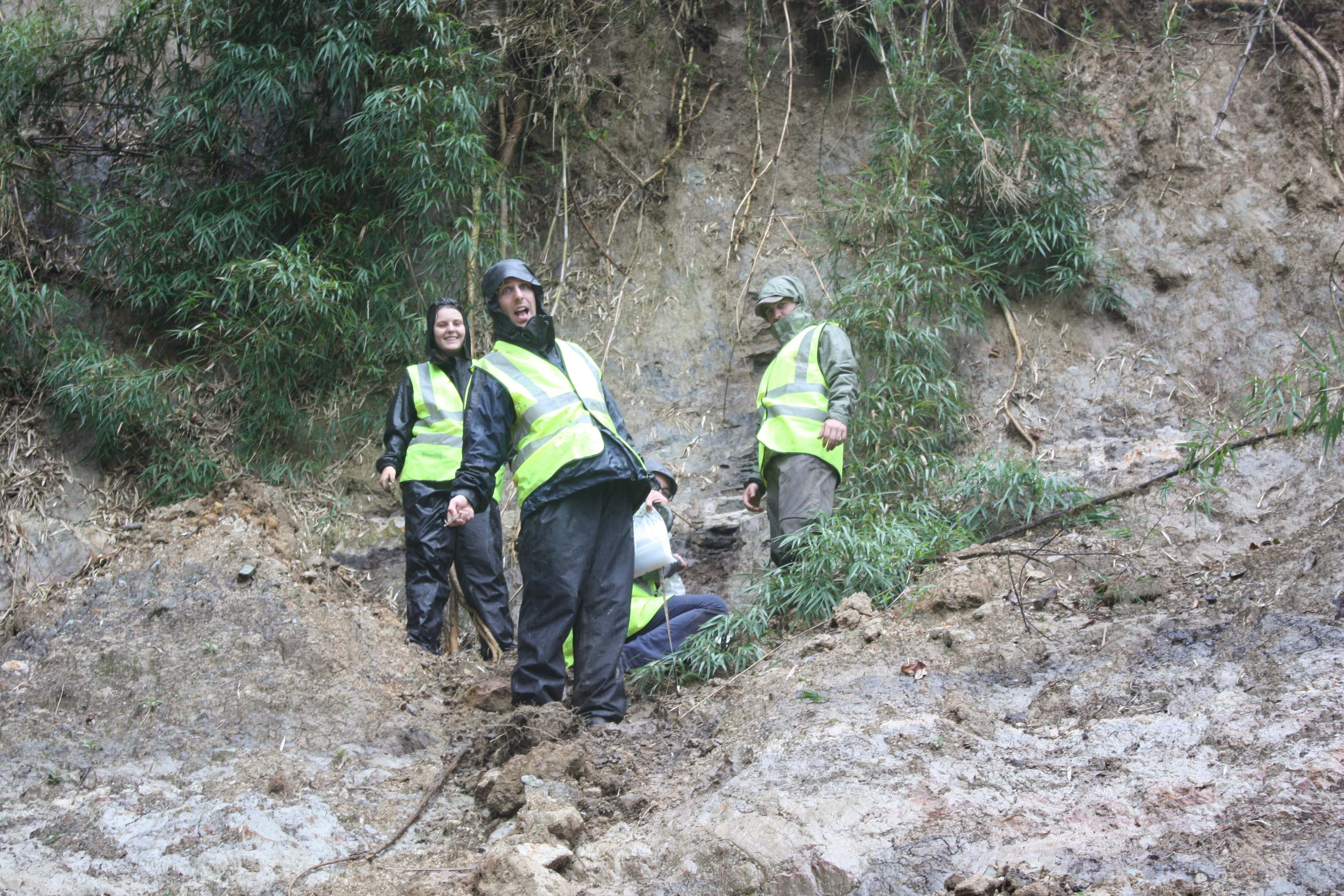
Sampling the sedimentary section at Vinillos was hampered by a tropical downpour. Sediments recovered from here include volcanic ash, mud slide deposits including large wood macrofossils and fine grained organic sediments probably deposited in still water environments.

Antenas near Cujuca

Preparing to recover a short core from a pond near the antenas at Cujuca. Short cores will be used for Chironomid analysis.

Tomorrow we will attempt to recover short cores from two more lakes. Then our final few days here in Ecuador will be spent visiting partners and packing up.

Blog at WordPress.com.