I am delighted to be organizing a focus session at the first AfQUA meeting. The session seeks to bring together ecologists and palaeoecologists working in Africa. If you are interested in getting involved please contact me (William Gosling) directly. For further information on the conference visit the AfQUA website or twitter feed.
Focus session 1: African ecology in context
The African continent spans over 80 degrees of latitude, nearly 6000 m of altitude and around 30 million km2 consequently it contains a vast array of unique ecosystems. Many of the African ecosystems are under direct pressure from human activity and are threatened by on-going and projected climate change. However, management and conservation of the modern African ecosystems is hampered by a paucity of data on their natural history. Studies of observations of ecosystems spanning >30 years are rare so we are heavily reliant on examination of the fossil record to place modern ecology in a long-term (>50 year) context. Information on past ecosystems can be extracted through the examination of a range of biological indicators (e.g. pollen, carbon isotopes, charcoal) found within marine and lake sediments. However, interpretation of the sediments and the proxies they contain with the ecosystems observed today is challenging because of timescale and interpretation issues. The aim of this session is to bring together modern ecologists and paleo-ecologists working in Africa to present the state-of-the-art understanding of ecosystems past and present, and explore how we can improve understanding of timescales and proxy interpretation to place these threatened ecosystems in context.
Over the next few months the “Palaeolimnology et al.” blog will be changing. The first noticeable change will be the title of the blog to “Ecology of the past”. The idea behind changing the name is to have a title that it easily informs the reader about the broad area of our interests.
The changes have been precipitated by three key factors:
My desire to have a blog people within the Paleo and Landscape Ecology Group at the University of Amsterdam (UvA) can feel comfortable contributing to, and
The fact this blog has been running for over 3 years and it is probably time for a refresh.
Changes to the static pages and blog content will happen over the next few weeks.
So we’re back from a hot and humid Ecuador to the joys of a British winter. Ecuador is an amazing country and the diversity of the flora and fauna surpasses anything that I have experienced before. Continue Reading
Nick and Will with Carman (director of the Pindo Mirador biological station)
Three members of the PCRG (William Gosling, Encarni Montoya and Nick Loughlin) visited Ecuador (November-December 2013) to develop collaborations with Ecuadorian institutions, recover more lake sediments, and find new potential sites for projects. Below are some photos from:
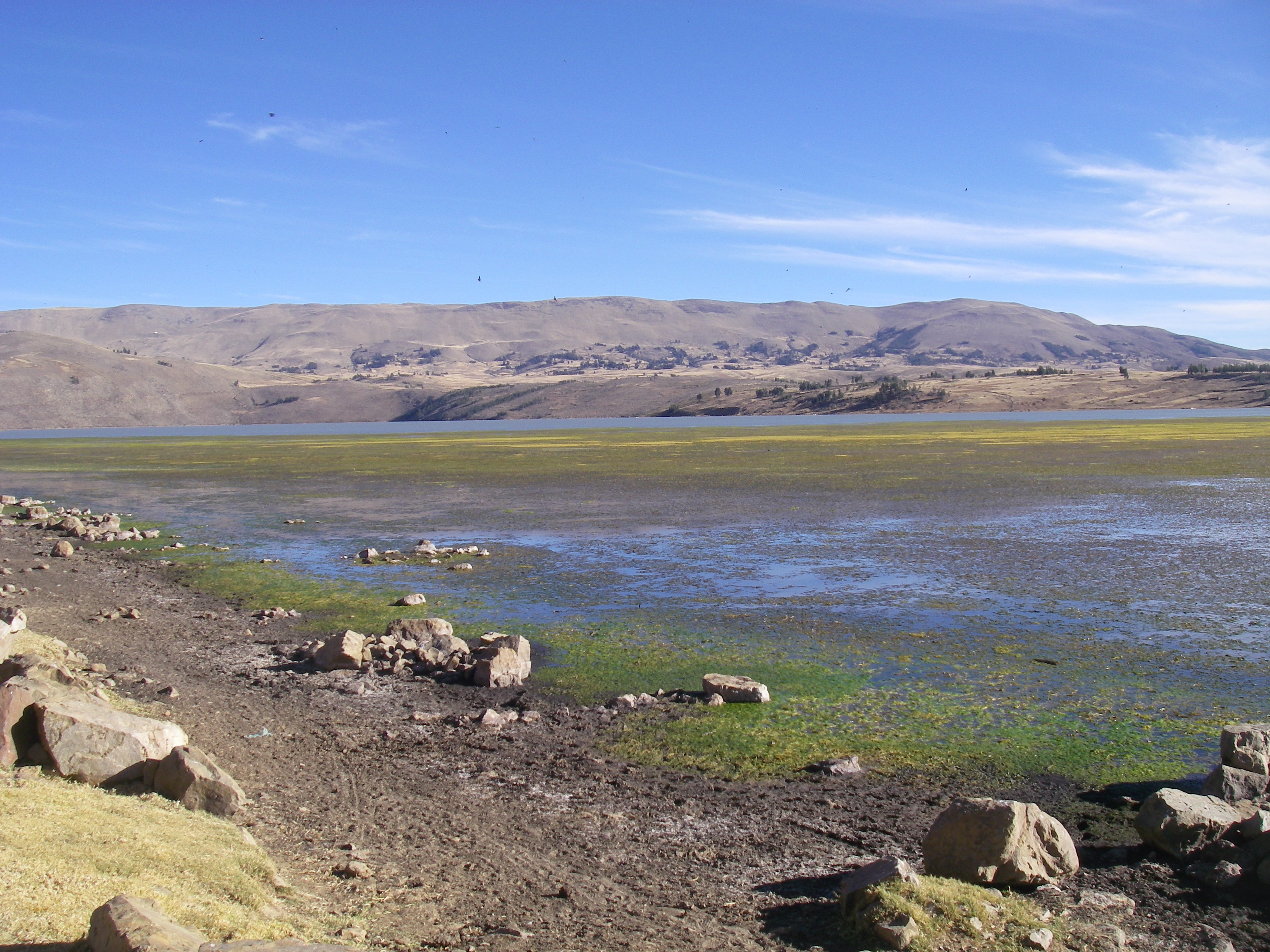
Lake Pindo,
Lake Huila, and
Lake Erazo.
Full reports on specific aspects of the fieldwork to follow.
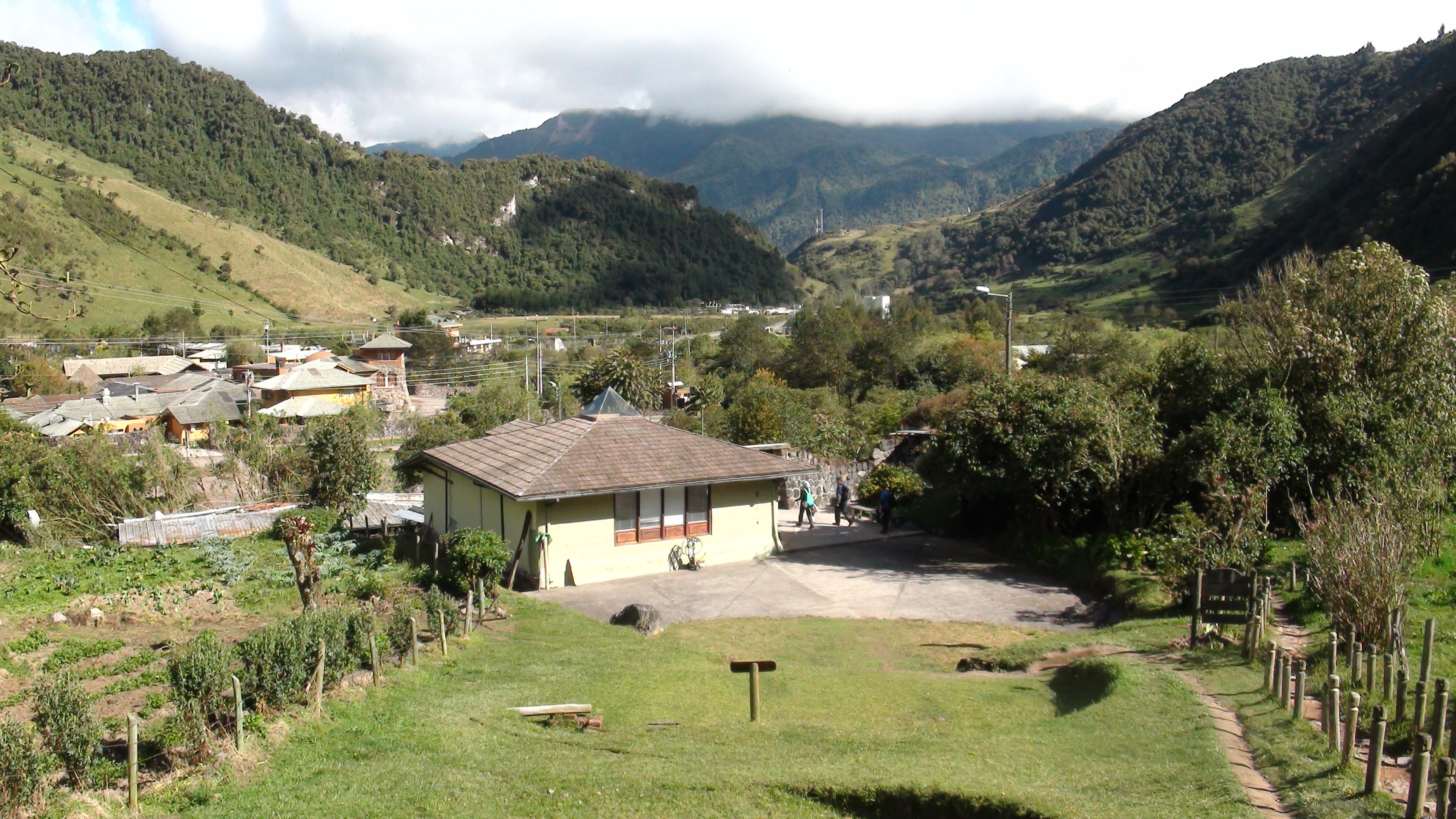
Photo taken close by the study site. The road that pass through Eastern Andes, and the magnificent Montane forest of western Amazonia behind. (Photo by M. L. Cárdenas)
Who would have thought that building a road in Andes would have allowed us to gain new and unique insight of pristine western- Amazonian forests? (I would have thought completely the opposite). Initially Patricia Mothes, chief of the volcanologist section of the Intituto de Geofisica in Ecuador, was called to look at sediments exposed by road works on the eastern flank of the Ecuadorian Andes. Arriving at the site she found thick (>20 vertical meters) deposits of grayish and dark brown interbedded layers of sediments which looked like they have been recently deposited. At closer inspection Patricia discovered that there were even wood pieces and leaves within the dark sediments (now known to be highly organic) that had the appearance of have been deposited within modern time. She wanted to know more. So a PhD student was recruited (a.k.a. Macarena Cárdenas) to work with the sediments at the Palaeoenvironmental Change Research Group at the Open University under the supervision of Dr William Gosling… And so the study began.
After several years spent dating the sediments, analyzing their composition (physical and elemental) and the fossils (pollen and wood) contained within them preliminary insights into vegetation change on the eastern Andean flank during the middle Pleistocene (c. 200,000-300,000 years ago) were revealed and published (Cárdenas et al., 2011a; Cárdenas et al., 2011b). Further work covering stratigraphically lower sediments (older than those previously published; c. 500,000 year) and more detailed sedimentary and fossil analysis of the entire sequence completed a PhD thesis (Cárdenas, 2011).
I am now pleased to announce that the extended work included in my PhD thesis has now been published in a new article in Palaeogeography, Palaeoclimatology, Palaeoecology (Cárdenas et al., online). The new paper is an extended version from previous publications from the same research and provides further evidence of the unique insights that can be gained from palaeoenvironmental studies in this region. These are some of the oldest Quaternary sediments ever discovered and studied from the mid-elevation eastern Andean flank / western Amazon and upon their analyses we were able to get for the first time an insight of how human-untouched Amazonian forests were back in time (up to 500,000 years ago!), how was their diversity and how they responded to intense volcanic activity and climatic change.
By Dr Macarena L. Cárdenas
REFERENCES
Cárdenas, M.L. (2011) The response of western Amazonian vegetation to fire and climate change: A palaeoecological study. In: Department of Earth & Environmental Sciences, p. 242. The Open University, Milton Keynes
Cárdenas, M.L., Gosling, W.D., Pennington, R.T., Poole, I., Sherlock, S.C. & Mothes, P. (online) Forests of the tropical eastern andean flank during the middle pleistocene. Palaeogeography, Palaeoclimatology, Palaeoecology. DOI:10.1016/j.palaeo.2013.10.009
Cárdenas, M.L., Gosling, W.D., Sherlock, S.C., Poole, I., Pennington, R.T. & Mothes, P. (2011a) The response of vegetation on the Andean flank in western Amazonia to Pleistocene climate change. Science, 331, 1055-1058. DOI: 10.1126/science.1197947
Cárdenas, M.L., Gosling, W.D., Sherlock, S.C., Poole, I., Pennington, R.T. & Mothes, P. (2011b) Response to comment on “the response of vegetation on the Andean flank in western Amazonia to Pleistocene climate change”. Science, 333, 1825. DOI: 10.1126/science.1207888
Human modification of the landscape in the Andes (Peru)
Whilst working on intergrating palaeoecological and archaeological data for a recent publication (Gosling & Williams, 2013) I was struck by the range of sources I had to go to to obtain data from the two different disciplines. The paper focuses on the how societies in the high Andes have developed over the last 5000 years and the role, if any, that changes in natural resource (ecosystem service) avaliability might have played in pacing any societal changes. However, when I got the first set of review comments back I was left considering my (academic) resource base, how I accessed this, and how that influenced my ability to conduct research; especially when moving slightly outside the area of my specialism.
All applications must be pre-approved by the host institution so if you are interested in applying for a project through The Open University expressions of interest are required by 25th January 2013.
Two NERC algorithm funded PhD studentships are currently available with the PCRG. The projects are focused on understanding past environmental change in west tropical Africa and Amazonian-Andean Ecuador. Both projects will involve field work and build on on-going research within the lab.
Closing date 31/01/2013
One project will work on samples collected during fieldwork in 2012 near Papallacta (Ecuador).
Further project details and how to apply below… Continue Reading
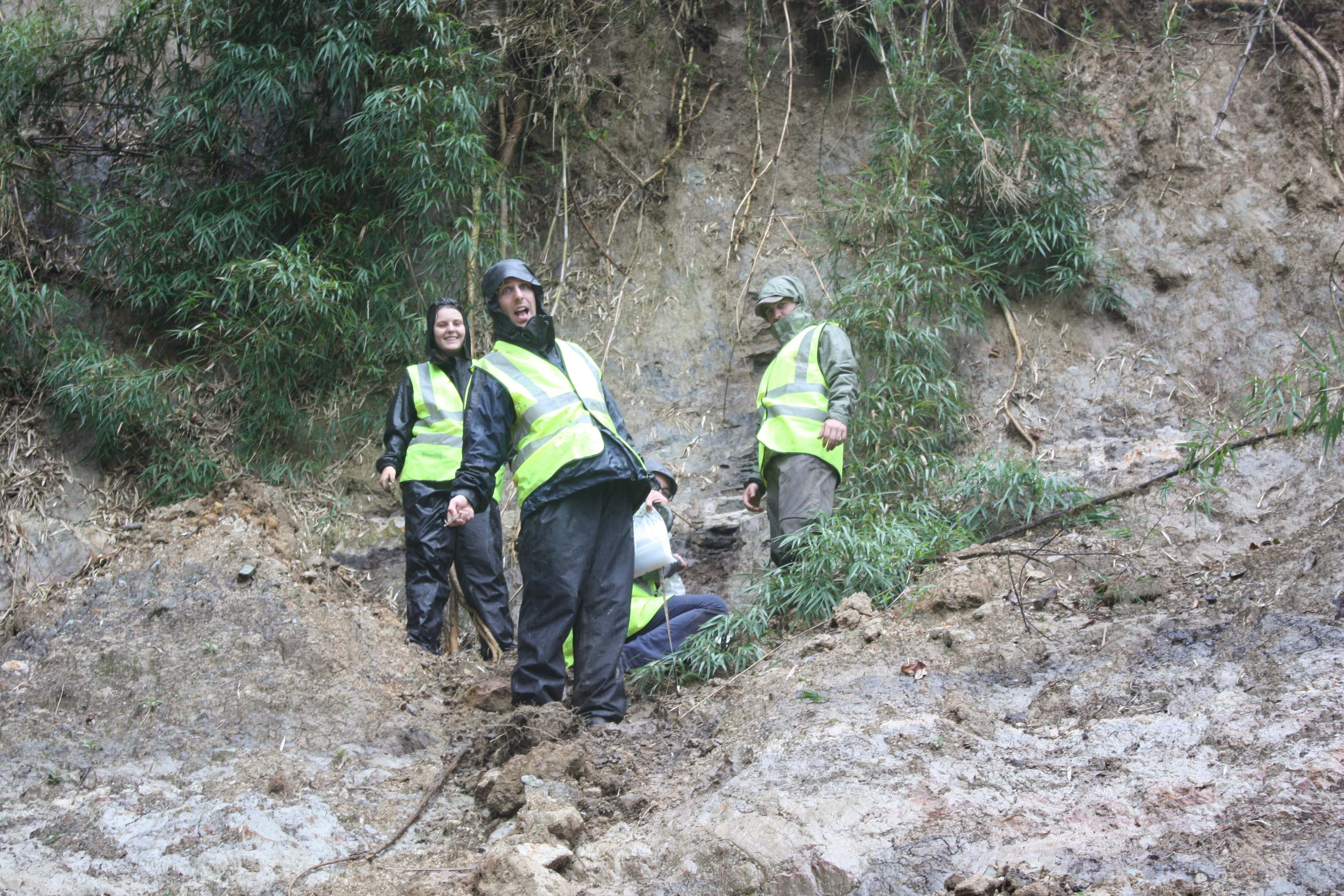
One of the key goals of the fieldtrip to Ecuador (August-September) was to sample organic and volcanic (tephra) layers from sedimentary exposures with the aim of obtaining new information about past envrionmental change in the region. Our Ecuadorian collaborator, Dr Patricia Mothes (Instituto Geofisico), had identified four of sites she thought might be useful too us: El Fatima Dique, Mera “2” Dique, El Rosol and Vinillos.
At the Fatima site, near Puyo, a thin organic bed was sampled sandwiched between volcanic ash deposits. Wood macrofossils from this deposit have been dated to the last glacial period.
For further descriptions of what we found and field photos read on…



 Ecology of the past