Tropical Ecology in the Netherlands

October 12, 2015
WDG

UvAPresentations by current PhD research students
R
elated to the University of Amsterdam Tropical Ecology course

Date: Friday October 16 2015
Location: Sciencepark 904
Contact: Joost Duivenvoorden

Program

9:00-9:30 Marian Cabrera (UvA): Paramo response to human influence: A trait-based approach.
9:30-10:00 Caterina Cúcio (UvA): The seagrass rhizobiome and its role in the sulfur cycle.
10:00-10:30 Vitor Gomes (Naturalis): Endangered tree species future in Amazon.

Coffee Break

11:00-11:30 Catarina Jacovac (WUR): Effects of land use on forest succession in the Amazon.
11:30-12:00 Andre van Proosdij (WUR/Naturalis): Assessing botanical diversity patterns in Gabon using Species Distribution Models: methods & applications.
12.00-12.30 André Junqueira (WUR): Legacies of anthropogenic soils on forests and cultivation systems in Amazonia.

Lunch

Mashpi (25)

Journal articles

  • Clement, C.R., Denevan, W.M., Heckenberger, M.J., Junqueira, A.B., Neves, E.G., Teixeira, W.G. & Woods, W.I. (2015) The domestication of Amazonia before European conquest. Proceedings of the Royal Society of London B: Biological Sciences 282. DOI: 10.1098/rspb.2015.0813
  • Oliver, T.H., Heard, M.S., Isaac, N.J.B., Roy, D.B., Procter, D., Eigenbrod, F., Freckleton, R., Hector, A., Orme, C.D., Petchey, O.L., Proenca, V., Raffaelli, D., Suttle, K.B., Mace, G.M., Martin-Lopez, B., Woodcock, B.A. & Bullock, J.M. Biodiversity and Resilience of Ecosystem Functions. Trends in Ecology & Evolution. DOI: 10.1016/j.tree.2015.08.009
  • Watkins, C. (2015) Oliver Rackham OBE FBA 1939–2015. Landscape History 36, 5-8. DOI: 10.1080/01433768.2015.1044280
    COMMENT: One of the books that inspired me to enter this field of research was Rackham’s Trees and woodlands in the British landscape; published the year I was born…

Plus three papers discussed during the University of Amsterdam BSc Biology Tropical Ecology course trip to De Hortus Botanicus Amsterdam:

  • Bush, M.B. (1995) Neotropical plant reproductive strategies and fossil pollen representation. American Naturalist 145, 594-609. Stable URL: http://www.jstor.org/stable/2462970
  • Cárdenas, M.L., Gosling, W.D., Sherlock, S.C., Poole, I., Pennington, R.T. & Mothes, P. (2011) The response of vegetation on the Andean flank in western Amazonia to Pleistocene climate change. Science 331, 1055-1058. DOI: 10.1126/science.1197947
  • Logan, A.L. & D’Andrea, A.C. (2012) Oil palm, arboriculture, and changing subsistence practices during Kintampo times (3600–3200 BP, Ghana). Quaternary International 249, 63-71. DOI: 10.1016/j.quaint.2010.12.004


Highlights of Dutch research in the tropics

October 5, 2015
WDG

Symposium
125 years Treub Maatschappij – Society for the Advancement of Research in the Tropics
&
Biodiversity & Global Change (IBED/UvA)

present:
“Highlights of Dutch research in the tropics”
Coordinators: Carina Hoorn & Daniel Kissling

Location: Institute for Biodiversity & Ecosystem Dynamics, Amsterdam Science Park (Building 904)
Time: Wednesday 11 November 2015, 1300-1700 (followed by drinks reception)
For further information, and to book your place, visit the IBED web site by clicking here.

amazone-rivier


Palaeoecology at UvA and Twente 2015: Teaching and Learning

September 21, 2015
cmcmicha

By Crystal McMichael

The month-long palaeoecology module at UvA is coming to an end. We have had two weeks of lectures and microscope work, an introduction to quantitative palaeoecology, and we just finished a week of fieldwork in Twente, which is in the easternmost part of the Netherlands.

Students working in the field (photo: M. Groot)

Students working in the field (photo: M. Groot)

Will Gosling and I tried something new for the field excursion this year. We split the class into eight groups, and gave each group a set of pollen and phytolith samples from an ‘unknown location’. Unknown in this context means being from one of the eight primary sites that we would visit during the field excursion. The students were required to perform vegetation surveys and characterize soils at each of the primary sites that we visited. The goal of each group was to figure out which location their set of ‘unknown’ samples came from. Basically, we had them doing forensic palynology, with idea that they could then better visualize the different vegetation assemblages seen in the palaeoecological records.
Continue Reading

Ecology of the past 2014

January 4, 2015
WDG

William shortly after a haircut

William shortly after first Dutch haircut

2014 has seen more people visit this blog and more “clicks” through to articles than in any previous year (see Annual Report 2014). So thanks for reading! I hope that the information provided is useful. For me 2014 has been a big year of change; with the largest work related change being taking up my new post at the University of Amsterdam in September.

2015 promises to be an exciting year with a number of key projects generating exciting findings (including chironomid climate for the Neotropics, Andean flank evolution, and ‘deep time’ palynomorphs) , the start of the XPERT network, and new proposals and collaborations being developed here in the Netherlands (including new proposal to work in Europe!).

Any comments, thoughts or contributions on the blog welcome.

William

Assistant Professor Palaeoecology

November 18, 2014
WDG

02_05_2007_AsteraceaeVacancy: Assistant Professor Palaeoecology
(5-year tenure track)

Palaeoecology & Landscape Ecology
Institute of Biodiversity & Ecosystem Dynamics
University of Amsterdam

Closing data: 14 December 2014
Interviews: January 2015

We are looking for an ecologist with experience and interest in long timescales specifically related to one, or more, of the following research areas:

  • the Quaternary (last 2.6 million years);
  • sedimentary archives;
  • application and interpretation of proxy indicators (physical, biological and/or geochemical);
  • novel proxy development;
  • numerical/statistical methods in ecology.

For full details on the position and how to apply click here.
For informal discussion of the position please contact William Gosling.

Current research within the P&L group focuses on examining past environmental change in lake sediments (Yanacocha, Peru)

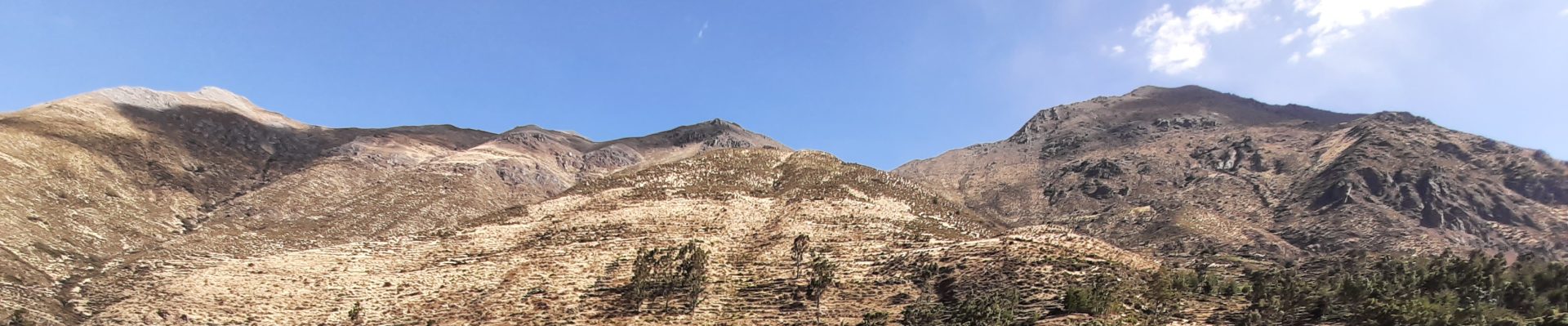
Current research within the P&L group focuses on examining past environmental change in lake sediments (Photo: Yanacocha, Peru)

Organisms and environments: Frontiers in palaeoecological technique development

October 16, 2014
WDG

inquaXIX INQUA Congress
NAGOYA, JAPAN 27 July-2 August, 2015

Grass pollen from Lake Bosumwti picked for individual chemical analysis

Grass pollen from Lake Bosumwti picked for individual chemical analysis

Abstract submission is now open for the XIX International Union for Quaternary Research (INQUA) Congress. “Ecology of the past” researchers will be there and are hosting a special session, entitled Organisms and environments: Frontiers in palaeoecological technique development, at which we hope to bring together a wide range of palaeoecologists working on novel proxy development. Members of the “Ecology of the past” group will be showcasing recent findings on the environmental significance of pollen chemistry change through time; linked to the 500,000 years of solar irradiance, climate and vegetation change in tropical West Africa project (Fraser et al., 2014). Please take a look at our session and consider submitting YOUR abstract today!

For information on abstract submission click here. Closing date for abstract submission 20 December 2014.

For further information on our session click here, or “Continue reading” below…

Continue Reading

Paleoecology course University of Amsterdam

September 29, 2014
Valerie

Students examining a sediment core extracted with a Russian corer

Students examining a sediment core extracted with a Russian corer

Last week, Will – our new associate professor at the University of Amsterdam – joined us on the field residential module of the undergraduate “Paleoecology” course; 7 days exploring the sediments and vegetation of the Twente region of the Netherlands. The experience provided Will with a lot of information on Dutch language, landscapes, and students; which should be useful to him next year as he will be coordinating the course!

Students examining peat exposures.

Students examining peat exposures.

During this very intensive (4-week) paleoecology course, students get background lectures in past environmental change, learn to identify microfossils in the laboratory (pollen and chironomids), and go on the excursion to experience fieldwork. The field module involves excursions during the day, when students have to identify plant species indicative of different vegetation types in relation to soil nutrient availability and moisture content. The evenings are reserved for the students own paleoecological research investigation; this year students were reconstructing the vegetation history and climate change during the late-glacial from a lake sediment core from Germany. Once data collection was completed the students had to interpret the pollen assemblages they found using the knowledge of modern day ecosystems they gained throughout the week. On the final evening they presented their work to the whole group. The final results they achieved were quite impressive.

Students presenting findings from the days work

Students presenting findings from the days work

I am very curious as to what the course will be like next year, led by Will, and how he will tweak and turn it to his liking.


Debating the Vera hypothesis

Debating the Vera hypothesis


Teaching in the field: Foundations, feedback and fun

September 16, 2014
WDG

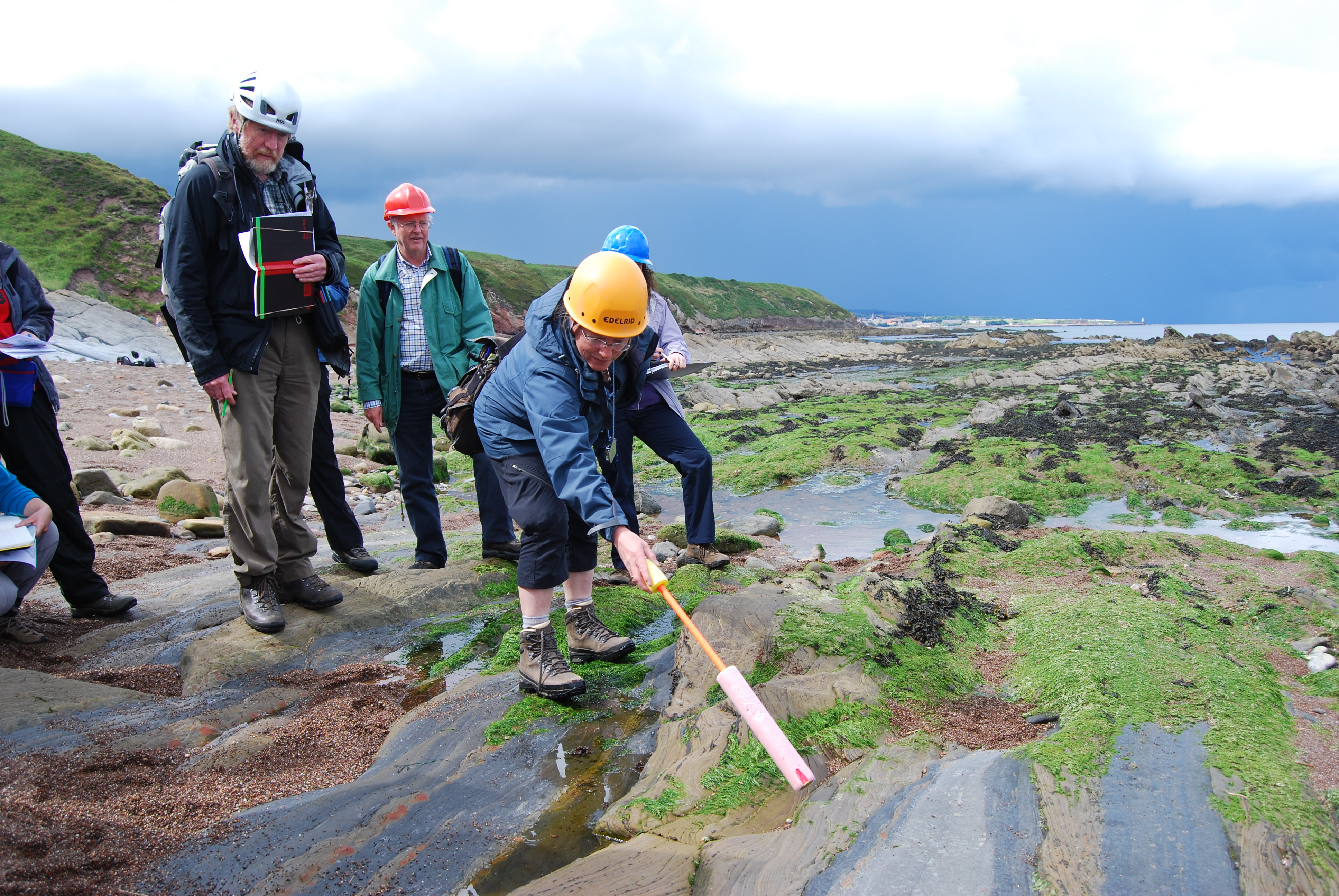
My final teaching job for The Open University was to help deliver the “Sedimentary Rocks & Fossils in the Field” section of the Level 2 Practical Science module (SXG288) offered by the Science Faculty. I have been involved in all three presentations of this section of the SXG288 module, which will now cease to be offered, and a number of other Earth and environmental science residential schools over the last 9 years.

Showing students the rocksHaving the opportunity to engage directly with students and enthuse them face-to-face about the subject I specialise in is a privilege I have gained a lot from. Furthermore, my over-riding impression from the students I have taught is that they feel they benefit greatly from the opportunity to explore first hand the concepts and subjects which they have previously studied in books and online. Based on my experiences on “Sedimentary Rocks and Fossils”, and other modules as both a tutor and a student, I am convinced that to effectively teach geological, geographical, environmental and ecological subjects effectively an element of field-based teaching is required.

Continue Reading

Three new videos on the Ecology of the Past Youtube channel

July 25, 2014
philjardine

We’ve got a bumper crop of palaeoecological film making for you today, with three videos uploaded to our very own ‘Ecology of the Past’ Youtube channel. We’ve got an interview with Will Gosling, talking about the Bosumtwi pollen chemistry project and his own background and career (it’s a timely and somewhat poignant addition to the channel, because this is Will’s last day at The Open University before heading off to Amsterdam). Also posted are research presentations by Frazer Bird and Hayley Keen, which were filmed during the PhD student conference on 21st May. For the first time at the Open University these presentations were carried out in the Three Minute Thesis (3MT®) format.

Blog at WordPress.com.