Vegetation and climate dynamics in a 16,600-year marine sequence offshore Mozambique in Delagoa Bight, south-eastern Africa

September 8, 2025
WDG

Mapping Ancient Africa Quaternary International special issue article #8

Open access:

Neumann, F. H., Finch, J., Hahn, A., Miller, C. S., Scott, L., Schefuß, E., Dupont, L., Cawthra, H. C., & Engelbrecht, F. (2025). Vegetation and climate dynamics in a 16,600-year marine sequence offshore Mozambique in Delagoa Bight, south-eastern Africa. Quaternary International, 747, 109956. DOI: 10.1016/j.quaint.2025.109956

To find the complete list of articles in the Mapping Ancient Africa special issue of Quaternary International click here.

A multi-model approach to the spatial and temporal characterization of the African Humid Period

July 25, 2025
WDG

Mapping Ancient Africa Quaternary International special issue article #7

Open access:

Gosling, W.D., Chevalier, M., Fischer, M.L., Holewijn, M., Finch, J., Gil-Romera, G., Hill, T., Houngnon, A., Leonardi, M., Manica, A., & Kaboth-Bahr, S. (2025). A multi-model approach to the spatial and temporal characterization of the African Humid Period. Quaternary International 744, 109933. https://doi.org/10.1016/j.quaint.2025.109933

Gosling, W.D., Chevalier, M., Lothar Fischer, M., Holewijn, M., Finch, J. M., Gil-Romera, G., Hill, T. R., Houngnon, A., Leonardi, M., Manica, A., & Kaboth-Bahr, S. (2025). Code from: A multi-model approach to the spatial and temporal characterization of the African Humid Period. Figshare. https://doi.org/10.6084/M9.FIGSHARE.29608400.V1

To find the complete list of articles in the Mapping Ancient Africa special issue of Quaternary International click here.

Drivers of vegetation change in tropical Africa

April 9, 2025
WDG

I was delighted to be invited to give a seminar as part of the Max Planck Institute for Geoanthropology “Human Palaeo-systems Research Group” series. In case you missed it the seminar is will soon be available to watch online (click here).

To see the full list of seminars in the series click here.

Heat, hydroclimate and herbivory

January 6, 2025
WDG

Mapping Ancient Africa Quaternary International special issue article #5

Kiely, R.E., Paine, A.R., McMichael, C.H. & Gosling, W.D. (2025) Heat, hydroclimate and herbivory: A late-Pleistocene record of environmental change from tropical western Africa. Quaternary International 717, 109636. DOI: 10.1016/j.quaint.2024.109636

To find the complete list of articles in the Mapping Ancient Africa special issue of Quaternary International click here.

Climate frameworks for the Middle Stone Age and Later Stone Age in Northwest Africa

December 15, 2024
WDG

Mapping Ancient Africa Quaternary International special issue article #4

#openaccess

Boisard, S., Wren, C.D., Timbrell, L. & Burke, A. (2025) Climate frameworks for the Middle Stone Age and Later Stone Age in Northwest Africa. Quaternary International 716, 109593. DOI: 10.1016/j.quaint.2024.109593

To find the complete list of articles in the Mapping Ancient Africa special issue of Quaternary International click here.

Fieldwork in the Drakensberg

December 11, 2024
WDG

South African research trip (part 3 of 3)

by Jelle Kraak

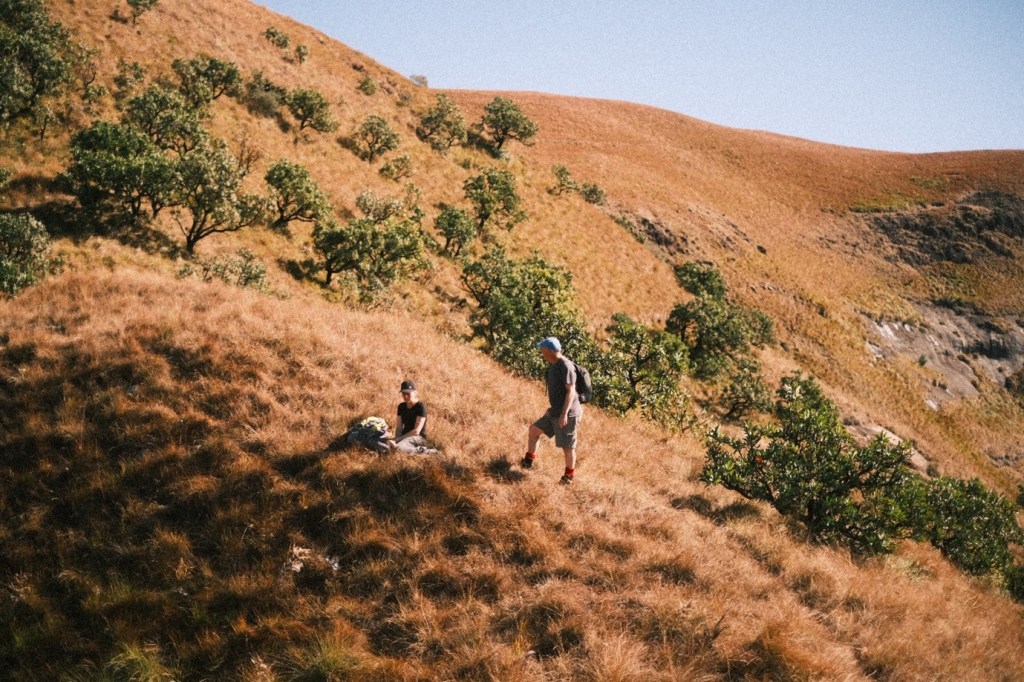
As part of my MSc Biological Sciences research project at the University of Amsterdam I  travelled to Africa, where I first presented the early findings of my research at the SASQUA congress (blog post 1) in Oudtshoorn (Western cape), before heading to the University of Kwa-Zulu Natal (blog post 2). Here I met up with local experts and prepared for the upcoming fieldwork, which the previous parts of this blog series covered. Now, the time has come for the final and best part, about my fieldwork in the absolutely gorgeous Drakensberg mountains.

Aims: As the samples for my research had already been collected earlier by my supervisors Prof. Dr. Jemma Finch & Prof. Dr. Trevor Hill for the University of Kwa-Zulu Natal, our initial goal was to collect various samples (charcoal, sediment cores, etc) for the next students. During my time at the university of Kwa-Zulu natal, however, we realized that it would be great to collect a bunch of C3 and C4 grass species, to extract phytoliths (amorphous silica particles formed in plant tissues) from, which would help with the interpretation of our data. This then became our new focus. To achieve this goal we visited the Drakensberg twice, one day trip in the weekend, and one trip with an overnight stay.

Day 1

After a night of utterly terrible sleep (I was alone on the AirBnB property, the gate did not lock due to the cold, and our dogs started barking at something (someone!?) at 2AM), I woke up at 6AM to get ready for the long day ahead of us. Jemma came to pick me up at the, bringing coffee with her, which I really appreciated. We then picked up Trevor at their place and began our drive towards the mountains.  I had not seen much of the landscape in the Kwa-Zulu Natal province, which turned out to be very compared to the Western Cape. Whereas the western cape had fynbos vegetation (very similar to the Mediterranean, KZN was more savanna like. There was grass everywhere the eye could see, except for the patches of spruce, planted by humans. Halfway through the drive the Drakensberg mountains came into view, which was stunning. We then drove through some small villages, until we finally arrived at the Berg.

Continue Reading

Highland forest dynamics across equatorial East Africa during the end ofthe African humid period

November 6, 2024
WDG

MAPPING ANCIENT AFRICA QUATERNARY INTERNATIONAL SPECIAL ISSUE ARTICLE #2

Ivory, S.J., MacDougal, E., Mason, A., Pereboom, E., Garelick, S., Ficken, K., Wooller, M.J., Nakileza, B. & Russell, J. (2024) Highland forest dynamics across equatorial East Africa during the end of the African humid period. Quaternary International. DOI: 10.1016/j.quaint.2024.10.007

INQUA Fellowship journey: Alfred Hougnon (field work)

October 19, 2024
WDG

INQUA fellow Alfred Hougnon continues his research into past environmental change in the Dahomey Gap (Benin). In the fourth video documenting his progress a short background to the project, and insights into field work, are given. Field work took place near the Ewe-Adakplame forest in the south east of Benin and involved the recovery of sediments using a Russian corer. The video also shows how interactions and engagement with the local community was developed during the research expedition.

To find out more above Alfreds project read posts on:

To watch more videos about past environmental change visit the Ecology of the Past YouTube channel.

Mapping Ancient Africa: Scientists

August 14, 2024
WDG

During the Mapping Ancient Africa writing workshop in Kenya (3-6 June 2024) Stefanie Kaboth-Bahr conducted a series of short interviews with the scientists attending. In this, final, instalment of the interviews the thoughts of the instructors on the course are presented. Watch all the Mapping Ancient Africa videos on the Mapping Ancient Africa YouTube Playlist.

The instructors

Bruk Lemma (Free University of Berlin, Germany)

Rahab Kinyanjui (National Museums of Kenya, Kenya & Max Plank Institute for Geoanthropology, Germany)

Continue Reading

Mapping Ancient Africa: Scientists

August 13, 2024
WDG

During the Mapping Ancient Africa writing workshop in Kenya (3-6 June 2024) Stefanie Kaboth-Bahr conducted a series of short interviews with the scientists attending. Below you can find part 2 (of 2) of the interviews with the participants in the workshop. Watch the videos to find out their scientific stories and top tips for academic writing. Watch all the Mapping Ancient Africa videos on the Mapping Ancient Africa YouTube Playlist.

The participants (part 2 of 2)

Ruth Kiely (University of Amsterdam, Netherlands)

Husna Mashaka (Arizona State University, USA & National Museums of Kenya, Kenya)

Continue Reading
Blog at WordPress.com.