Frazer Matthews-Bird’s video on his PhD research examining long-term (>50 year) climate change from fossil insects (chironomids) has been shortlisted for the American Geophysical Union (AGU) student competition prize. Please watch Frazer’s video and “Like”; the most liked video will win free entry into the AGU Fall meeting 2014.
Hayley Keen’s video “Past environmental change in the Amazon basin” has been shortlisted for the American Geophysical Union (AGU) student video prize. Please watch and like Hayley’s video; top “Liked” videos will win entry to the AGU 2014 Fall meeting.
We’ve got a bumper crop of palaeoecological film making for you today, with three videos uploaded to our very own ‘Ecology of the Past’ Youtube channel. We’ve got an interview with Will Gosling, talking about the Bosumtwi pollen chemistry project and his own background and career (it’s a timely and somewhat poignant addition to the channel, because this is Will’s last day at The Open University before heading off to Amsterdam). Also posted are research presentations by Frazer Bird and Hayley Keen, which were filmed during the PhD student conference on 21st May. For the first time at the Open University these presentations were carried out in the Three Minute Thesis (3MT®) format.
One short story and five scientific papers thinking about different aspects of ecological change through time.
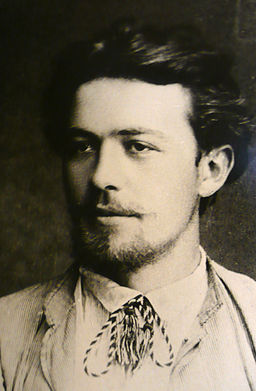
SUMMARY (Will): People have long been concerned about environmental change. Observations of phenological shifts, degradation of ecosystem services and climate change are clearly presented in Checkhov’s “The Pipe” (1889).The key difference is today we have a better idea of why these things are happening!?
Scientific papers:
Garcia, R.A., Cabeza, M., Rahbek, C. & Araújo, M.B. (2014) Multiple dimensions of climate change and their implications for biodiversity. Science 344 1247579
SUMMARY (Phil): This review highlights the alternative metrics used to quantify climate change at different spatial scales, each with its own set of threats and opportunities for biodiversity. It’s a very relevant paper for palaeoecologists, with implications for how we think about climatic estimates we generate, how we interpret ecological shifts in the assemblages we study, and for demonstrating the importance thinking spatially as well as temporally. It also shows how important palaeoecological data is for setting baselines and putting projected climatic change into context.
Stansell, N.D., Polissar, P.J., Abbott, M.B., Bezada, M., Steinmann, B.A. and Braun, C. (2014) Proglacial lake sediment records reveal Holocene climate changes in the Venezuelan Andes. Quaternary Science Reviews. 89, 44 – 55.
SUMMARY (Hayley): A study of three lake sediment records in the Venezuelan Andes to look at patterns of glacial variability, and how glaciers might have responded to changing climatic conditions during the last c. 12,000 years.
Still, C.J., Foster, P.N. & Schneider, S.H. (1999) Simulating the effects of climate change on tropical montane cloud forests. Nature, 398, 608–610.
SUMMARY (Nick): The paper attempts to model the impact of climate change on a number of cloud forests around the world by simulating atmospheric parameters at the last glacial maximum (LGM) and at twice today’s CO2 level. The models agrees with palaeoecological data of a downslope migration of the cloud forest at the LGM, while the 2xCO2 model shows reduced cloud cover and increased evapotranspiration, which results in a significant reduction in cloud forest supporting land area.
Montoya, E. (2011) Paleocology of the southern Gran Sabana (SE Venezuela) since the Late Glacial to the present. PhD Thesis, Department of Animal Biology, Plant Biology and Ecology, Unitersitat Autonoma de Barcelona.
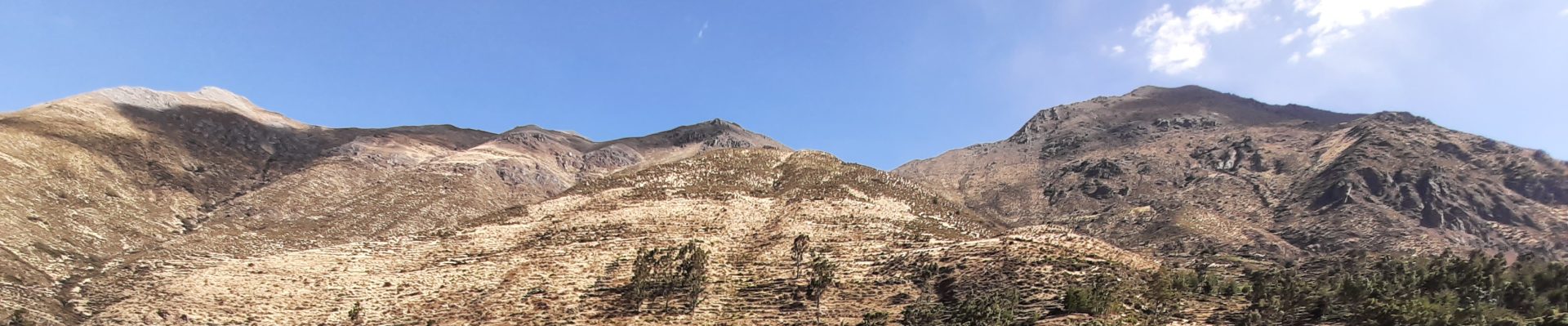
EM Venezuela (2007)
Abstract:
This thesis is aimed to study the paleoecology of the southern Gran Sabana region (GS; SE Venezuela) since the Late Glacial to the present. This region is characterized nowadays by the occurrence of large extent of savannas in a climate suitable for rainforests. For this purpose, three sequences (two from peat bogs and one from lake sediments) have been analyzed for pollen and spores, non-pollen palynomorphs (NPP), and microscopic charcoal particles. Among the sequences analyzed, two of them are located currently within treeless savannas (Lakes Chonita and Encantada); whereas the third one is placed in the boundary between GS savannas and Amazon forests (El Paují). The Late Glacial interval of Lake Chonita was characterized by a shrubland that was replaced by a treeless savanna at the end of Younger Dryas (YD) and the onset of the Holocene, linked to the occurrence of regional fires since ca. 12.4 cal kyr BP. The beginning of local fires was dated synchronous with the vegetation replacement, ca. 11.7 cal kyr BP. A similar shrubland, though not identical, is located nowadays around 200 m elevation above the lake, so the replacement by surrounding savannas was interpreted as a probably upward displacement of the former vegetation and an increase in average temperatures of approximately 0.7 ‐1.5ºC. This section represents the oldest interval analyzed for GS so far, and the presence of fires during the Late Pleistocene is among the oldest fire records documented for northern South America. The peat bog records of Lake Encantada and El Paují showed the main vegetation trends of the last 8 cal kyr BP, which were characterized by the continuous occurrence of regional fires. In Lake Encantada, the presence of treeless savannas was reported during the whole interval analyzed as the dominant vegetation type, despite variations in forest abundance and composition taxa of the community also occurred. The vegetation changes in this record were interpreted as mainly due to climatic shifts until the Late Holocene. At El Paují, the occurrence of forests and savanna/forest mosaics was reported during the same interval, and fire was postulated to have been the major driver of the vegetation shifts. In this sequence, a treeless savanna was not recorded as the dominant vegetation of the landscape until the last millennia, and the presence of two different indigenous cultures was postulated as responsible of the shifts in fire regime registered, with an interval of human land abandonment between them. This interval was characterized by the cessation of fires, and the establishment of a secondary dry forest. The Late Holocene was characterized, in the three sequences studied, by a sudden increase of fires, which likely favored the expansion of savannas and the establishment of the present GS landscape.
The join interpretation of the records presented in this thesis, together with previous analyses in the region, highlighted some key aspects for understanding the main trends of GS landscape and vegetation, e.g., the appearance and establishment of morichales (Mauritia palm stands typical of current southern GS landscapes) has been restricted to the last two millennia, synchronous with the increase in fire incidence. Moreover, it has been possible to gather empirical evidence for testing some previous hypothesis regarding GS. For example, the proposal of an extended aridity prior the Holocene has been rejected, whereas the hypothesis about the postglacial expansion of morichales has been supported. In this sense, with all the available information to date, some suggestions have been proposed: (i) Climate and fire have been the major forcing factors operating in the GS; (ii) During the Late Glacial and the beginning of the Early Holocene, the landscape of southern GS was likely formed by a mosaic of forests, shrubs, and savannas, without the current supremacy of the last vegetation type, which only established during the last 2 cal kyr BP onwards; (iii) Some general climatic trends have been inferred for the study area, as for example an increase in average temperatures around the Late Glacial/Early Holocene transition, a dry interval from 8 to 5 cal kyr BP, and a wetter phase during the Mid-Holocene centered around 4 cal kyr BP; (iv) The establishment of Mauritia in the region has been likely driven by a synergism between biogeographical, climatic and anthropogenic factors, as well as the likely pyrophilous nature of this palm given its synchronous appearance with the increase of fires; (v) The settlement of the modern indigenous culture (Pemón) occurred at least since around ca. 2000 cal yr BP onwards, 1500 yr earlier than previously thought, but previous human presence in the region has been also documented; and (vi) The fire activity observed in the long-term has caused a huge impact on GS landscape.
Research paper: Brando, P.M., Balch, J.K., Nepstad, D.C., Morton, D.C., Putz, F.E., Coe, M.T., Silvério, D., Macedo, M.N., Davidson, E.A., Nóbrega, C.C., Alencar, A. & Soares-Filho, B.S. (2014) Abrupt increases in Amazonian tree mortality due to drought–fire interactions. Proceedings of the National Academy of Sciences.
SUMMARY (Hayley): “A new method is presented on splitting the log – transformed taxa accumulation curve into sections (natural breaks where the curve deviates from a linear trend), with the hypothesis that breaks in the curve could indicate shifts in abundance between high (e.g. wind pollinated taxa) and low producers of pollen (e.g. insect pollinated taxa), this hypothesis is tested on pollen diagrams from three separate pollen diagrams from varying landscapes.”
SUMMARY (Adele): “This elegant paper highlights the changeability of pollen grains and their responses to their environment, giving those of us who identify pollen based on morphological characteristics plenty to think about.”
My first fieldwork from the OU, in 2005, was pollen trapping on the Galapagos. Here I am looking beardy on Bainbridge.
February was an exciting month for me principally because of the finalization of my move to the University of Amsterdam (UvA) where I will become head of Paleo and Landscape Ecology in September. The decision to leave The Open University (OU) has been a difficult one. When I joined the OU as a RCUK Research Fellow in Ecosystem Science in 2005 I would not have believed that I would be in a position to take on a job such as the one in Amsterdam only nine years later. Building the group here during the last nine years has been a lot of fun and I have got to work with some great people. Stand out moments include:
Obtaining my first grant as Principle Investigator (c. US$20,000 from the National Geographic for field work in Bolivia),
Recruiting, and graduating, my first PhD research students (Joe Williams and Macarena Cardenas),
Being invited to participate in large international research efforts (notably the Lake Bosumtwi project),
Co-editing my first book (Bush et al., 2011), having my first student to publish a paper getting it in Science (Cardenas et al., 2011), and helping to write a popular science text co-published by the Natural History Museum (Silvertown et al., 2011)
There have been many more amazing things here but I don’t want to swamp this post with a retrospective of my OU career…
Ongoing excitement within the PCRG is happening on a number of fronts:
So we’re back from a hot and humid Ecuador to the joys of a British winter. Ecuador is an amazing country and the diversity of the flora and fauna surpasses anything that I have experienced before. Continue Reading
Roucoux, K.H., Lawson, I.T., Jones, T.D., Baker, T.R., Coronado, E.N.H., Gosling, W.D. & Lähteenoja, O. (2013) Vegetation development in an Amazonian peatland. Palaeogeography, Palaeoclimatology, Palaeoecology, 374, 242-255
Rull, V., Montoya, E., Nogué, S., Vegas-Vilarrúbia, T. & Safont, E. (2013) Ecological palaeoecology in the neotropical Gran Sabana region: Long-term records of vegetation dynamics as a basis for ecological hypothesis testing. Perspectives in Plant Ecology, Evolution and Systematics, 15, 338-359



 Ecology of the past