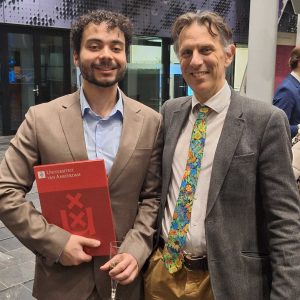
Reyan Christ graduating with an MSc in Earth Sciences
On the 18 March 2026 I had the fun challenge of speaking at two MSc graduation ceremonies that were running at the same time. Two ‘long-term’ members of the palaeoecology team at the University of Amsterdam had reached the culmination of their degree program.
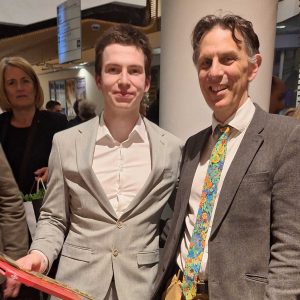
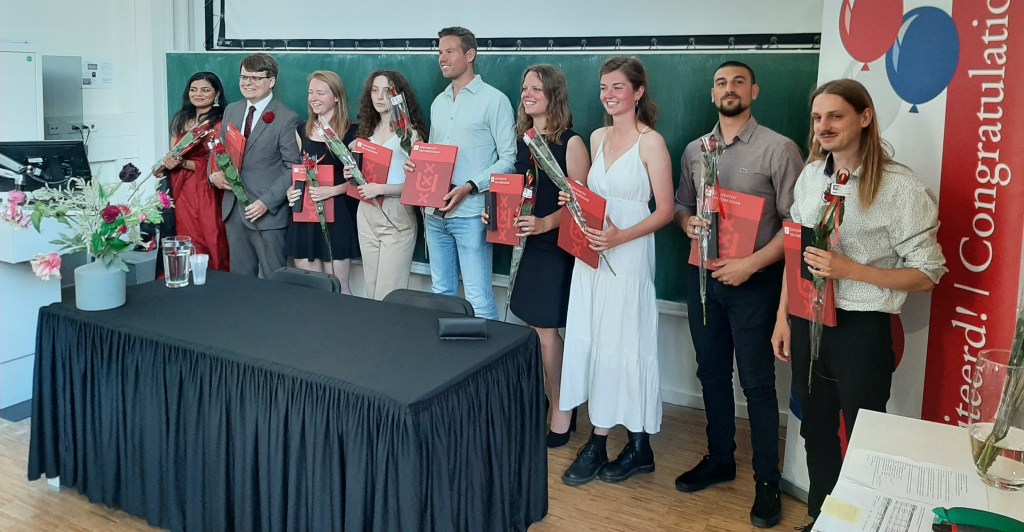
Reyan Christ graduating Cum laude in MSc Earth Sciences (track Earth System Science) and Jelle Kraak graduating in MSc Biological Sciences (track Ecology & Evolution).
Reyan was up 2nd in the Earth Sciences program, and Jelle was up 5th in Biological Sciences, giving me approximately 10 mins to get between rooms! Thankfully everything ran to time and I was able to deliver my speeches for them both. It was great to meet their friends and families and celebrate this important moment for their education.
Jelle Kraak graduating with an MSc in Biological Sciences
It was also great to celebrate the submission of a manuscript (the day before) on which they are first and second author. This manuscript is based on a combination of their, and other students, theses work on past environmental change in the Drakensberg Mountains (South Africa), and conducted in collaboration with Jemma Finch and Trevor Hill at the University of KwaZulu-Natal. We now cross our fingers that the journal editors and reviewers are as excited as we are about their findings. Fingers crossed we can be announcing the published version on here later in the year…
Palynologische Kring: Jaarvergadering en lezingenmiddag
Date: 20 June 2025 / 20 juni 2025
Location: Minnaertgebouw, Utrecht Science Park
13.15: arrival / inloop
13.30-14.30: Annual meeting / Jaarvergadering
14.30-14.55: Tobias Vervaart MSc (Universiteit Utrecht): Introducing PhD project ‘Looking back to plan ahead: unfolding the natural heritage of Dutch landscapes’.
14.55-15.15: coffee break
15.15-15.40: Yannick Bats MSc (Universiteit Utrecht): Impact of chemical treatments on the molecular and stable carbon isotopic composition of sporomorphs.
15.40-16.10: Prof Dr. Corrie Bakels (Faculteit der Archeologie, Universiteit Leiden): Results from stable isotope analysis applied to charred grain preserved in two storage rooms found in Tell Damiyah, Jordan.
16.10-16.35: Dr. Otto Brinkkemper (Rijksdienst voor het Cultureel Erfgoed): The optimal sample size of cereal grains for stable isotope research.
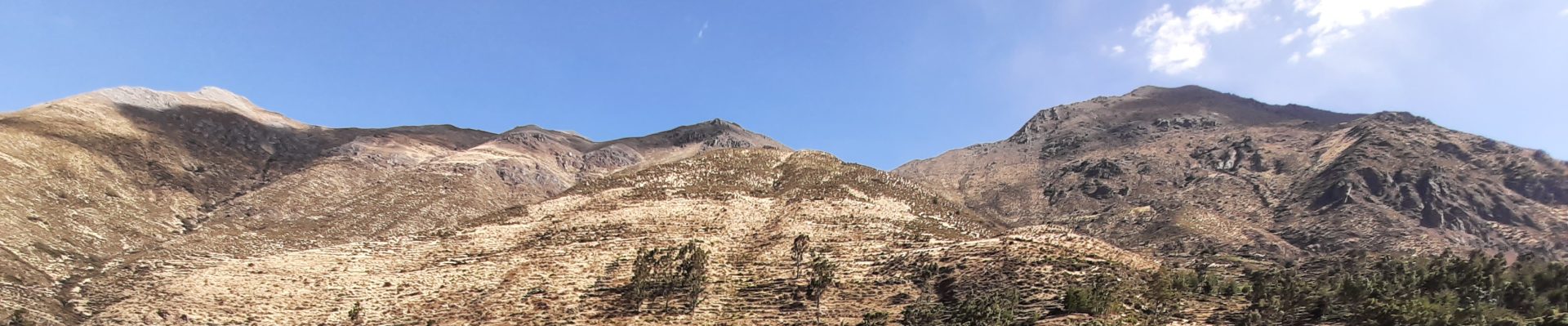
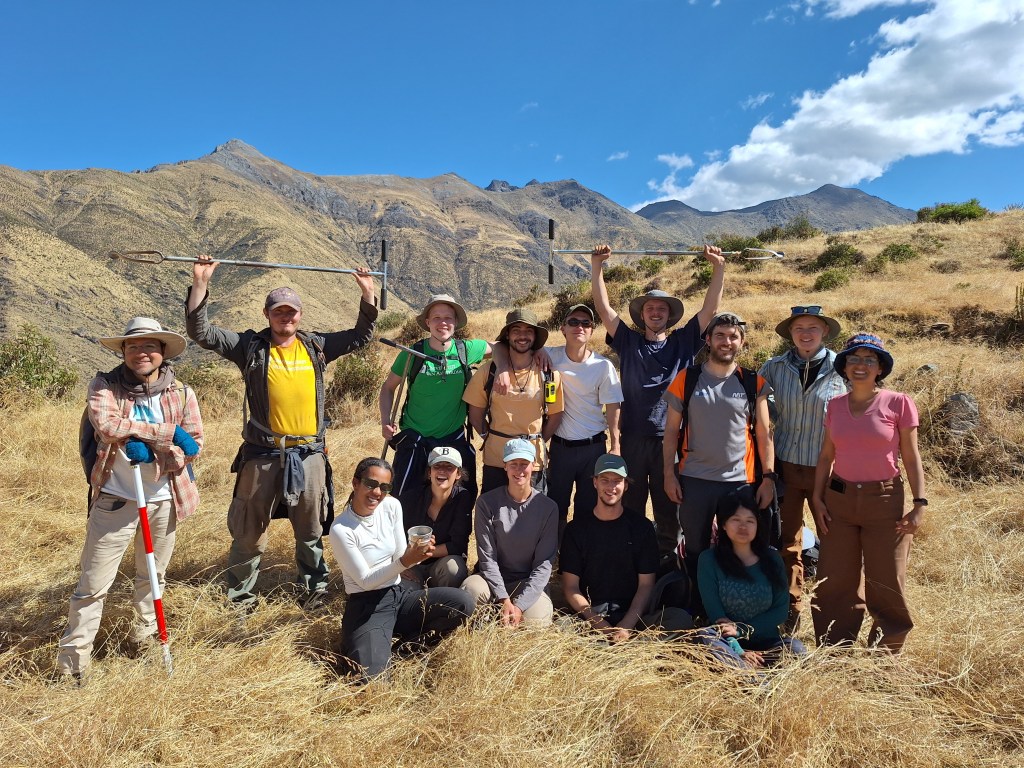
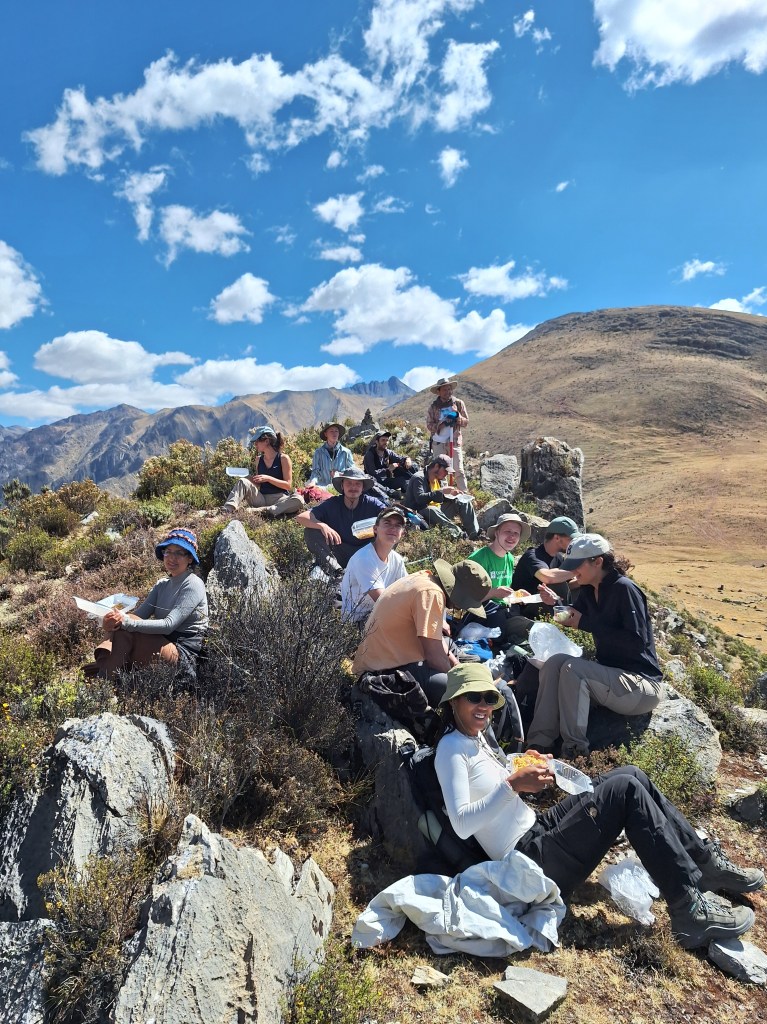
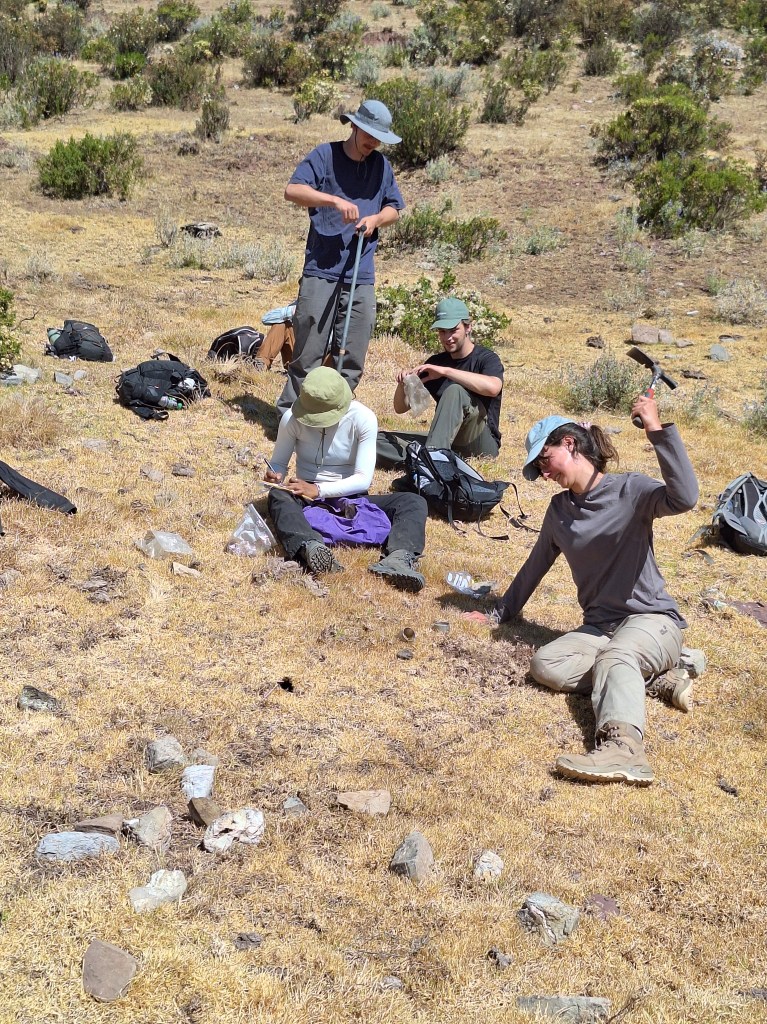
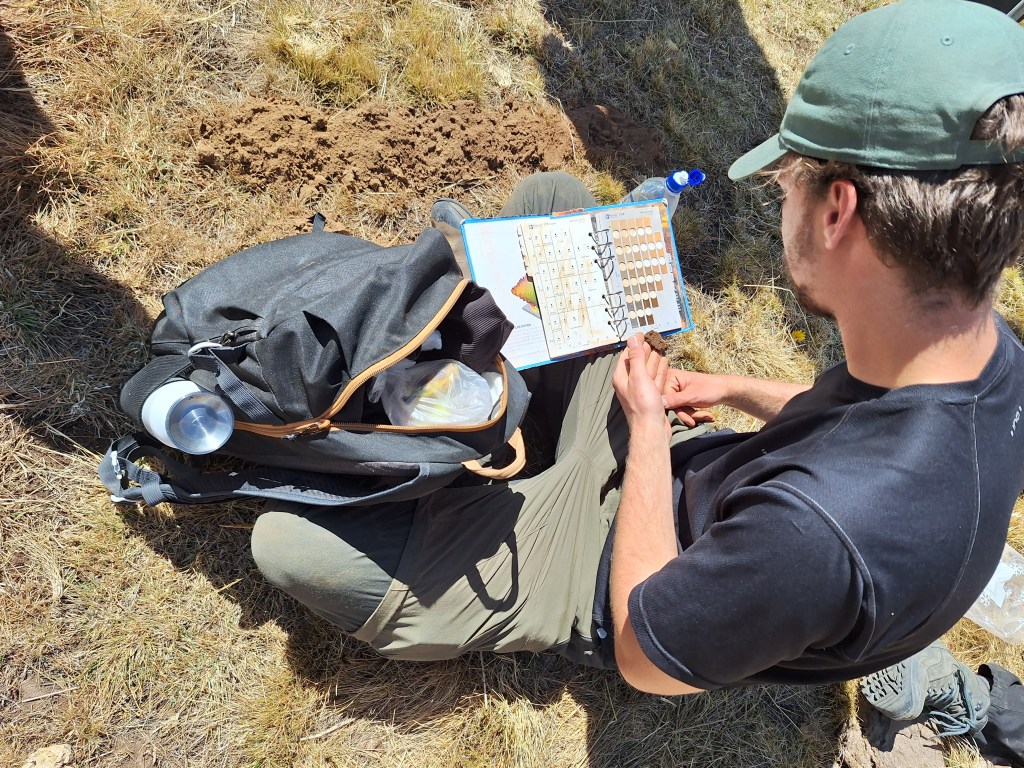
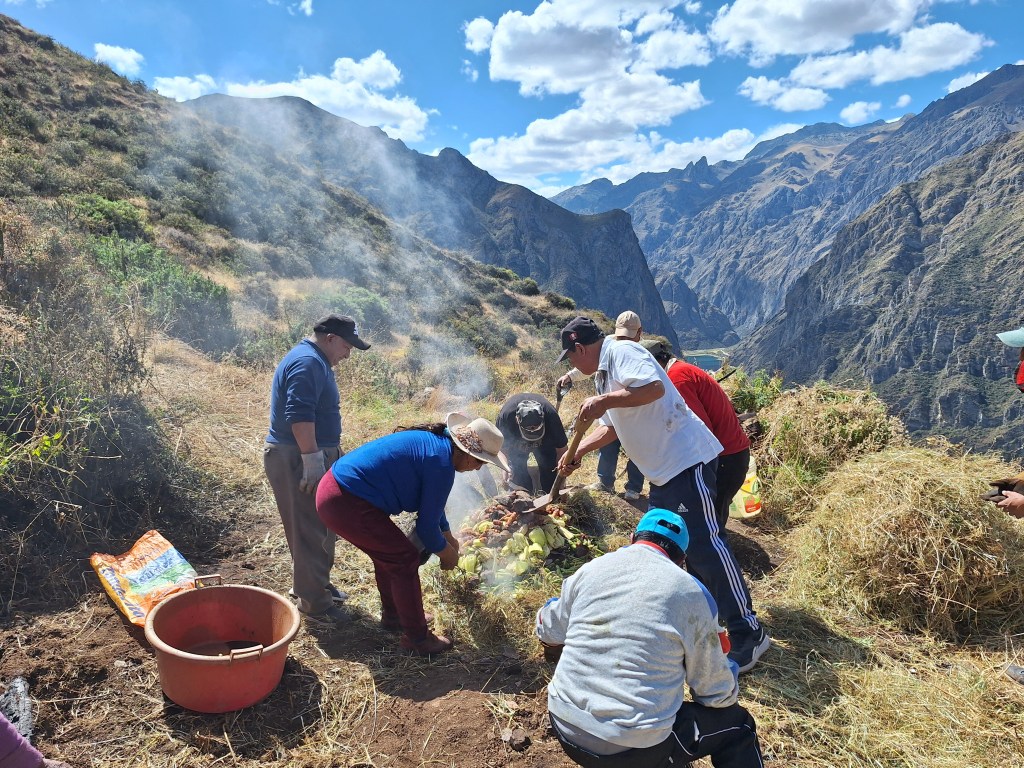
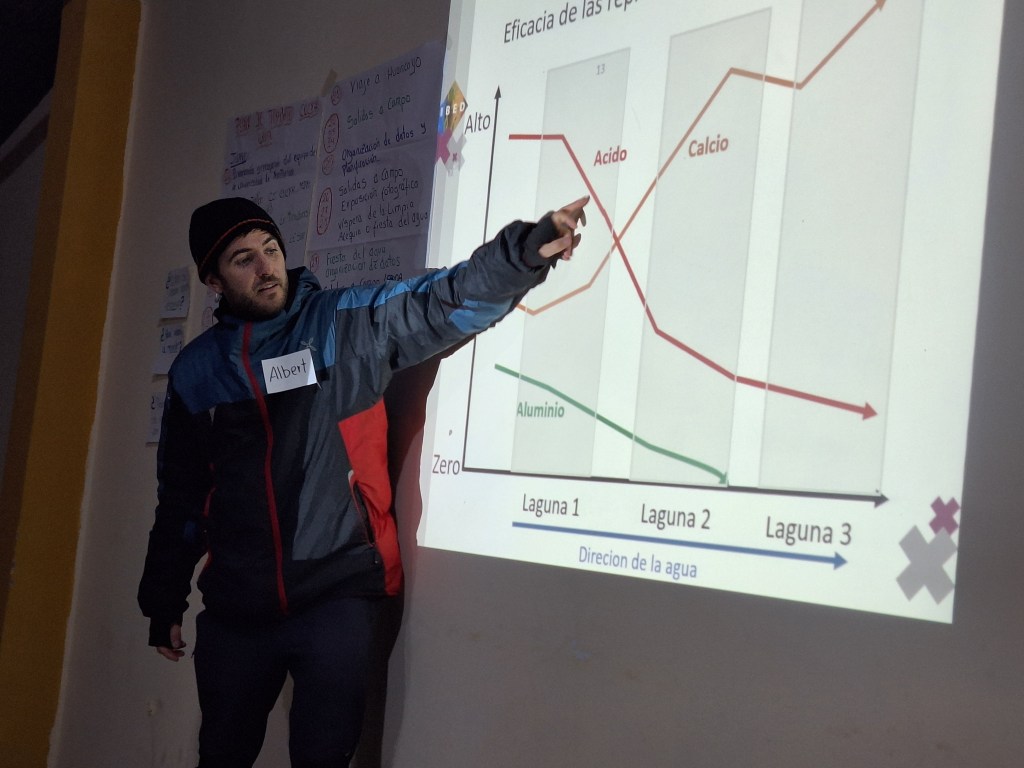
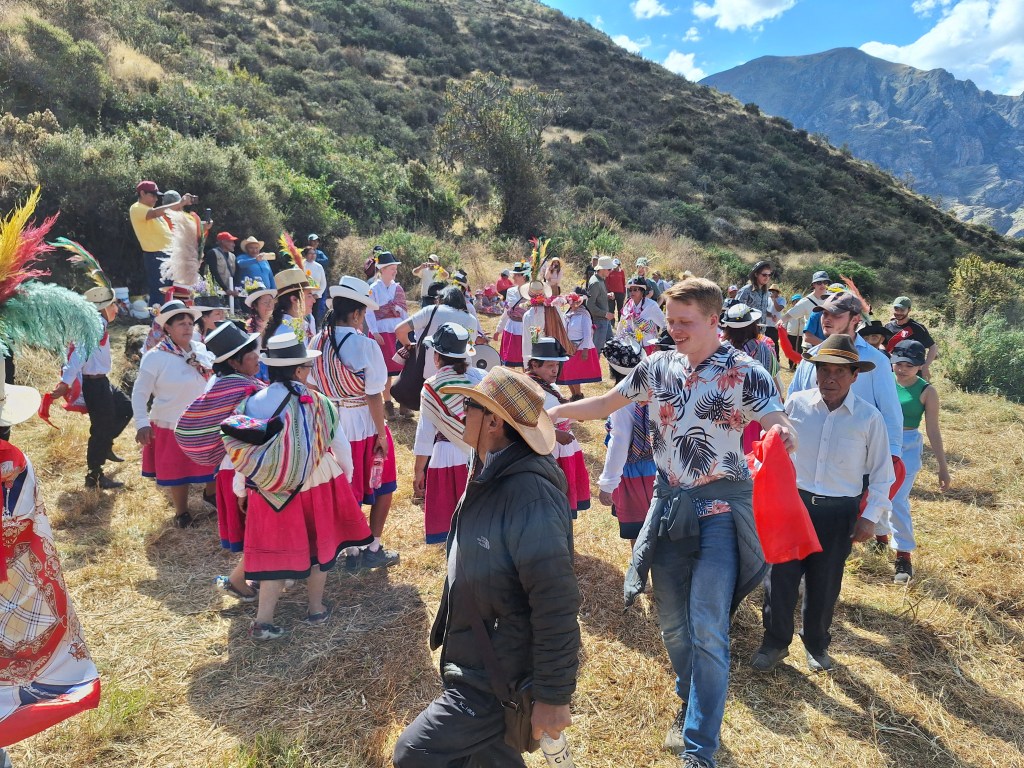
The University of Amsterdam MSc Earth Sciences “Geoecological Systems” field course took place this year in Miraflores (Peruvian Andes) during June and July. Eighteen students, including three from Peruvian institutions, spent four weeks exploring the high Andes. During this time the students developed scientific projects to address interests of the local population related to soil quality, environmental pollution, water resources and cultural heritage. Access to the area and embedding within the community was enabled by The Mountain Institute Peru. During the course the students gained extensive ‘hands on’ field experience, developed teamworking skills and discovered the benefits of a participatory approach to research.
This course runs once every two years (to find out about the 2022 expedition click here). Want to join us on a future expedition? Check out our degree program here to enroll.
Images from the University of Amsterdam Peru field course 2024
As part of my MSc Biological Sciences (University of Amsterdam) research project entitled “Assessing the effect of human induced fire regime changes on vegetation in the Drakensberg mountains” (for further details click to see previous post). I’ve travelled to Africa, where I’ll be staying a month. During this mini blogpost series I’ll take you with me on my travels!
During the first poster session, I presented my poster which went into detail on how we are developing a proxy to reconstruct past fire using micro-Fourier Transformed Infrared Spectroscopy (µFTIR). These reconstructed fire temperatures can then be compared with phytolith or pollen data to assess the effects of different fire temperatures on local vegetation over time. The presentation and poster were well received!
After my poster presentation there were two more congress days which were filled with interesting talks and beautiful posters.
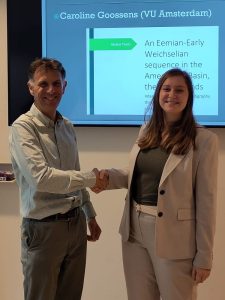
On Friday 24 May 2024 the Palynologische Kring (Dutch palynological society) held a seminar series and laboratory workshop at the Institute for Biodiversity & Ecosystem Dynamics (University of Amsterdam). During the afternoon we had the annual meeting of the society, the presentation of our MSc Thesis prize, four seminars and two laboratory demonstrations. The MSc thesis prize “Florschütz Award” was won by Caroline Goossens (VU Amsterdam) for her thesis entitle: “An Eemian-Early Weichselian sequence in the Amersfoort Basin, the Netherlands”; the project was supervised by Natalie Van der Putten, Cees Kasse and Jeroen Schokker. We hope that Caroline will present her thesis at a future Palynologishe Kring meeting.
Teye Aukes presenting on the diatoms of ancient Rome
The talk series was kicked off by Nina Witteveen (University of Amsterdam) who presented part of her PhD thesis (currently awaiting defense), entitled: “Long-term forest recovery in Amazonia insights from phytolith analysis”. Nina discussed the impact of past peoples on the vegetation of Suriname based on her work identifying phytoliths in soil samples collected at varying distances from an archaeological site. The second talk was given my Amanda Henry (Leiden University) who demonstrated how the analysis of starch grains extracted from archaeological context can provide insights in to past diets. She used these evidences to suggest that early humans and Neanderthals had a similar diversity of plants in their diets. The third talk was given by University of Amsterdam MSc researcher Teye Aukes and focused upon his identification of diatoms from an swampy lagoon environment near Ostia (Italy). He drew conclusions from these data about the antiquity of salt production in ancient Rome. The final talk was given online by Welmoed Out (Moesgaard Museum) who presented a detailed analysis of inter- and intra-analyst variability in phytolith morphometric analysis.
After the seminars we moved upstairs to the microscope laboratory where Nina Witteveen and Ana Smuk (University of Groningen) showed off phytoliths from their study site in South America and the Netherlands.
Some of the Palynologische Kring members enjoying some refreshment after the event.
If you think you might fulfill all the criteria for application, and are interested in conducting a PhD on a “ecology of the past” related theme at the University of Amsterdam, please do not hesitate to get in contact. I am then happy to check eligibility and discuss if your skill set and interests would be appropriate to apply for a PhD scholarship with us. I would be delighted if we would be able to support an applicant to this scheme.
Deadline for applications: 21 May 2024 (but please get in contact as soon as possible so that we can make the relevant eligibility checks and discuss ideas).
Yesterday evening, in my capacity as chair of the exam board MSc Earth Sciences, I had the pleasure of handing out degree certificates to graduates of both our Earth Science and Biological Science programs. It was unusual to have a combined event, but very nice given that I teach on both programs. It was great to meet up with some familiar faces and recount tales from past courses, notably the Field Course “Geoecological Systems”, and the associated adventures in the high Andes, came up a number of times! It was impressive to note the span of the research projects that students had been engaged with; from molecular biology to carbon cycle dynamics, and environmental policy. I think that all concerned had a great time at the ceremony, and throughout their studies at the University of Amsterdam. Congratulations again to all!
If you are interested to also become a happy graduate in a few years time sign up online for programs starting in September 2023:
On Wednesday 11 May 2023 I was delighted to give a online seminar for the African Pollen Database group on integrating palaeoecological data into educational programs. Thanks to Sarah Ivory, Chris Kiahtipes, and Alejandra Domic for inviting me and organizing this series.
I covered topics including the motivation of students, designing a MSc level course, and setting up BSc/MSc research projects. My presentation was centered around my personal experience of running courses for BSc Biology and Future Plant Studies students (Palaeoecology), and for MSc Earth Science and Biological Science students (Environments Through Time) at the University of Amsterdam. It was nice to get a wider perspective from discussion with the audience and to pick up some additional ideas and advice. If you have other thoughts on this topic please feel free to comment on this post.
The entire African Pollen Database online seminar series is now available to watch via the associated YouTube channel. So to find more click here.
In addition to researchers, many of us are also educators! William Gosling (this blog’s esteemed owner) will be leading a discussion of how to use the African Pollen Database (APD) for outreach and education! Please join us Wed, May 10 at 9am EDT (time zone converter). Please email sji15@psu.edu for the zoom link and instructions.
At this workshop, Will is going to focus on:
Why incorporating paleoecology in education is important.
Some theory about pedagogy related to paleoecology.
Discussion of specific ideas targeted at different groups (e.g. undergraduates, informal education).
Do you have exercises and modules that you have incorporated paleoecological data into? If so, we’d love to hear some of your ideas as well!
For more information, check out the schedule below and see past workshops here.














 Ecology of the past