Organisms and environments: Frontiers in palaeoecological technique development

October 16, 2014
WDG

inquaXIX INQUA Congress
NAGOYA, JAPAN 27 July-2 August, 2015
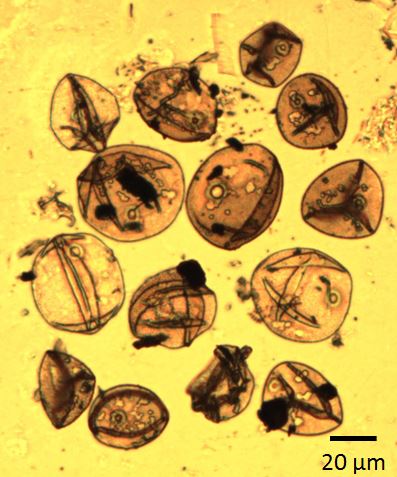
Grass pollen from Lake Bosumwti picked for individual chemical analysis

Grass pollen from Lake Bosumwti picked for individual chemical analysis

Abstract submission is now open for the XIX International Union for Quaternary Research (INQUA) Congress. “Ecology of the past” researchers will be there and are hosting a special session, entitled Organisms and environments: Frontiers in palaeoecological technique development, at which we hope to bring together a wide range of palaeoecologists working on novel proxy development. Members of the “Ecology of the past” group will be showcasing recent findings on the environmental significance of pollen chemistry change through time; linked to the 500,000 years of solar irradiance, climate and vegetation change in tropical West Africa project (Fraser et al., 2014). Please take a look at our session and consider submitting YOUR abstract today!

For information on abstract submission click here. Closing date for abstract submission 20 December 2014.

For further information on our session click here, or “Continue reading” below…

Continue Reading

Paleoecology course University of Amsterdam

September 29, 2014
Valerie

Students examining a sediment core extracted with a Russian corer

Students examining a sediment core extracted with a Russian corer

Last week, Will – our new associate professor at the University of Amsterdam – joined us on the field residential module of the undergraduate “Paleoecology” course; 7 days exploring the sediments and vegetation of the Twente region of the Netherlands. The experience provided Will with a lot of information on Dutch language, landscapes, and students; which should be useful to him next year as he will be coordinating the course!

Students examining peat exposures.

Students examining peat exposures.

During this very intensive (4-week) paleoecology course, students get background lectures in past environmental change, learn to identify microfossils in the laboratory (pollen and chironomids), and go on the excursion to experience fieldwork. The field module involves excursions during the day, when students have to identify plant species indicative of different vegetation types in relation to soil nutrient availability and moisture content. The evenings are reserved for the students own paleoecological research investigation; this year students were reconstructing the vegetation history and climate change during the late-glacial from a lake sediment core from Germany. Once data collection was completed the students had to interpret the pollen assemblages they found using the knowledge of modern day ecosystems they gained throughout the week. On the final evening they presented their work to the whole group. The final results they achieved were quite impressive.

Students presenting findings from the days work

Students presenting findings from the days work

I am very curious as to what the course will be like next year, led by Will, and how he will tweak and turn it to his liking.


Debating the Vera hypothesis

Debating the Vera hypothesis


In the news:

Exploding flower blasts birds with pollen, by Xochitl Rojas-Rocha Science shot. (Research article behind this story is Dellinger et al. listed below). Also:

Scientific articles:

Dellinger, A.S., Penneys, D.S., Staedler, Y.M., Fragner, L., Weckwerth, W. & Schönenberger, J. A Specialized Bird Pollination System with a Bellows Mechanism for Pollen Transfer and Staminal Food Body Rewards. Current Biology, online.

Huntley, B., Midgley, G.F., Barnard, P. & Valdes, P. (2014) Suborbital climatic variability and centres of biological diversity in the Cape region of southern Africa. Journal of Biogeography, 41 (7): 1338-1351.

Matthew, T.J., Cottee-Jones, H.E., & Whittaker, R.J. (2014) Habitat fragmentation and the species–area relationship: a focus on total species richness obscures the impact of habitat loss on habitat specialists. Diversity and Distribution, 20 (10): 1136-1146.

Rijsdijk, K.F., Hengl, T., Norder, S.J.,  Otto, R., Emerson, B.C., Ávila, S.P., López, H., van Loon, E. E., Tjørve, E. & Fernández-Palacios, J.M. (2014) Quantifying surface-area changes of volcanic islands driven by Pleistocene sea-level cycles: biogeographical implications for the Macaronesian archipelagos. Journal of Biogeography, 41 (7): 1242-1254.

Past environmental change in the Amazon basin – AGU video

September 8, 2014
WDG

Hayley Keen’s video “Past environmental change in the Amazon basin” has been shortlisted for the American Geophysical Union (AGU) student video prize. Please watch and like Hayley’s video; top “Liked” videos will win entry to the AGU 2014 Fall meeting.

View all the videos on the AGU YouTube channel.

Three new videos on the Ecology of the Past Youtube channel

July 25, 2014
philjardine

We’ve got a bumper crop of palaeoecological film making for you today, with three videos uploaded to our very own ‘Ecology of the Past’ Youtube channel. We’ve got an interview with Will Gosling, talking about the Bosumtwi pollen chemistry project and his own background and career (it’s a timely and somewhat poignant addition to the channel, because this is Will’s last day at The Open University before heading off to Amsterdam). Also posted are research presentations by Frazer Bird and Hayley Keen, which were filmed during the PhD student conference on 21st May. For the first time at the Open University these presentations were carried out in the Three Minute Thesis (3MT®) format.

An interview with Phil Jardine

July 1, 2014
philjardine

Well, we’ve heard from Wes and Adele, and now it’s my turn (Phil Jardine) for a bit of a chat on the “Ecology of the past” YouTube channel. Similar to the previous interview videos, I’m talking about my role on the Bosumtwi pollen chemistry project, and what I’ve done (academically speaking) prior to coming to the Open University. Enjoy!

For more videos check out the “Ecology of the past” YouTube channel.

An interview with Adele Julier

May 26, 2014
philjardine

Following on from Wes Fraser’s insightful and revealing interview, cactus-hugger Adele Julier tells us about her academic background and her role on the Lake Bosumtwi pollen chemistry project.


For more videos check out the “Ecology of the past” YouTube channel.

African ecology in context

May 14, 2014
WDG

afqua-logo-header-copy

I am delighted to be organizing a focus session at the first AfQUA meeting. The session seeks to bring together ecologists and palaeoecologists working in Africa. If you are interested in getting involved please contact me (William Gosling) directly. For further information on the conference visit the AfQUA website or twitter feed.

Focus session 1: African ecology in context
The African continent spans over 80 degrees of latitude, nearly 6000 m of altitude and around 30 million km2 consequently it contains a vast array of unique ecosystems. Many of the African ecosystems are under direct pressure from human activity and are threatened by on-going and projected climate change. However, management and conservation of the modern African ecosystems is hampered by a paucity of data on their natural history. Studies of observations of ecosystems spanning >30 years are rare so we are heavily reliant on examination of the fossil record to place modern ecology in a long-term (>50 year) context. Information on past ecosystems can be extracted through the examination of a range of biological indicators (e.g. pollen, carbon isotopes, charcoal) found within marine and lake sediments. However, interpretation of the sediments and the proxies they contain with the ecosystems observed today is challenging because of timescale and interpretation issues. The aim of this session is to bring together modern ecologists and paleo-ecologists working in Africa to present the state-of-the-art understanding of ecosystems past and present, and explore how we can improve understanding of timescales and proxy interpretation to place these threatened ecosystems in context.

Williams PhD thesis 2011

May 13, 2014
WDG

Williams, J.J. (2011) Human and climate impacts on tropical Andean ecosystems. PhD Thesis, Department of Earth & Environmental Sciences, The Open University.

JJW Bolivia (2007)

JJW Bolivia (2007)

Abstract:

Population growth and predicted global climate change are applying new, and increasing, pressure to mountain environments, but the consequences of these changes upon the biodiverse and vulnerable Tropical Andean ecosystems are poorly understood. This thesis explores past human-climate-ecosystem interactions using multi-proxy palaeolimnological investigations (fossil pollen, spore, charcoal and Chironomidae (midges); elemental abundance, colour spectra and magnetic susceptibility) of two sites in the eastern Bolivian Andes (Lake Challacaba and Laguna Khomer Kocha Upper) over the last c. 18,000 years. During the deglaciation and Holocene ecosystems were exposed to varying climatic stress levels, and pressures imposed by the development of human cultures.

Examination of preserved ecological assemblages, including the first assessment of subfossil central Andean Chironomidae, reveals ecosystem sensitivity to changes in temperature, moisture, fire regime, lake level and salinity. Charcoal analysis from Laguna Khomer Kotcha Upper reveals changes in burning at c. 14,500, 10,100 and 6,400 cal yr BP. Concomitant palynological shifts shows this climatically controlled fire regime was a transformative agent of Andean vegetation, particularly for the threatened, high elevation, Polylepis woodlands. Pollen and geochemical data from Lake Challacaba indicate two periods of aridity (c. 4000−3370 and 2190−1020 cal yr BP), these broadly correlated to El Niño/Southern Oscillation variations. Increased Sporormiella abundance after c. 1,340 cal yr BP indicate changes in trade routes and agricultural practices; demonstrating human adaption to environmental change and interconnectivity to Tiwanaku and Inca civilizations.

The long-term response of the terrestrial and aquatic ecosystems, reconstructed from these lakes, has provided insights into how Tropical Andean ecosystems may respond to future changes in temperature, precipitation and human interference. The palaeoenvironmental data has implications for conservation management; it indicates that spatial and temporal variations in site sensitivity, exposure and resilience should be assessed, and that planting strategies should mimic the present day natural patchy distribution of Polylepis woodlands.

Supervisors: Dr. William D. Gosling , Dr. Angela Coe (both The Open University), and Steve Brooks (Natural History Museum).

Examined by: Prof. Henry Hoogheimstra (University of Amsterdam), and Prof. Bob Spicer (The Open University).

To borrow a copy from The Open University Library click here.

Continue Reading

Blog at WordPress.com.