Palaeoecology course 2022 goes archaeology…

September 16, 2022
WDG

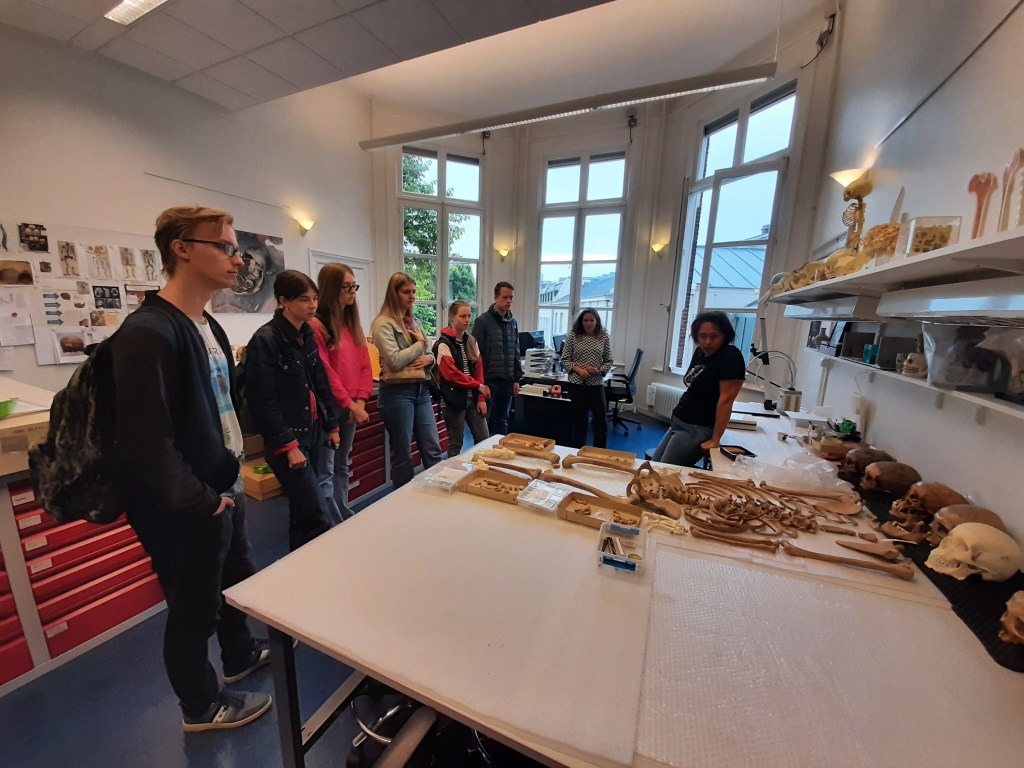
As part of this years BSc Palaeoecology course at the University of Amsterdam we visited the Department of Archaeology. Organised by Anja Fischer we visited the human bone collection, the animal bone collection and the archaeobotany section. Amazing collections and lots of opportunities for cross faculty projects and teaching.

In addition to explaining the physical reference collections Anja also explained how she has been developing data mining techniques to allow information to be synthesised from the thousands of archaeological reports across the Netherlands.

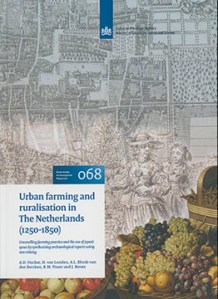
She used this approach to make new discoveries about the role of urban farming and ruralisation in Dutch history. Her findings formed a report for the Dutch national heritage organisation (Rijksdienst voor het Cultureel Erfgoed) which can be downloaded for free (in English).

Fischer, A., van Londen, H., Blonk, A., Visser, R.M. & Renes, J. (2021) Urban Farming and Ruralisation in The Netherlands (1250-1850): Unravelling farming practice and the use of (open) space by synthesising archaeological reports using text mining. Nederlandse Archeologische Rapporten 68. Download free here.

Palaeoecology course UvA 2022

September 15, 2022
WDG

The University of Amsterdam (UvA) palaeoecology course is underway. The course is part of the BSc Biology program and the “Earth & Ecology” minor of the BSc Future Planet Studies.

Week 1 (last week) we got everyone up to speed with the fundamentals of palaeoecology (including: key principles, depositional environments, dating methods) and laboratory skills (pollen, phytolith and macrofossil identification). This week (week 2) we are out and about (coring sediments, surveying vegetation and visiting the archaeology department). By the end of the week the students will (should!?) have generated sufficient data in the laboratory and field to be able to identify the location from which their mini-project “mystery slides” were taken. Next week (week 3) will be number crunching to generate the statistical support for their ideas and inferences.

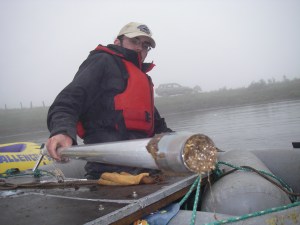
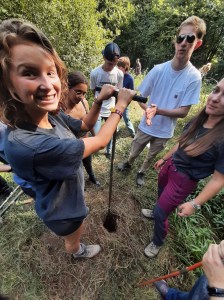
Students collecting sediments using a Russian corer at Langenboom (September, 2022). These samples were recovered in collaboration with the BosGroep Zuid Nederland as part of an ongoing project to gain new insights into the nature of the past landscape in the Netherlands and aid conservation efforts.

Characterising Dutch forests, wetlands and cultivated lands on the basis of phytolith assemblages

September 13, 2022
WDG

Open access:

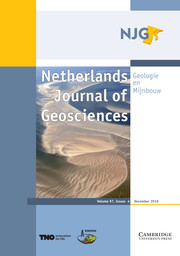
de Wolf, I.K., McMichael, C.N.H., Philip, A.L. & Gosling, W.D. (2022) Characterising Dutch forests, wetlands and cultivated lands on the basis of phytolith assemblages. Netherlands Journal of Geosciences 101, e17. DOI: 10.1017/njg.2022.14

This paper started off as a research thesis undertaken by Iris de Wolf at the University of Amsterdam as part of her BSc Biology degree in 2018. The project was supervised by Crystal McMichael and William Gosling and has subsequently been further developed. If you are student or researcher interested in undertaking a similar type of projects please get in touch.

Listen to Iris’s journal podcast speaking about the subject here.

MSc Earth Sciences: Peru field course 2022

July 15, 2022
WDG

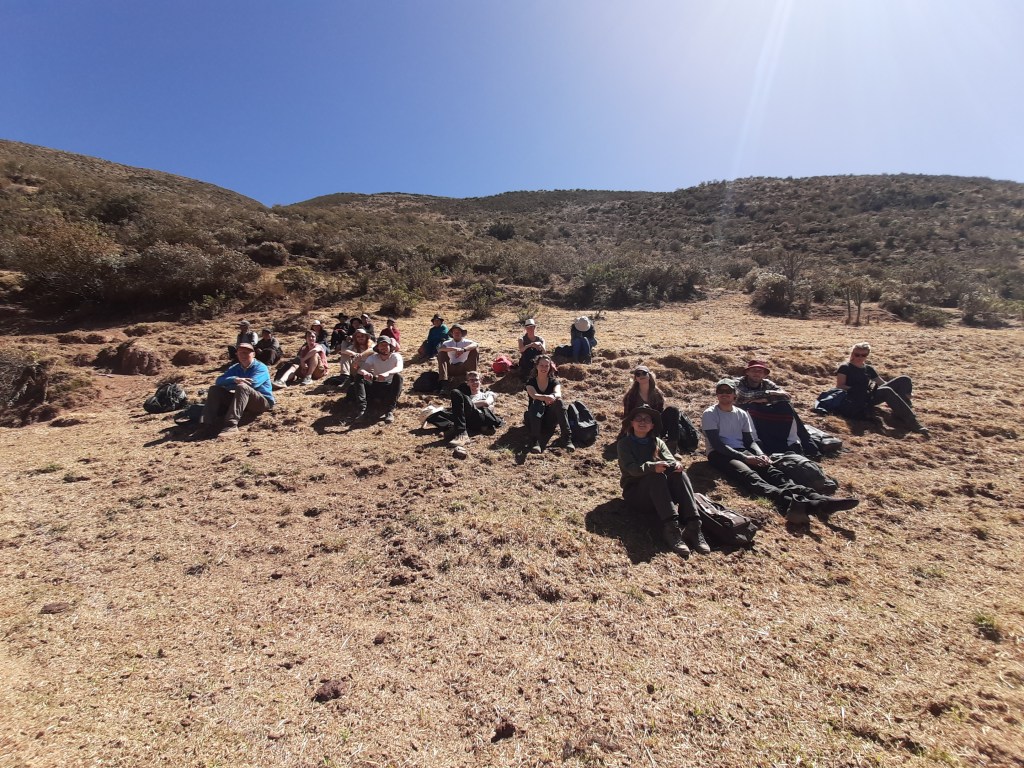
The University of Amsterdam MSc Earth Sciences “Geoecological Systems” field course to Peru took place this year during June and July (2022). A team of 18 students and 4 staff spent four weeks in Miraflores Town (c. 3700 m above sea level) working with, and for, local communities to study geomorphology, geology, land-use, water quality and carbon storage. The students were organized into teams of 3 or 4 each of which tackled a research question in the nearby landscapes that had been developed in conjunction with the local community. Access to the area and embedding within the community was enabled by The Mountain Institute Peru. The student reports will be translated into Spanish who will communicate findings to the community in Miraflores Town.

Want to join us on a future expedition? Check out our degree program here to enroll.

Continue Reading

Tenured Assistant Professorship: Climate-vegetation dynamics

December 23, 2021
WDG

We are seeking to recruit an experienced educator and researcher in the field of climate dynamics, linked to Earth system functioning and/or land-surface processes. The position will be tenured, subject to a positive evaluation of your performance during the initial 12-month temporary appointment.

Deadline: 31 January 2022

Find out more and apply:

Scientific Archaeology 2021

November 13, 2021
WDG

The Science in Archaeology 2 course, run as part of the minor in “Archaeology Today” by the Amsterdam Centre for Ancient Studies and Archaeology (ACASA), is currently underway. This year I have again contributed to this course with a weeks worth of activity related to detecting past human impacts. During this week we have focused on what sorts of evidence contained within the sedimentary record can be used to track human actions. We focused in particular on the manipulation of fire regimes and the the abundance of animals in landscapes (i.e. extinctions vs. introductions of domestic species). To illustrate how past human activities can be detected in landscapes I tapped into some recent publications I have been involved with (eastern Andean flank, Samoa and Mauritius) and the students selected papers in line with their own focus to discuss. Here is what they came up with…

Continue Reading

Big History podcast

March 26, 2021
WDG

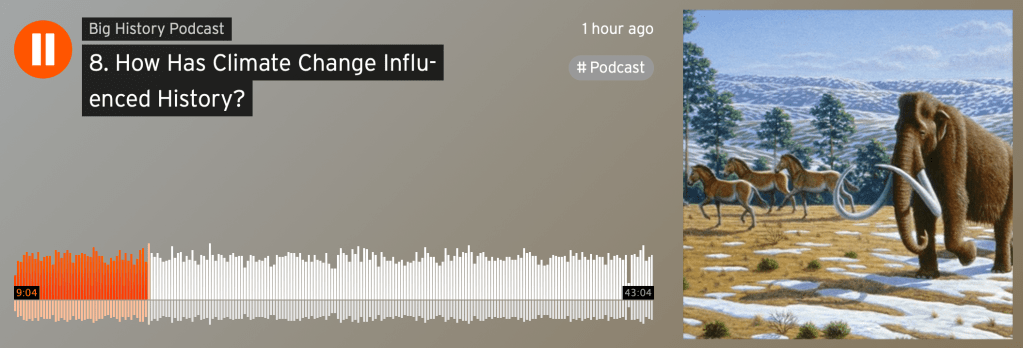
As part of the (on-line) bachelor level “Big History” course from the Institute for Interdisciplinary Studies at the University of Amsterdam I recently recorded a podcast with Henry Hooghiemstra. Under the banner of “How Has Climate Change Influenced History?” among other things we discussed: (i) the principles of how we can obtain information on past climatic and environmental change, (ii) how global climate changed between cold (glacial states) and warm (interglacial states) during the last 2.6 million years (Quaternary), and (iii) past human impacts and influences on environmental and climatic change.

  • Listen to the podcast click here.
  • For more Big History podcasts click here.
  • To learn more about the Big History course click here.

Institute for Biodiversity & Ecosystem Dynamics

January 19, 2021
WDG

Palaeoecology and past environmental research central to the work at the Institute for Biodiversity & Ecosystem Dynamics (University of Amsterdam); check out the new institute video, spot the palaeoecology researchers, and see what else is going on at IBED:

Professor of Marine Palaeobiodiversity

October 8, 2020
WDG

Prof. dr. Willem Renema

Prof. dr. Willem Renema Special Chair in Marine Palaeobiodiversity

Willem Renema, head of the Marine Biodiversity research group at Naturalis, has been appointed as a Special Chair in Marine Palaeobiodiversity within the Department of Ecosystem & Landscape Dynamics at the University of Amsterdam. I am delighted that Willem has joined the team coupling his expertise in marine tropical systems with our existing focus on terrestrial tropical settings will, I am sure, provide many new avenues of scientific endeavour. Catalysing collaboration between Naturalis and UvA will be five PhD researchers, employed on the Marie Skłodowska-Curie Innovative Training Network, who will be jointly supervised by Naturalis and UvA staff. 

  • To find out more about Willem and his appointment click here.
  • To visit Willem’s Naturalis web site click here.
  • To find out more about 4D-Reef click here.

Job: Post-doc “Digital Environmental Sustainability”

September 28, 2020
WDG

Do you have a PhD in Physical Geography, Environmental Sciences, Landscape Ecology or Soil Ecology? Have you got educational and research experience working with digital data to contribute to climate, geographic or biodiversity science? If so please consider applying for the 4-year post-doctoral position “Digital Environmental Sustainability” currently available within the Department of Ecosystem & Landscape Dynamics (Institute for Biodiversity & Ecosystem Dynamics, University of Amsterdam).

Closing data: 29 November 2020

For full information click here.

Blog at WordPress.com.